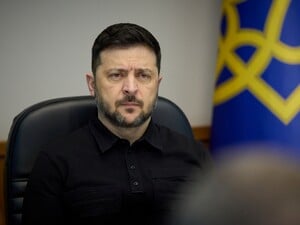
The head of state, in particular, criticizes European leaders for their slow support, threatens Hungarian Prime Minister Viktor Orban and openly questions the approach of US President Donald Trump to the war that the aggressor country of the Russian Federation unleashed in Ukraine. Zelensky’s patience is running out, the material says.
According to a former foreign policy adviser to Zelensky, such harsh rhetoric is a consequence of delays in peace negotiations and instability of financial assistance. Zelensky seeks both to strengthen his internal political authority and to emotionally influence the partners participating in peace negotiations in Ukraine, explained People's Deputy of Ukraine from European Solidarity Nikolai Knyazhitsky.
The conflict with Orban arose due to the blocking of a €90 billion loan package from the European Union and accusations of Kyiv for allegedly delaying Russian oil supplies. Zelensky said he does not consider diplomatic silence in this situation useful.
At the same time, Zelensky openly criticizes Trump for his approach to the war, calling him “dishonest” because the American president puts more pressure on Kyiv for concessions than on Moscow. Zelensky complains that the United States has not yet put serious pressure on Russia and has not brought the issue of the Kremlin's responsibility to the forefront.
After Trump's request for help intercepting Iranian drones, Zelensky hinted that Kyiv was holding the “cards” in its hands, joking in response.
Natia Seskuria, a representative of London-based think tank Royal United Services Institute, warns of the risk that Zelensky's harsh rhetoric could give partners the impression that Ukraine is the obstacle to a peace agreement. The scientist called on the head of state to be careful when criticizing his allies.
“It will be critical for Zelensky that all European allies are on Ukraine’s side in deciding how to deal with the Trump administration,” she said.
Context
Since 2025, the United States has been negotiating with the aggressor country of the Russian Federation and Ukraine to end the Russian-Ukrainian war, in particular, the Trump administration presented a draft “peace plan.” The first round of negotiations between the delegations of Ukraine, the Russian Federation and the United States in Abu Dhabi took place on January 23 and 24, 2026. The next round is on February 4th and 5th.
After tripartite talks in Geneva in February, the next meeting was to take place in early March, according to Zelensky, during March 5–9 in Abu Dhabi (UAE), however due to the military operation that Israel and the United States launched against Iran on February 28, negotiations had to be postponed. The head of the Ukrainian state said that the meeting could be held in other countries (Austria, the Vatican, Turkey or Switzerland).
The media reported that the next round of negotiations could be held on March 11 in Istanbul, but postponed due to the priority attention of the American side to the situation around Iran, Zelensky explained.