
JD Vance would have contested the attacks ordered by Trump on Iran, White House sources say

Vice President JD Vance was skeptical of the United States striking Iran in the run-up to President Donald Trump's decision to go to war, two senior Trump administration officials told POLITICO.
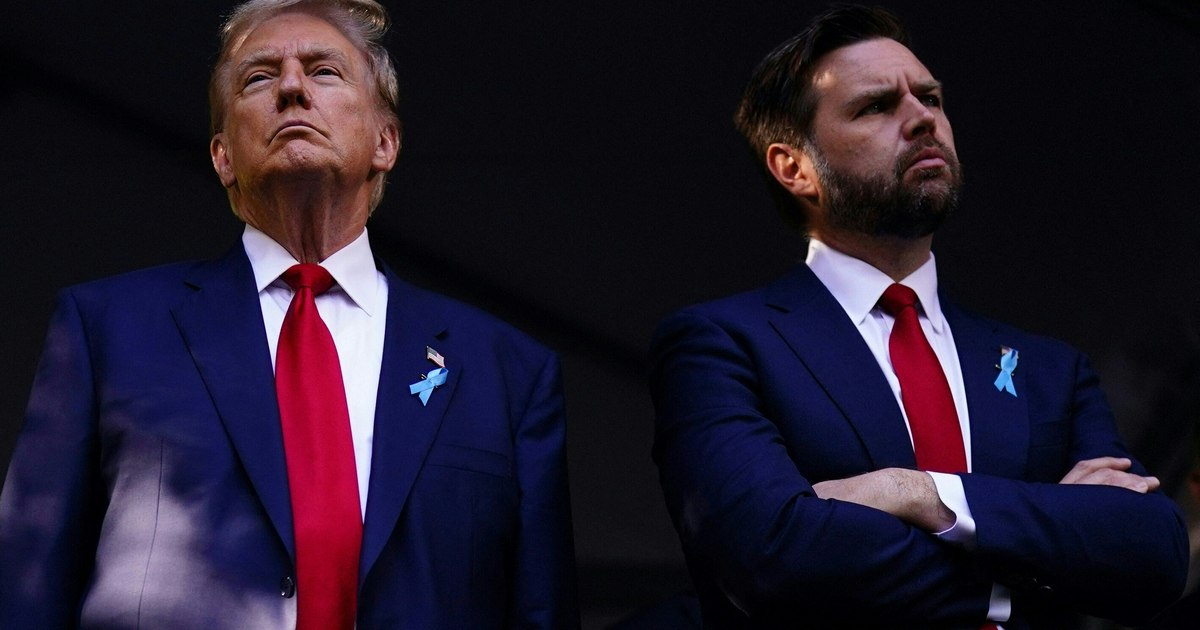
JD Vance would have been skeptical of US attacks on Iran PHOTO Archive
Vance, who has long questioned US military interventions abroad, has publicly defended the operation against Iran. Still, White House officials revealed that the vice president had voiced his opposition in the run-up to the decision, fueling speculation in recent months that Vance was far more reserved about military action than Trump.
Vance is “skeptical”it is “concerned about the chances of success” and “simply opposed” war with Iran, a senior Trump administration official said via text message. He was granted anonymity to speak about the vice president's views.
A second senior administration official said that “his role is to present to the president and the administration every possible view of what could happen, from multiple perspectives. And he does that. But once the decision has been made, he's fully aligned”.
Speculation of a rift between Vance and Trump
Vance's well-known skepticism of US military involvement — shaped by his experience as a United States Marine Corps soldier in Iraq — combined with his more reserved tone regarding the success of the operation, fueled speculation of a possible rift between the president and his vice president.
This is not the first time that Vance appears to have a different opinion than Trump on US military actions. When the United States bombed the Houthi rebels early last year, Vance wrote in a group chat on the Signal app, believed to be secret, attended by other administration officials, that he considered the decision a “mistake.”
The episode also comes amid a series of public statements in recent years in which he has explained why it is not in the United States' interest to go to war with Iran.
The latest example of a policy divergence between the two comes as Trump has suggested that both Vance and Secretary of State Marco Rubio — who has publicly aligned himself closer to the president on Iran — could have a role on a possible 2028 ticket.
Even Trump mentioned this difference in approach on Monday, but he didn't seem to mind. “Vance was, I would say, philosophically a little bit different from me. I think he was maybe less enthusiastic about going in that direction, but still pretty enthusiastic.”Trump told reporters at Mar-a-Lago.
The White House accuses the media of having “no idea what they're talking about.”
Vance has not publicly explained what that difference is “philosophical”and his aides declined to provide details on how he viewed the military action.
“The vice president has been the target of constant leaks from all directions from people trying to project their own views on him”spokeswoman Taylor Van Kirk said. “As a result, numerous conflicting accounts of the vice president's views have emerged, showing that the mainstream media really has no idea what they're talking about.”
The never-ending 'won' war: Why Trump may find himself unable to end conflict with Iran – CNN Analysis
She added that “the vice president, a proud member of the president's national security team, keeps his advice to the president private”.
For her part, the spokeswoman of the White House, Anna Kelly, said that “attempts to create a rift between President Trump and Vice President Vance are completely misguided. The President listens to the opinions of the many talented members of his national security team and ultimately makes decisions based on what is best for our country and national security. Vice President Vance is a tremendous asset to the President and to the entire administration.”.
But a person familiar with Vance's thinking, who spoke on condition of anonymity to speak on the matter, said the vice president believed a quick strike was needed and that a delay could have caused casualties among the US military because of possible leaks about US military plans.
Vance, skeptical of foreign military interventions
In the first year of Trump's second term, Vance has often been the voice of skeptics of military intervention. After the United States bombed Iranian nuclear facilities in June and the capture of former Venezuelan leader Nicolás Maduro, Vance took to social media to defend those decisions, but also admitted that Americans are “entitled to be concerned about involvement in foreign conflicts”as he wrote after the June bombing.
Since the attacks began, Vance has publicly adopted a line of support for the president's military goals, without repeating his triumphalist language, such as Trump's statement on Wednesday that “I won” the war.
“Trump will not throw the United States into a conflict that will last for years, without a clear end and without a precise objective”Vance told Fox News on March 2, claiming that the goal “simple” to destroy Iran's nuclear capability will prevent the US from ending up in stalemate situations like those in Iraq or Afghanistan.
Although he now publicly expresses his support for the attacks, Vance has a long history of positioning himself as a skeptical voice of American interventions abroad, particularly in Iran.
Two days before Trump launched the attacks, he told The Washington Post that he considered “a skeptic of foreign military interventions” and that “we all prefer the diplomatic option”.
Two years earlier, when he was running for vice president, he told podcaster Tim Dillon that “our interest is, I think, very clearly not to go to war with Iran” and that such a conflict would represent “a huge drain on resources” and would be “extremely costly to our country.”


