
A famous tourist destination wants to ban the burka and niqab in public spaces. Fines of up to tens of thousands of euros and imprisonment

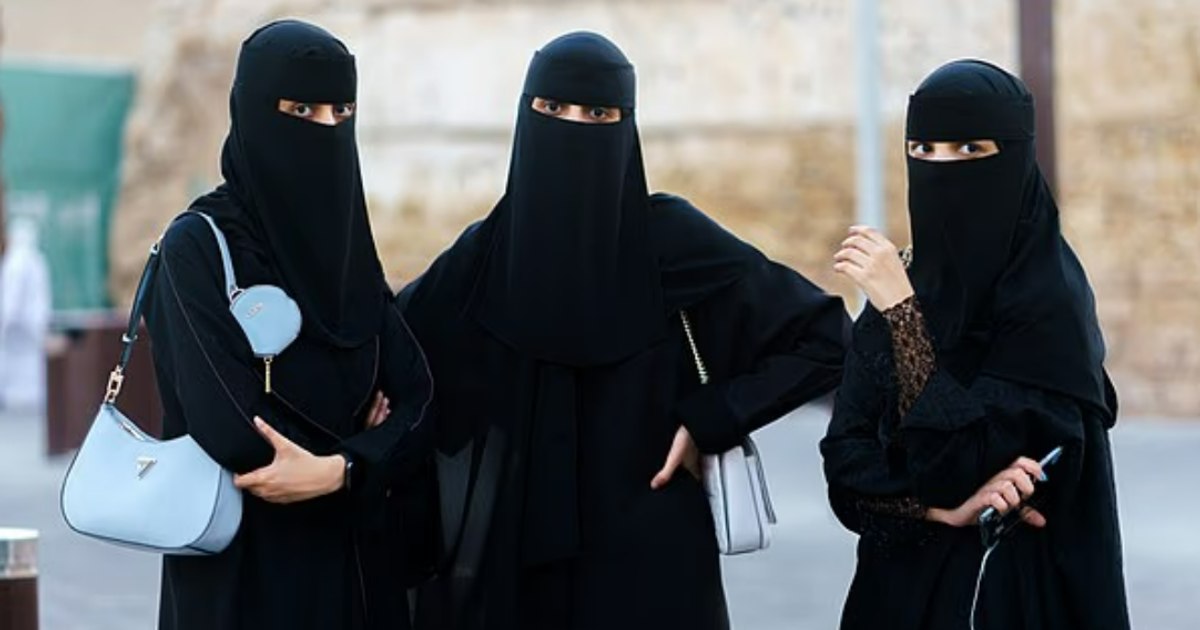
The Parliament of the Balearic Islands is debating a bill that could lead to a total ban on wearing the burqa and niqab in public spaces. The initiative, backed by the right-wing party Vox and the People's Party (PP), provides for fines of up to £25,000 for people who repeatedly wear the garments and severe penalties for those who force women to use them.
Burka and niqab could be completely banned in the Balearic Islands Photo: Shuterstock
The legislative proposal has sparked strong controversy in the regional parliament. While Vox and PP argue that the measure is necessary to defend women's dignity and public security, left-wing parties have categorized the project as racist and politically motivated, writes dailymail.
According to Vox's proposed text, people who repeatedly wear the burka or niqab could be fined up to £25,000.
In addition, the bill provides prison terms of up to four years for those who force, intimidate or coerce a woman to wear such coverings. In the case of foreign nationals who repeatedly commit such acts, expulsion from the territory of Spain is provided for.
Vox MP Manuela Cañadas, who defended the initiative in the regional Parliament, said that accepting the wearing of these garments represents a return to the past.
“Normalizing the use of these garments means accepting a medieval regression in the 21st century“, she declared.
The politician argued that the preservation of Spanish identity, culture and traditions must be a priority and stated that Islamic practices that “denigrates women” they have no place in Spanish society.
“The veil is an instrument of personality erasure, designed to nullify the civil existence of women” Cañadas said. She added that the burqa and niqab represent “submission and subjugation“.
Deputy Vox also criticized the left-wing parties opposing the bill, which she described as right “hypocrites and fake feminists”.
According to her, the banning of the burqa and niqab in public spaces “it is not an act of discrimination, but a strict measure of public order and national security”.
Similar arguments were presented by the People's Party. Deputy Cristina Gil stated that her group has been arguing for years that the burka and the niqab violate the dignity of women.
“This law does not affect religious freedom, but restricts a practice that makes women invisible”stated Gil.
The conservative MP also criticized the left for its position on the project.
“This is their kind of progressivism: for fully covered women. They want to keep them hidden”she stated.
Gil also justified the ban on security grounds, arguing that these garments prevent facial identification of individuals. She pointed out that European jurisprudence allows limiting the wearing of the full veil in certain circumstances.
On the other hand, the representatives of the parties PSIB, MÉS per Mallorca, MÉS per Menorca and Unidas Podemos rejected the initiative and described it as discriminatory.
While stating that they do not support the use of the burqa and niqab, they questioned Vox's expressed concern for women's rights.
Socialist MP Teresa Suárez stated that the project does not aim to liberate women, but is the result of “an obsessive idea about a supposed cultural threat”.
“The burqa is used as a pretext to talk about the incompatibility of Islam with our society,” she stated.
According to her, the true objective of the Vox party is “creating a common enemy” around which to mobilize the electorate.
The debate in the Balearic Islands is part of a wider trend seen in Europe in recent years. In 2011, France became the first European country to introduce a general ban on wearing the burqa in public spaces.
The European Court of Human Rights has repeatedly confirmed the legality of such measures. In 2017, the court upheld Belgium's ban on wearing the burqa and full-face veil, ruling that states can limit their use to protect “living in society”.
In Italy there are already regional restrictions. The Lombardy region introduced a ban on entering public buildings and hospitals with the face covered since 2015.
In Portugal, Parliament approved a bill in October banning full-face veils for religious or gender reasons in most public spaces.
Burka is a garment that completely covers the woman's body from head to toe, including the eyes, which are protected by a textile net. The niqab is a veil that covers the face, leaving only the eye area visible.


