As the Italians see the resemblance to the Romanians: “Their ancestors were essentially the Dacians from the Black Sea, conquered by the Romans”


Romanians have become more and more familiar to the Italians since the 2000s, since they represent the most important community of foreigners in Italy, and many locals notice the resemblance between the two peoples. However, they offer arguments to differentiate them.
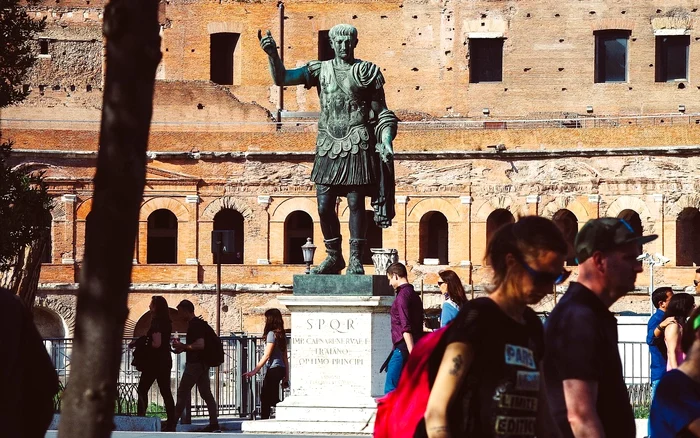
Emperor Trajan, honored in both Italy and Romania. Photo: pixabay.com
Many Italians tried to answer, with arguments, to the question launched by an Italian on Quora a popular online platform of questions and answers: does it consider Romanians similar to them?
How do Italians see Romanians
Most have noticed the differences of culture, and behavior, while others say that, once they knew them better, these differences have diminished. The Romanian language is intelligible, and the two peoples share Latin origins, they noticed other Italians.
Romanians are the most important community of foreigners in Italy, with over one million people. After they have come to know the Romanians better, the Romanian diaspora being significant in the peninsula for over two decades, numerous Italians regard them as more distant “relatives”, but with close origins.
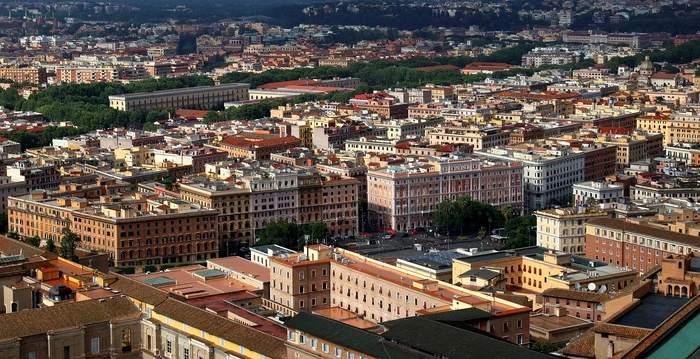
Rome (Lazio) The most populated region of Romanians in Italy. Pixabay.com
Others, on the other hand, say that, apart from the similar grace, the Romanians do not have much in common with the Italians.
“The Romanians are not in any way similar to us, except for the language, which is somewhat similar, but we cannot understand too much when I speak at a normal pace. If I speak slowly, we can understand about 30 percent, I would say. If we read Romanian, we can understand about 50 percent. He writes a local from northern Italy.
Another Italian notes that once people in both countries get to know each other personally, they will discover that they have many common points.
“This has happened to me many times. I tend to connect better with the Romanians in the big cities, because I come from one. When you ask people about a general opinion about Romanians (or ask Romanians about the Italians), the clichés inevitably have a major influence. However, in the relations one to one, we do not see. European, so a Romanian and an Italian are both European citizens ”, he thinks.
Romanians, seen as descendants of the Dacians
Romanians and Italians are only similar in language, because Romanian is part of the Latin family.
“Being it Italian myself, my sincere opinion: well, from a linguistic perspective, yes, for sure: Romanians are similar to us, since I speak a language belonging to the Latin family. However, the way it sounds clearly reminds me of the influences of other Balkan languages, and my ears take a few more words.” add it.
However, the Italian believes that the peoples are almost completely different, not having too much in common, apart from the general Indo-European group of which all Europeans belong.
“The Italians, as an ethnicity, have the same DNA as Italian ancestors, respectively the local native tribes of ancient Italy (Romanians, Etruscii, Picenii, Oscans, Shadows, Celts, etc.). On the other hand, the Romanian ancestors were, in essence, the Dacians who lived near the Black Sea, conquered by the Romanians”he claims.
A historical Italian supports the same opinion, specifying that today's Italians are descendants of the peoples who lived in pre-Roman Italy (Latin, Etrusci, Samnites, Greeks, etc.), with the addition of slaves (especially Anatolian) and some migrants who came to Italy in the Imperial and Byzantine era.
“Basically, the genetic background of the Italians, starting from the imperial era, has changed very little, except for restricted areas of the country, affected by particular phenomena of depopulation and subsequent allogeneic repopulation (for example alghero, livorno or trieste, some Albanian valleys or villages from southern Italy). Like some drops in the sea, with very little influence ”, He believes.
Romanians' ties with Italians, more than linguistic
An Italian established in Romania since 1975 argues that, although Romanians are not perceived as culturally distant, Romanian and Italian are not mutually intelligible, traditional religions are not the same (Orthodox vs. Catholic), and historical contacts were not very powerful.
“In addition, external influences throughout history were not the same. It is possible that Romania has been named to emphasize that its identity is distinct from that of the Slavic and Hungarian populations around, than due to a continuous connection with Rome. On the other hand, the relations have been strengthened lately. 1990 Many Italians started businesses in Romania and a considerable number of Romanians have migrated to Italy, where they are currently forming the largest foreign community ”, add it.
Only linguistically, Romanians can be likened to the Italians, believes another Italian. “The Romanians will always be Eastern European the most similar to the Italians and other Latinos-Spanish, French and Portuguese,” she says.
Another Italian states that the Italians generally believe that they are superior to the rest of Europe, especially to anyone who is east of them (Greece, Romania, Bulgaria, former Yugoslav states).
“From a cultural point of view, the Italians believe that they are the best in terms of their history in art, manufacture, gastronomy. However, from a genetic point of view, they could consider Romanians related to them (old Latin), but I do not think that the general image of Romania is a favorable one. I say that, after more than a decade, they have not yet broken.he says.
Other Italians look at Romanians as East-European or strongly influenced by the Slavs in the Balkans. Some remember the historical links between the two peoples.
“I believe that Romanians are a unique people, born primarily from the Dacian mixture with the native populations. The Slavic component of their DNA is quite small and refer especially to the Balkan Slavs. The Romanians are a Balkan people, while the Italians are an Italic people, with a different DNA. And similar to the Bulgarian ones. says an Italian from Romania.
The perception of Italians about Romanians has changed
Romanians are the largest foreign community in Italy, representing almost a quarter of the total foreigners, reminds another Italian.
“They do not sneak in secret (you meet them everywhere) and, at first glance, they are quite similar to us. There is nothing annoying as a stranger or to say:” Look, a Romanian! “, notes it.
Another Italian notes the way the Italians have changed their perception of Romanians over the past 20 years.
“” They used to be seen mainly as criminals, illegal immigrants. After accession to the EU there were no extra-community citizens and Italians became indifferent, and later they started to like them. They work, most are fine, criminals are a minority. Personally, I see them as the Spanish, I would not be able to have it. About 70 percent like us ”consider this.
In general, the Italians are so absorbed by themselves that they do not have any special opinion about what has no direct connection with them, another Italian concludes.
How did Romanians arrive in Italy
In 1990, about 8,000 Romanians lived in Italy, showed some statistics. Currently, their number has exceeded one million people, the Romanian community representing almost a quarter of the total number of peninsula strangers. Most, almost 200,000, settled in the Lazio region, over 100,000 Romanians are registered in Lombardia, Veneto and Piedmont, and almost 100,000 in Emilia-Romagna.
Along with Israel, first of all, but also by Turkey, Italy was one of the main migration destinations for Romanians in the early 1990s, while other Romanians chose to leave to work in Germany and Hungary. Almost 100,000 Romanians left the country during 1990, show some official statistics, without including those who left the country clandestine.
The working men represented most of the Romanian migrants. Many of the first post-December migrants have arrived in these countries often helped by acquaintances or relatives and have agreed to work “in black”, on wages anyway than those in Romania those years.
By the end of the 1990s, the number of Romanians who left the country to work in the West increased, and Italy became the main destination. Israel continued to present interest to Romanians, and Canada and Spain have also become attractive, besides Germany, Hungary and Turkey. In the 2000s, after diminishing the access restrictions of Romanians in the Schengen area, the phenomenon of migration became a mass, and Italy and Spain became the main destinations for Romanians.
“From the number of departures, about 50 percent were directed to Italy and 25 percent to Spain. During this period there is a massive differentiation between the three historical regions, Moldova representing the main basin from which they migrated, followed by Muntenia and Transylvania. Bucharest and Dobrogea registered, regardless of the stage, the lowest emigration rate. support from outside the country.showed the university professor Sabin Drăgulin, in the research “The migration flow from a historical perspective. Case study: Romanians from Italy (1990-2010)”. The construction sector attracted most men, while a large part of the Romanians were employed as caretaker or housekeepers.
One million Romanians remaining in recent years in Italy
The author of the study, published in the magazine Sphere of politics, showed that the number of Romanians in Italy increased significantly against the economic crisis that the Romanian state faced in the late 1990s and of the opening policies of the labor market towards the Italian state.
In addition to the “friendly” legislation of Italy in terms of workers, another aspect that often mattered in the options of Romanians was the Italian language, much easier to understand for those who wanted to work in the West. But Romania's accession to the European Union, from January 1, 2007, meant radically changed the situation of the diaspora. Between 2007 and 2008, the number of Romanian emigrants from Italy was doubled, reaching over 800,000 compared to 350,000 in 2006.
At the same time, the phenomenon of immigration of Italians in Romania could be noticed, these migrants are often entrepreneurs or administrators of small and medium -sized companies who preferred to move their business to Romania.
In 2010, the Romanian diaspora in Italy had reached almost one million people. In the following years, the number of Romanians fluctuated, maintaining closer to this value so far.