
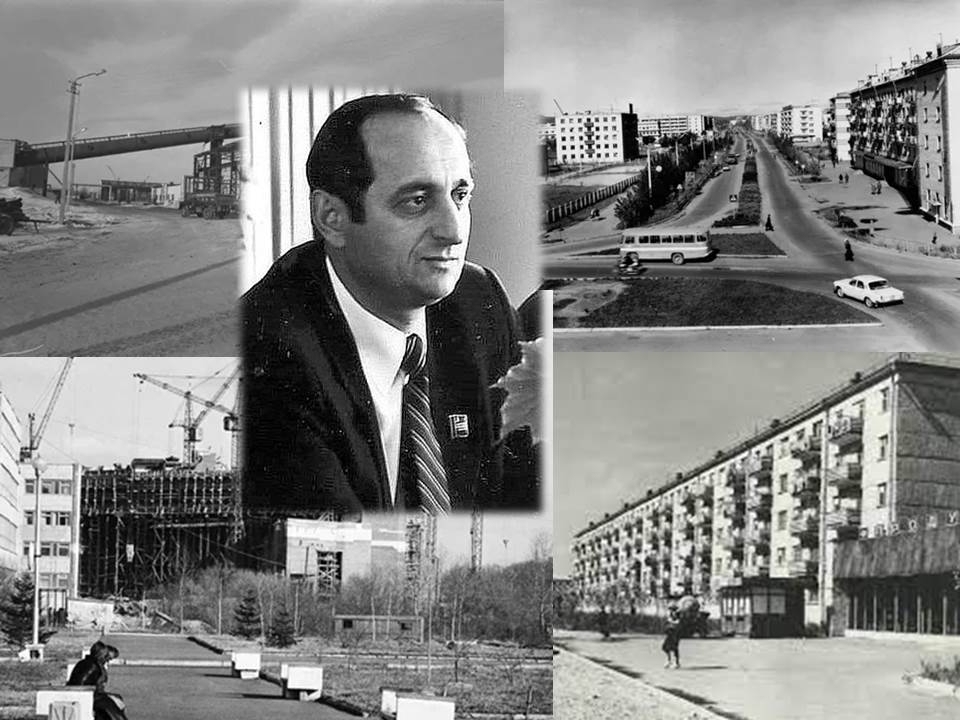
Boris Leonidovich Korsunsky
Photo: Regional Library
March 13, 1922
On this day, Bella Petrovna Mazo, Honored Cultural Worker, was born.


Bella Petrovna Mazo. Photo: Photo: Newspaper “Birobidzhan Star”
In 1935, her family came to the Jewish Autonomous Region. Bella Petrovna graduated from the Birobidzhan Pedagogical School. During her studies, she not only masters the basics of the profession, but is also actively involved in amateur artistic activities.
From 1941 to 1959 she worked as a teacher in rural schools in the region. In the village of Kukelevo, Leninsky district, Jewish Autonomous Region, Bella Maso organized a women's vocal group, which became one of the best, first in the area, and then in the region.
In 1960, the Mazo family moved to the city of Birobidzhan, where she was appointed director of the Palace of Culture.
Thanks to her activities, new amateur creative groups were created: a violin ensemble, a Jewish folk theater, and various hobby groups. The Palace of Culture became the center of the city's cultural life. On her initiative, amateur art shows began to be held among the workforce of enterprises and schools in the city.
Bella Petrovna was also at the origins of the birth of Russian folk theater in the city. Bella Petrovna took an active part in the public life of the city and was elected as a deputy of the city Council of People's Deputies.
Having retired, Bella Petrovna moved for permanent residence to the state of Israel, where she died and was buried.
By Resolution of the Head of Administration dated May 13, 1992 No. 319, she was awarded the title “Honorary Citizen of the City of Birobidzhan.”
March 13, 1946

Boris Leonidovich Korsunsky. Photo: Photo: Legislative Assembly of the Jewish Autonomous Region
On this day, Boris Leonidovich Korsunsky was born – the first secretary of the regional committee of the CPSU, professor of the department of economics and finance of the Far Eastern State Social and Humanitarian Academy (now PSU named after Sholom Aleichem), Honorary Citizen of the Jewish Autonomous Region.
Boris Korsunsky came to Birobidzhan in the 1970s for party work as appointed by the Khabarovsk regional party committee.
Boris Leonidovich served as second and first secretaries of the regional committee of the CPSU of the EAO (1985-1990), and was chairman of the regional executive committee of the EAO (1990-1992).
In March 1991, not without his active participation, the region left the Khabarovsk Territory and became an independent region of the Russian Federation.
From 1992 to 2004 he was engaged in commercial activities. At the same time, from 2001 until the end of his life, he taught at the university of the Jewish Autonomy.
He is the author of 10 monographs and several dozen scientific articles. His works were widely used and are still in demand by Russian scientists and practitioners, students and graduate students.


Boris Leonidovich Korsunsky was awarded various medals and the badge “70 years of the KGB Border Troops.”
On October 27, 2008, Boris Korsunsky passed away.
By a resolution of the Legislative Assembly of the Jewish Autonomous Region dated April 26, 2016, Boris Leonidovich Korsunsky was posthumously awarded the title “Honorary Citizen of the Jewish Autonomous Region,” and on September 7, 2017, a memorial plaque was unveiled on the house where B. L. Korsunsky lived.
March 13, 1986
In the reference and information publication “Administrative-territorial structure of the Jewish Autonomous Region 1858-2003.” (0+) information is posted that, in accordance with the decision of the Khabarovsk Regional Executive Committee of March 13, 1986 No. 170 “On the exclusion from the registration data of the administrative-territorial division of some settlements of the Jewish Autonomous Region”: Settlements at the Kandalik station of the Londokovsky Village Council and at the Vorobyovo station of the Kimkansky Village Council are excluded from the registration data; the virtually non-existent settlement of Stepanovka of the Voskresenovsky Village Council is excluded from the registration data of the administrative-territorial division; the settlement at the Nikolaevka station of the Nikolaev Village Council is excluded from the accounting data of the administrative-territorial division.
March 13, 1951
A regional meeting of leading agricultural workers was held. It outlines activities to prepare for spring sowing. The meeting discussed and accepted the socialist obligations of agricultural workers in the region for 1951.
March 13, 1961
The Bureau of the Regional Committee of the CPSU approved the patriotic initiative of young workers of the textile, clothing, knitting factories of the city of Birobidzhan and the Tunguska house-building plant, who decided to go to work in agriculture. It was recommended that party and Komsomol organizations support the initiative of a group of Komsomol members and youth of Birobidzhan and the Smidovichi region.
March 13, 1980
The plenum of the Birobidzhan district committee of the CPSU determined the tasks of the district party organization to implement the Resolution of the Central Committee of the CPSU, the Council of Ministers of the USSR and the All-Union Central Council of Trade Unions “On further strengthening labor discipline and reducing staff turnover in the national economy.” The adopted resolution outlines measures aimed at further strengthening labor and production discipline, rational and efficient use of available labor resources.
March 13, 1994

Legislative Assembly of the Jewish Autonomous Region. Photo: Photo: Legislative Assembly of the Jewish Autonomous Region
A new type of parliament was formed in the Jewish Autonomous Region – the Legislative Assembly of the Jewish Autonomous Region.
The Legislative Assembly of the Jewish Autonomous Region is the highest legislative body of state power in the region. The competence of the Legislative Assembly of the region is determined by the Charter – the basic law of the region.
The activities of the Jewish Legislative Assembly in the Autonomous Region are aimed at legislatively ensuring the implementation of the main provisions set out in the Address of the President of the Russian Federation to the Federal Assembly of the Russian Federation.
Deputies actively work with voters: organize meetings, hold receptions, consider citizens' appeals.


