Electricity demand in Europe will increase by 60% by 2030. Romania will improve its regulatory framework, says a Romanian official

In a critical juncture for the energy future of South-East Europe, but also in the context of an obvious concern about global energy developments, the new OECD project “Electricity, digital and regional interconnectivity in South-East Europe” aims to strengthen the interconnections on the electricity markets throughout South-East Europe, writes the Greek press.
The event was opened by Symeon Tsomokos, founder and president of the Delphi Economic Forum, who emphasized the strategic importance of Thessaloniki as a historical gateway and bridge for economic relations between the rest of Europe and the Balkans.
Georgios Pagoulatos, the ambassador of Greece to the OECD and the president of the Friends of South-Eastern Europe organization within the OECD, recalled that 23 years ago, at the European Council in Thessaloniki, the prospect of the Western Balkans joining the EU was officially opened. He also welcomed the imminent accession of Bulgaria, Croatia and Romania to the OECD, assuring that these countries can count on Greece's full support.
In the context of increasing geopolitical instability, Pagoulatos emphasized that the integration of the Western Balkans into the EU is now an urgent need and will be a key priority of the Greek presidency of the EU Council in 2027. Referring to the OECD regional program for South-East Europe, he presented the project “Electricity, digital and regional interconnectivity in South-East Europe”, designed and financed by Greece with co-financing from Romania, and characterized economic cooperation as an antidote to historical nationalisms in the Balkans and as a catalyst for regional stability. According to OECD analyses, strengthening cross-border electricity interconnections can improve energy security, reduce energy costs and accelerate the development of renewable sources.
Busoi: Romania will improve its regulatory framework
The Secretary General of the OECD, Mathias Cormann, briefly presented the energy reality in the Western Balkans, talking about four pillars of the reform. First, the harmonization of regulations with the EU, since only 48% of the standards in the field have been implemented in the six countries of the region. Second, the competition and governance of state-owned energy companies, which spend 16% of revenue on wages – double that of OECD countries – while subsidies distort competition.
Thirdly, the modernization of the infrastructure, considering that 14% of electricity is lost in networks, almost three times more than in the EU, where the level is 5%. Fourth, digitization and renewable energy sources, as the region uses only 4% of its solar potential and 2% of its wind potential. In this sense he gave Greece as an example of success.
At the same time, half of the energy produced in the Western Balkans comes from lignite, which is highly polluting. The OECD Secretary-General has called for reforms in energy distribution and production, implementing the EU's regulatory framework.
Cristian Silviu Bușoi, Secretary of State in the Romanian Ministry of Energy, has committed that, by the end of the OECD project “Electricity, Digital and Regional Interconnectivity in South-Eastern Europe”, in 2027, Romania will improve its regulatory framework. Bușoi emphasized his country's firm support for strengthening interconnectivity and market integration, underlining the crucial role of cross-border connectivity for improving energy security, accelerating the green transition and reducing energy prices, which is essential for the competitiveness of the whole of Europe.
“Electricity demand is expected to increase by 60% in Europe by 2030”
The framework and objectives of the project were presented by Karim Dahou, Deputy Director of the OECD's Directorate for Global Relations and Cooperation, and Gabriela Miranda, Senior Advisor of the OECD South-Eastern Europe Programme. Karim Dahou pointed out that electricity demand is expected to increase by 60% in Europe by 2030 and that the Western Balkans are aiming to integrate into the European energy system through increased interconnectivity.
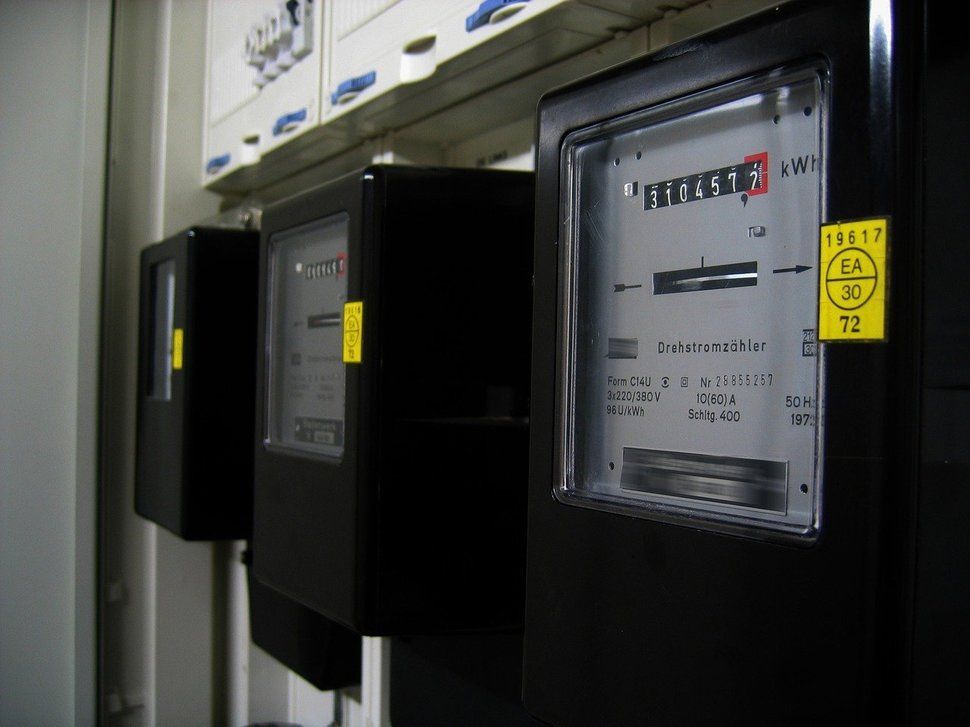
Among the main challenges for the Western Balkans, he highlighted that coal-fired power plants in the region are very old on average, with coal accounting for 54% of production, while in several countries sulfur dioxide emissions far exceed national limits. Developments in the Middle East also raise the possibility of a new oil and gas crisis. Dahou also pointed out that the region can make the transition to more modern, clean and sustainable production systems, but noted that the installation of smart meters remains below 30%.
Referring to the OECD project “Electricity, Digital and Regional Interconnectivity in South-Eastern Europe”, Gabriela Miranda emphasized that the initiative is based on the OECD's 20-year experience in the Western Balkans, where energy productivity is below half of the EU average, creating huge opportunities for development.
The project establishes four regional objectives: the integration of the market and attracting investments, the integration of renewable energy sources and the development of trade in green electricity, the digitization of energy systems based on the examples of Greece and Romania, and the strengthening of energy security in the context of global turbulence on the energy markets.
Implementation is structured around four pillars: securing political commitment to hold a final event in autumn 2027, strategic workshops in 2026 in Tirana, Skopje, Pristina and Belgrade, publication of a comprehensive analytical report in the second half of 2027 with specific policy proposals and input from the International Energy Agency (IEA), as well as communication actions to highlight investment opportunities in the region.
The project, which started in October 2025 and will end in September 2027, focuses in particular on Albania, Kosovo, North Macedonia and Serbia. A comprehensive analytical report on the region's electrical infrastructure will be developed, with a roadmap for improving interconnectivity.Material produced with the support of Rador Radio Romania)