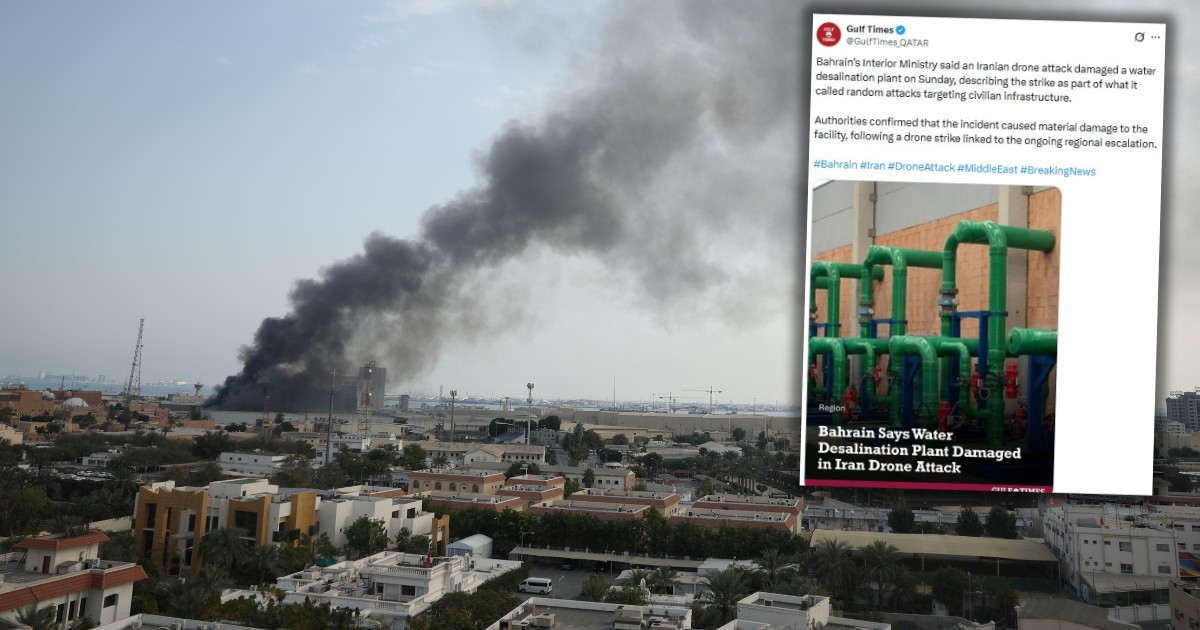
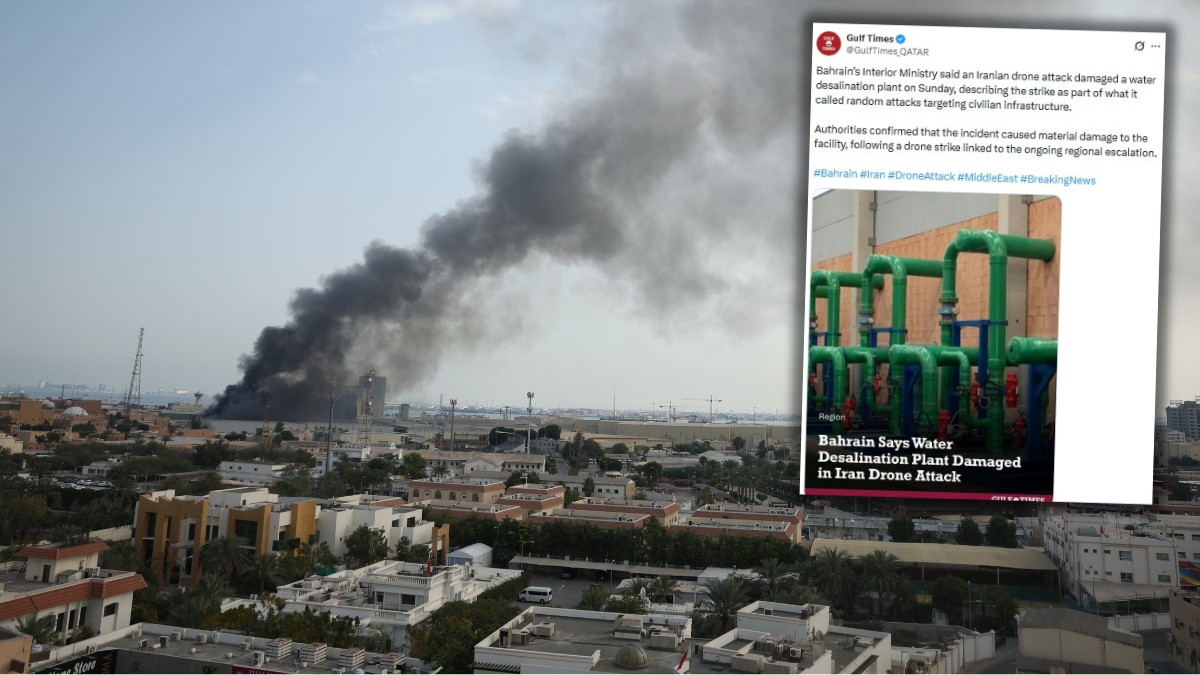
Okay. 400 water desalination plants operate on the coast of the Persian Gulf, constituting the basis of the inhabitants' existence. According to estimates, they produce approximately 40 percent. world amount of desalinated water. In Kuwait, about 90 percent drinking water comes from desalination, in Oman about 86% and in Saudi Arabia about 70%. Michael Christopher Low, director of the Middle East Center at the University of Utah, told the AP that the Gulf states are “salt water kingdoms” and “man-made water superpowers.” – This is both a monumental achievement of the 20th century and also a kind of weakness – added the expert, referring to the attack on the desalination plant reported by the Bahraini authorities.
See also: Iran wanted to scare its neighbors. Instead, he made them furious. And he may regret it bitterly [ANALIZA]
Key facilities of the Persian Gulf countries are at risk
“The authorities confirmed that the incident caused serious damage to the facility, following a drone attack linked to the ongoing escalation in the region,” wrote the Gulf Times website, published in Qatar, on X.
Iran, in turn, said that the United States had set a precedent for such attacks when it previously attacked a water desalination plant located on Iranian territory. “The United States committed a flagrant and desperate crime by attacking a freshwater desalination plant,” Iranian Foreign Minister Abbas Araghchi wrote in a post on X on Saturday, adding that “this is a dangerous step with serious consequences.”
See also: Iran's “hostages” have two options, both bad. “A New Era of Interstate War”
In one of the world's driest regions, drinking water is mainly obtained using desalination technology, which removes salt from seawater – most often by passing it through ultra-thin membranes in a process known as reverse osmosis. According to experts, the infrastructure necessary in this process may be as vulnerable to threats – or perhaps even more – than the key oil market for this region.
As AP reminds, at the beginning of the conflict the fighting came dangerously close to the water desalination plant – on March 2, Iranian attacks on the Jabal Ali port in Dubai took place about 19 km from one of the largest plants of this type. Damage was also reported at a power and hydropower complex in the United Arab Emirates and at a water desalination plant in Kuwait.
As David Michel, a senior research fellow for water security at the Center for Strategic and International Studies, told the AP, “disruptions could be cascading across interconnected systems.” In turn, Ed Cullinane, editor for the Middle East at Global Water Intelligence, a publishing house operating in the water industry, emphasized that in a multi-stage process such as water desalination, damage to any element of this “chain” may be a problem. If major desalination plants were shut down, some cities could lose most of their drinking water within days. This creates scope for both military operations and saboteurs.
According to AP, a 2008 US diplomatic cable warned that the Saudi capital, Riyadh, “would have to be evacuated within a week” if the Jubail desalination plant was damaged. Smaller countries such as Bahrain, Qatar and Kuwait may have even less time.