“Automotive miracle” by Viktor Orban under fire. Companies from Asia benefit from the lack of barriers


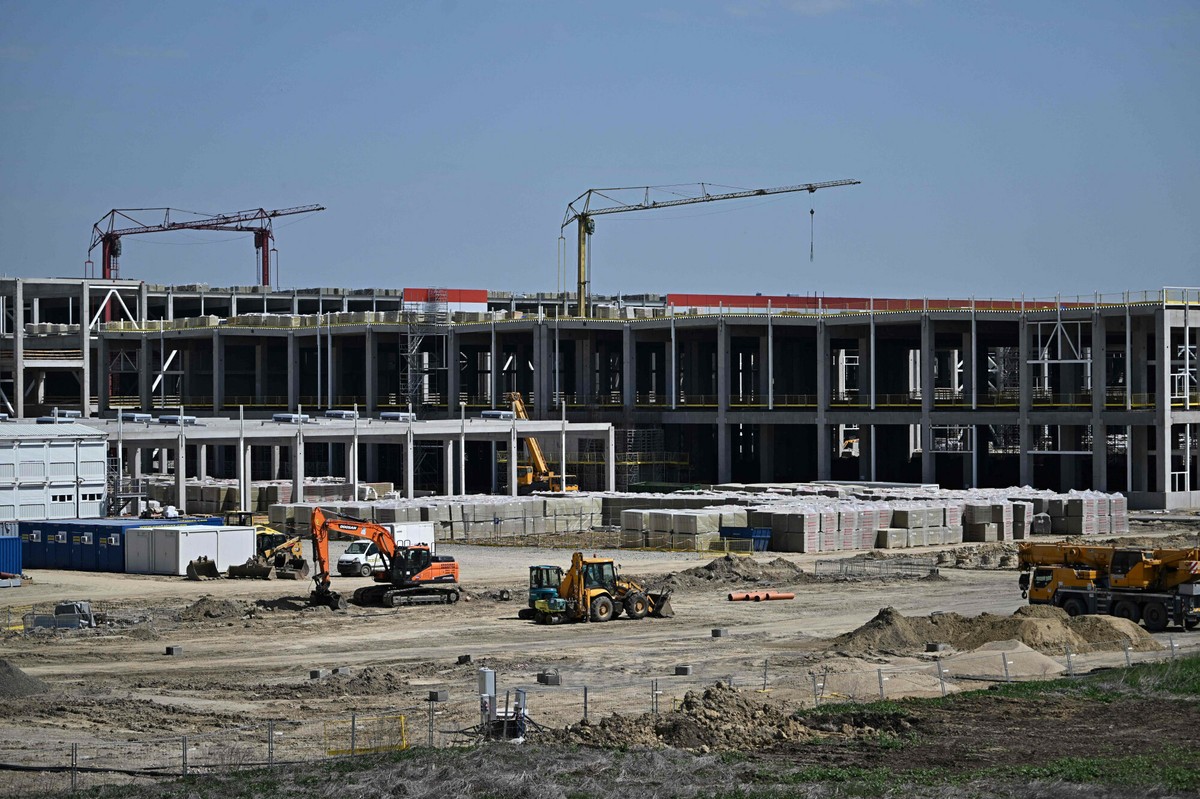
BMW is building its car's car, model IX3, at a new factory in the Hungarian debreat. The Chinese CATL group is erected in this city in the east of the country, a battery production plant that is to provide links for the Bavarian brand. However, this project raises opposition in Hungary. Residents regularly organize protests in fear of the effects of the environment, and the National Party of the Green also participates in them.
The 47-year-old Rebecca Szabó is the chairwoman of the party and a deputy. Her grouping belongs to the Coalition of opposition parties towards the government of Viktor Orbán, which in the last election in 2022 obtained 34.4 percent. votes.
Welt: As a co -chairman of the “Dialogue for Hungary”, you criticize the development of battery production in the country. Why?
Rebecca Saby: We criticize the policy of the Hungarian government in this field from the very beginning. There are two problems here: economic and ecological. From an economic point of view, experts warn that it is risky to invest too much money and resources in one industry. If the demand for batteries falls, which we are just observing, then in such a small country like Hungary we will stay with many factories that cannot sell their products. This harms the economy and employees. Example: Chinese CATL manufacturer this summer has already released Hungarian employees – despite the fact that the government has paid high subsidies.
And ecologically?
Battery factories consume huge amounts of water and electricity. Yes, Hungary has enough energy, but it comes mainly from gas and one atomic power plants, and not from renewable sources. This is not a balanced model. In addition, factories are often created on agricultural land and occupy huge areas – the size of entire villages. This is a serious interference in nature and agriculture.
But is this not a “green project”, since in the future cars will travel on electricity, not gas?
It is an illusion that we can simply replace all electric combustion cars and the problem will be solved. The real question is: how many cars do we need at all, why and how much traffic we want to have? Electric cars require huge amounts of raw materials and batteries – this is not balanced, especially in the face of the global climate crisis. It does not work on this scale – although of course we need batteries. Besides, I see one more problem.
What?
Hungary is not a rich country. Few people can afford to buy an electric car. Most of them go to Western Europe, where more people can buy them. And Hungary is borne by the environmental production. These costs are unfairly distributed.
Hungary has become a strong automotive country in recent decades, despite the fact that before 1990 they did not have their own brand. Is this not a huge success that brands such as Mercedes and Suzuki produce here and BMW is opening another factory? Countries like Germans complain about the loss of jobs in the automotive industry, while new ones are being created in Hungary.
Yes, car factories benefit. But new battery factories create fewer jobs for Hungarians than promised. And they do not make such a large contribution to GDP as expected. CATL has already stopped the planned second phase of construction – because of the market situation. I would like Hungary to play a leading role in such areas as organic farming, and not in mass production of cars and batteries.
Some say that Europe needs its own battery factories to maintain the automotive industry. Should Hungarian car plants still bring batteries from Asia?
Strategically can make sense to produce batteries in Europe. But Europe is more than Hungary. We should not build all factories here. The more that in Hungary environmental regulations are very weak – the government practically deprived the authorities of the environmental protection authorities. That is why Korean and Chinese concerns come here because they can bypass the usual ecological requirements. In Germany, they would certainly have to face more stringent regulations. If Europe needs its own faucet factories, in the future in countries other than Hungary.
Are battery factories more ecologically problematic than classic car factories?
Both types are not environmentally friendly. But the battery factories differ, for example, in a huge water consumption – and in a country like Hungary, which struggle with increasing drought and stepped in, are particularly critical.
Water is also a big problem at the Tesla factory in Brandenburg. Do you keep in touch with critics of other automotive locations in Europe?
There is no direct coordination, but we are part of the European Green Party and of course we talk about this situation. However, there is no common strategy with German green about this particular topic.
What would your perfect vision look like for Hungary?
I would immediately stop the construction of new battery factories. One or two are enough. Existing ones could continue, but provided that more stringent environmental norms are met. But five, six or seven factories are definitely too much for a country like Hungary.
Does it make a difference, do investors come from China or Europe?
Yes. We see that companies from China and South Korea often bring many employees from abroad. As a rule, every person is welcome here, but if the Hungarian state pays billions in subsidies, then more Hungarians should benefit. In addition, it would probably be easier to oblige European companies to comply with more severe environmental standards.
There are protests and trials against the new CATL factory. Can they change something else?
I'm afraid not. We already had similar cases – for example at Samsung's plant. There, many basic regulations were broken, there was a lack of permits, and yet the production lasted. I don't believe the courts will stop these projects. Although this cannot be completely ruled out.
Elections will take place next year. Could a change of government change industrial policy?
Changing the government is possible, but if it influenced the automotive industry, I can't say. Other opposition parties have not yet taken a clear position on this matter.
The above text is a translation with German portal Welt
See also: Volkswagen's lonely fight with the Chinese. Here is the group's plan for batteries for cheap and expensive cars