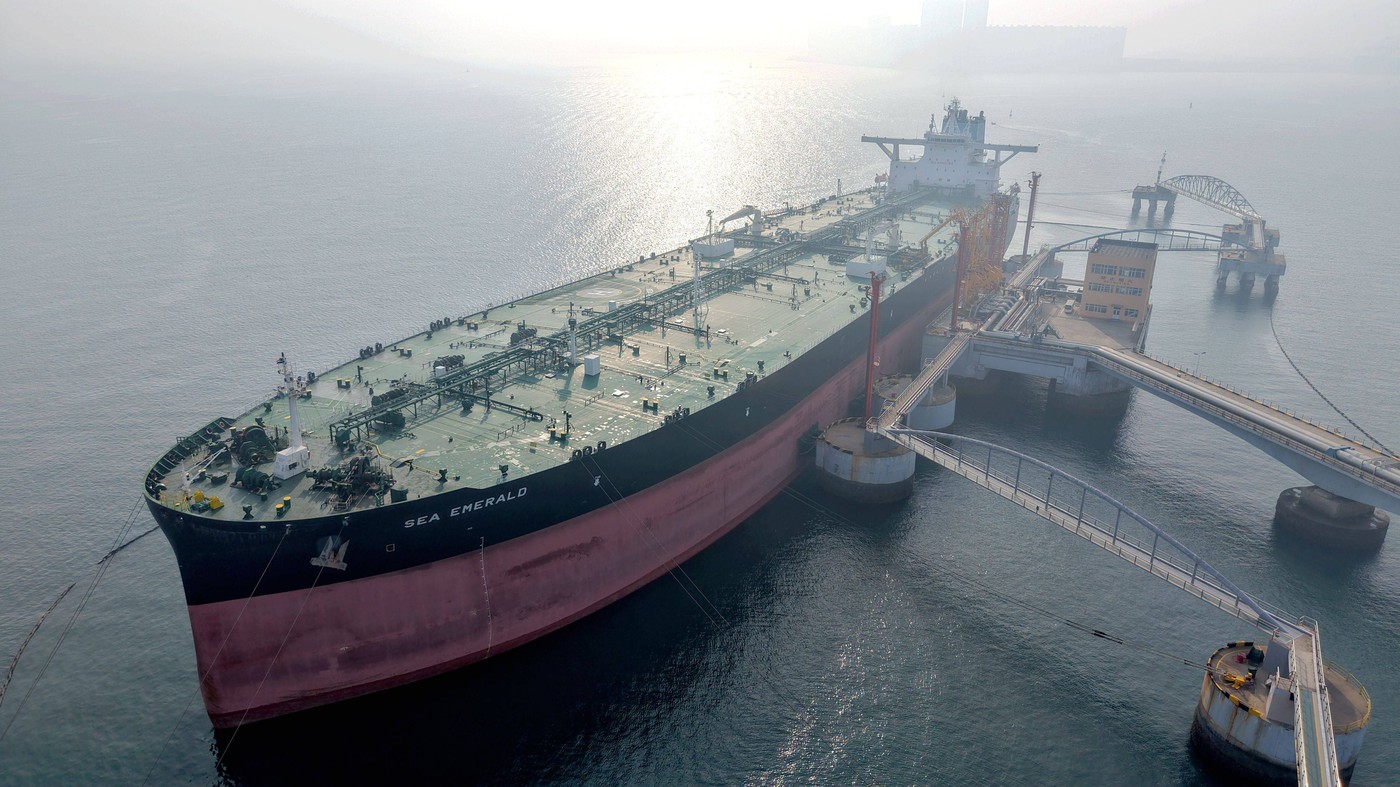
China is currently in talks with Iran to allow the safe transit of crude oil as well as liquefied natural gas (LNG) from Qatar through the Strait of Hormuz amid an escalating war between the US and Israel against Tehran, three diplomatic sources told Reuters news agency on Thursday.
The war in the Middle East, which entered its sixth day on Thursday, has virtually blocked this crucial sea route, with countries around the world deprived of a fifth of global supplies of oil and liquefied natural gas.
China, which has cordial relations with Iran and depends heavily on supplies from the Middle East, is unhappy with the Islamic Republic's decision to freeze shipping through the Strait of Hormuz and is pressuring Tehran to allow safe passage for ships, the three sources said.
China, the world's second largest economy, gets about 45% of its oil from deliveries through the Strait of Hormuz.
Ship tracking data showed that a ship called the Iron Maiden passed through the strait overnight after changing its identification to “Chinese owner”, but many more crossings will be needed to calm global markets.
Crude oil prices have risen more than 15 percent since the start of the conflict amid production disruptions as Tehran attacks energy facilities in the Gulf as well as ships crossing the Strait of Hormuz.
Iran's missiles have reached as far as Cyprus, Azerbaijan and Turkey, destabilizing global markets and prompting major economies to warn of inflationary risks.
Oil tanker transit through the strait dropped to four vessels on March 1, the day after hostilities broke out, from an average of 24 a day in January, according to vessel tracking data provided by Vortexa.
About 300 oil tankers remain inside the strait, according to Vortexa and Kpler, a ship-tracking company.
Mike McDougall, a sugar industry veteran, told Reuters that Middle East sugar industry executives say there are now a handful of ships transiting the strait, all of which are owned by China or Iran.
Jamal Al-Ghurair, managing director of Dubai-based Al Khaleej Sugar, said some ships carrying sugar are currently allowed to cross the strait while others are not, but he did not provide further details.
The government in Tehran said earlier this week that no vessels belonging to the United States, Israel, European countries or their allies would be allowed to pass through the Strait of Hormuz, but the statement did not mention China.