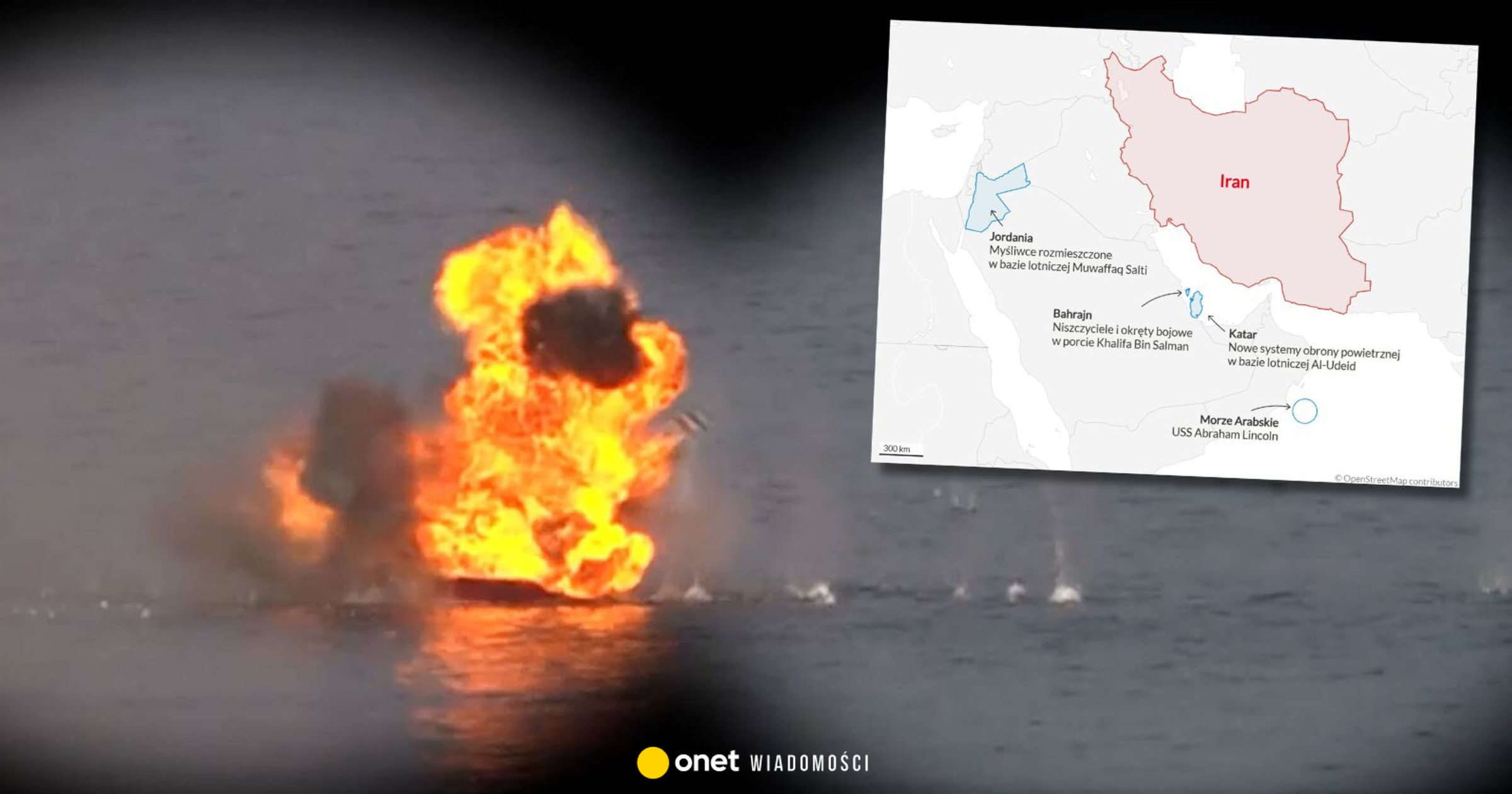
Why is the US massing forces in the Middle East?
What US warships are in the region?
What does Iran plan to do in the event of an attack?
What planes were transferred to the Azores?
However, the prospect of a breakthrough seems distant because the parties remain far from reaching an agreement on key issues. The Trump administration is pressing Iran to agree to limits on its missile program as well as its nuclear programwhich Tehran has so far strongly opposed.
US warships
Meanwhile, the American war machine is gaining momentum. The US currently has more than a dozen warships in the Middle East. This includes the aircraft carrier USS Abraham Lincoln, nine destroyers and three combat ships. Currently, the second aircraft carrier USS Gerald R. Ford is sailing across the Atlantic towards the Mediterranean Sea. It is expected to reach its destination in the coming days.
USS Gerald R. Ford is the most technologically advanced aircraft carrier in the United States and the largest ever built. It is designed to transport over 75 aircraft, including F-35C Lightning II and F/A-18F Super Hornets, as well as EA-18G Growler radar jets.
Situations in which two American aircraft carriers with dozens of combat machines on board and thousands of crew members operate in one place are rare.
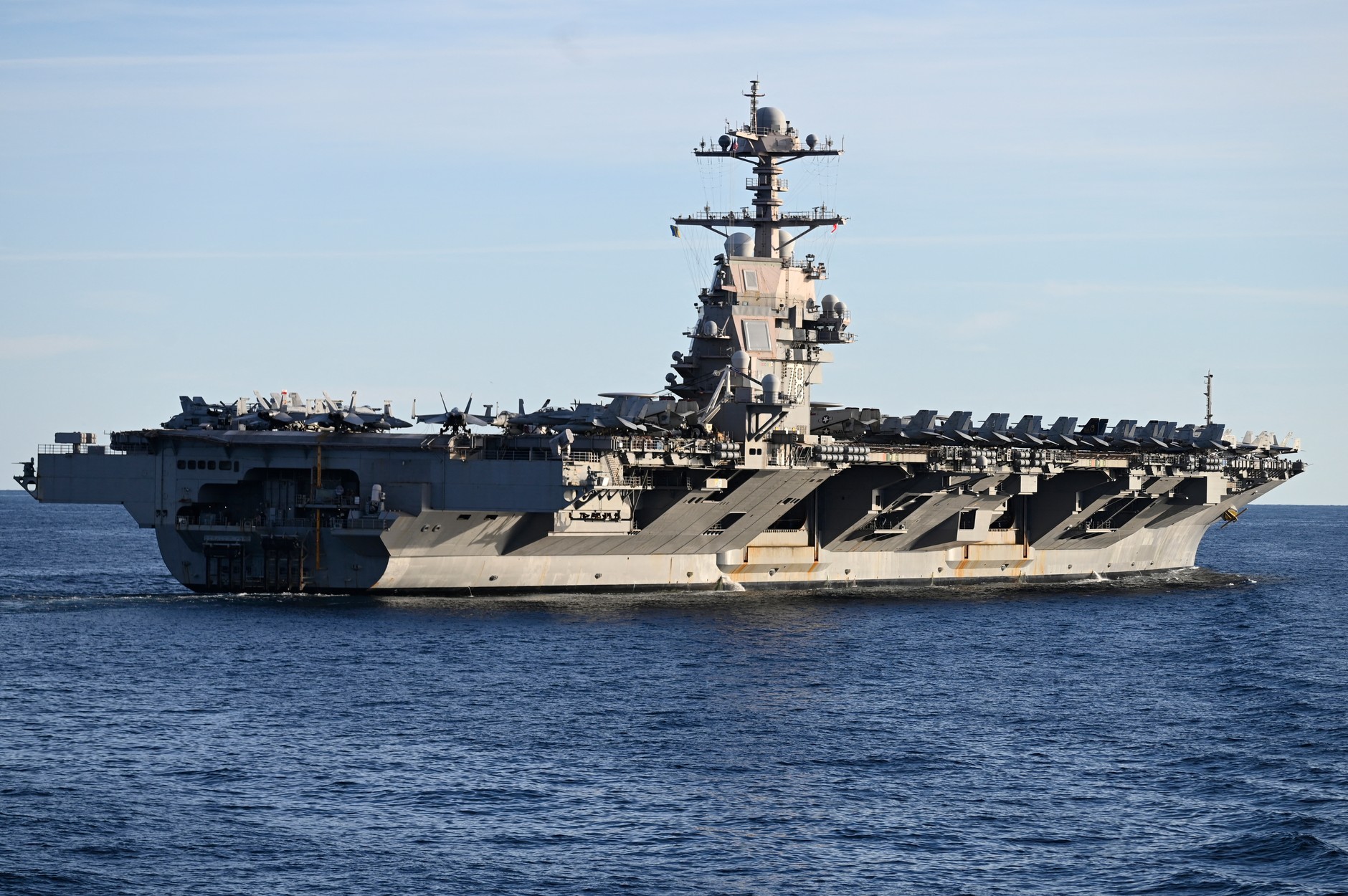
The aircraft carrier USS Gerald R. Ford in the North Sea during a NATO exercise (September 24, 2025)JONATHAN KLEIN / AFP
The presence of aircraft carriers and their escort teams gives the United States the opportunity to launch a possible strike against Iran without involving air bases in Arab countries on the Persian Gulf. The authorities of these countries – fearing a response from Iranian missile forces – clearly signaled that that they will not agree to the use of their territory for offensive activities.
US bases near Iran:
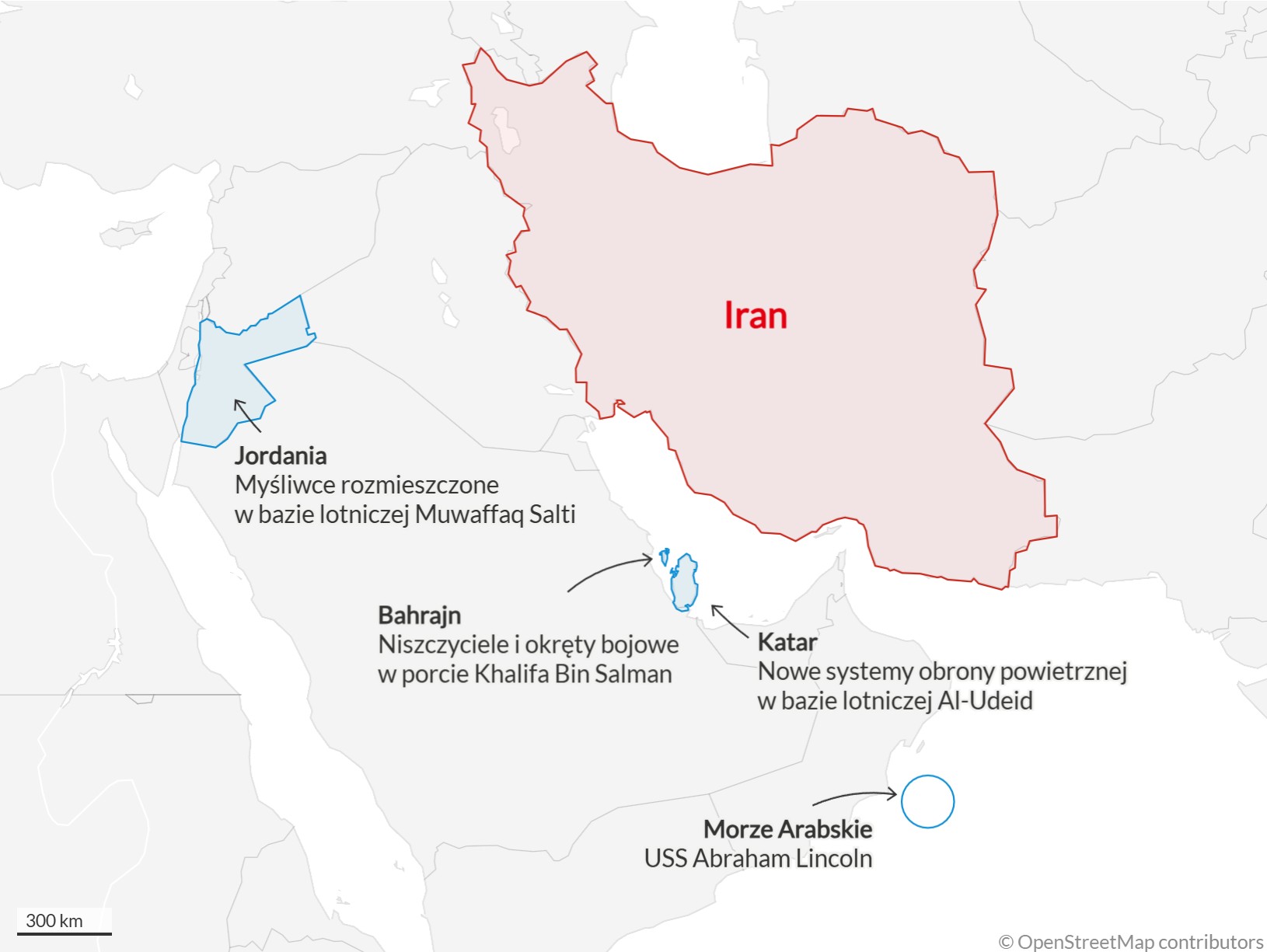
Onet
Dozens of planes in the Middle East
The United States has also significantly strengthened its aviation component in the Middle East. The region was sent, among others, F-22 Raptor stealth fighters, F-15 and F-16 combat machines, as well as KC-135 air refueling aircraft and E-3 Sentry early warning and command aircraft.
According to SIC, the Lajes base is home to ten Boeing KPC-46s — military aerial refueling and transport aircraft — as well as one Boeing C-17, capable of carrying large military payloads, and four F-16 fighters from the South Carolina Air National Guard.
Will Iran block the Strait of Hormuz?
The Iranians have repeatedly warned that if their country is attacked, they will block the Strait of Hormuz militarily. This is a key shipping route through which approximately 20 percent of the world's cargo is transported. world oil supplies and 20 percent liquefied natural gas.
Iran, to demonstrate its agency, fired missiles into the Strait of Hormuz this week as part of exercises. He also announced several hours of restrictions on traffic in the strait for the safety of ships.
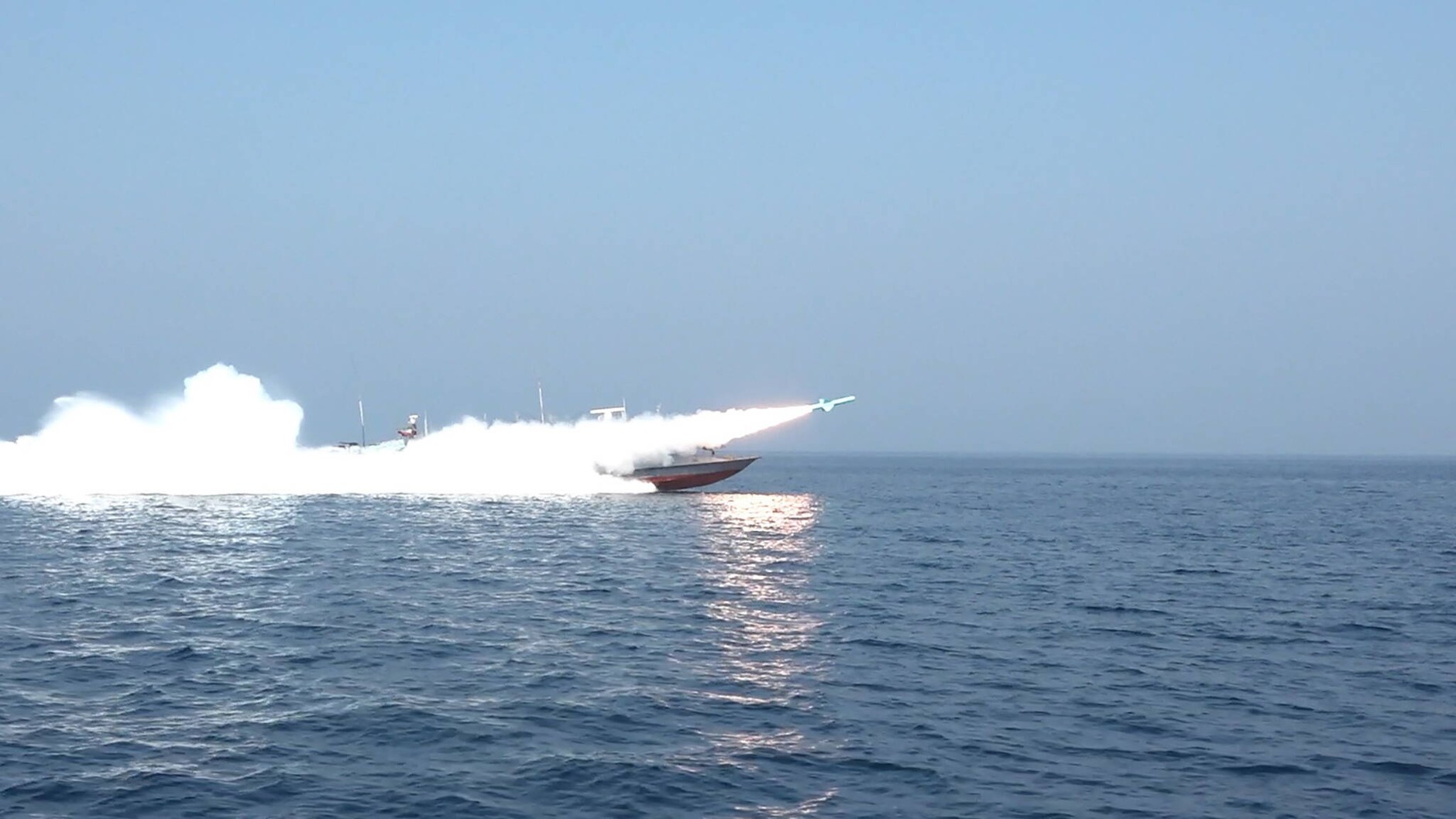
Military exercises in the Strait of HormuzSEPAHNEWS / AFP