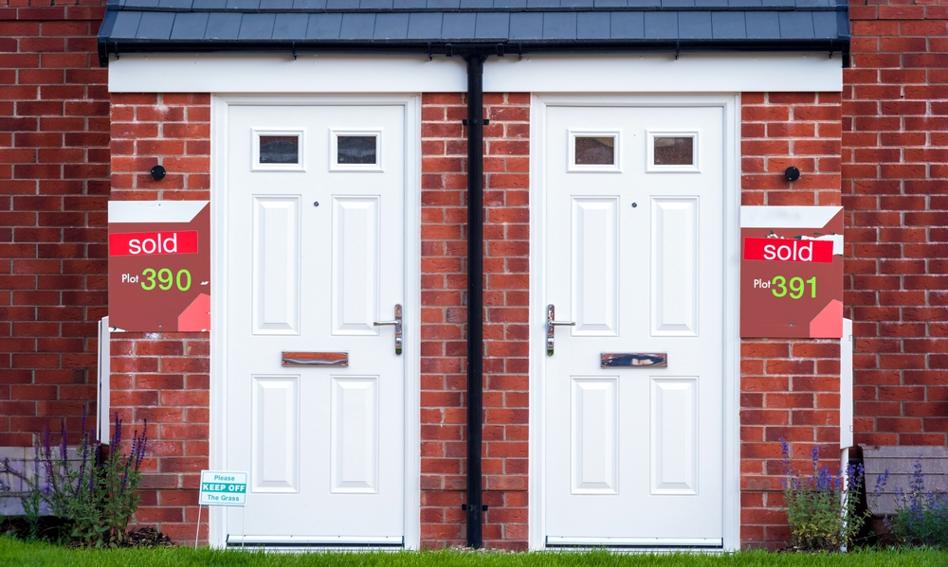
Russian spies have transformed real estate in Western Europe into a network of “Trojan houses” that could facilitate a coordinated sabotage campaign, Western intelligence officials have warned, as reported by the British website Telegraph.
It is suspected that secret Russian groups, taking advantage of weak legal protections, have purchased sensitive properties near military and civilian facilities in at least a dozen European countries.
From cottages to private islands
Wanting to expand hybrid warfare to the West, Russian spy agencies are reportedly purchasing summer houses, warehouses, abandoned schools, apartments in cities, and even entire islands with the intention of using them as a base for coordinated attacks, sabotage and surveillance, the Telegraph reported.
Current and former employees of three European intelligence agencies told the website they fear Russia may already have explosives, drones, weapons and secret agents hidden in some of these locations.
Since the beginning of Russia's full-scale war against Ukraine, there have been acts of sabotage in Europe – arson, sending bombs in parcels and attempts to derail trains. Some representatives of Western intelligence they fear that these incidents may be more than just a test – writes the portal.
Instead of a conventional war, the Kremlin may want to test NATO's readiness to operate in “gray zones” by staging large-scale, disavowable attacks to paralyze transport, communications and energy networks, according to these sources. Referring to Article 5 of the North Atlantic Treaty would then be difficult.
“A sabotage campaign is less likely to generate consensus around Article 5 than a conventional military operation by Russia,” one intelligence official said.
The new head of British intelligence, MI6, Blaise Metreweli, warned in her first speech that her country was “in a situation between war and peace.” “Russia is testing us in the gray zone with tactics that are just below the threshold of war.” – she assessed.
Allowing Russians to invest in strategic real estate without major restrictions is a significant source of threat that must be urgently addressed, said one intelligence official.
Finnish Lesson: The Case of Sakkiluoto Island
In the UK, suspicious property purchases near MI6 headquarters and the US Embassy in London have already been investigated, but experts and some politicians fear that Russia also bought remote properties near the Trident submarine base in western Scotland and near places where submarine cables are run in the Shetland Islands. There are also concerns that Russians may have bought houses around the RAF base in Cyprus.
More and more often, we hear that European countries should follow the example of Finland, which in July introduced an almost complete ban on purchasing real estate by Russians and Belarusians, and then the Baltic states introduced similar regulations.
The Finnish authorities were most concerned about the case of Airiston Helmi, which quietly purchased 17 properties in the Archipelago Sea between Finland and the Åland Islands, many of which are located close to major sea routes and telecommunications infrastructure near Turku, where the Finnish Navy Command is located.
The most drastic case was the island of Sakkiluoto. Investigators said the island had nine piers, a helicopter landing pad, cameras and motion detectors, camouflage nets and barrack-like buildings with satellite dishes and advanced telecommunications equipment.
Finland has not decided to engage in direct confrontation with Russia. The company's Russian owner, Pavel Melnikov, was charged with fraud and given a suspended sentence last year.
Under the microscope of MI6. Properties near Trident bases and submarine cables
According to intelligence representatives, since the beginning of the war against Ukraine, Russia has abandoned such large-scale projects, focusing on smaller but more numerous properties, and now hundreds, perhaps even thousands, of inconspicuous buildings in Europe have been transformed into listening stations, hideouts and weapons warehouses. Some officially belong to the Russian state and serve innocent purposes.
Western governments have begun to close some of them. Poland closed the Russian consulate in Gdańsk in November, and a year earlier, Britain deprived a Russian property in East Sussex of its diplomatic status when neighbors reported that surveillance drones were being sent from there, we read.
The Telegraph emphasizes that it is much more difficult to locate the much larger number of properties belonging to Russian citizens and Russian companies. For example, in Norway, houses belonging to people associated with the Kremlin are located near Arctic military bases. The Russian Orthodox Church, which is closely linked to the Kremlin, has purchased properties near naval bases and radar installations in Norway and Sweden.
“For over 10 years, Russian entities have been systematically purchasing real estate in Finland, Sweden and Norway in close proximity to military bases, ports and strategic supply lines,” Charlie Edwards from the International Institute of Strategic Studies (IISS) in London told the portal.
Europe divided. Lack of coherent response to the threat
In addition, European intelligence agencies found that entities linked to Russia had purchased properties near naval bases and strategic waterways in Sicily, Crete and mainland Greece, as well as near important facilities in London, Paris and Geneva.
Acquisitions in Switzerland are of particular concernwhere – according to Western intelligence – Russian spies used properties near the chemical institute that investigated the Skripal poisoning to intercept WiFi signals and track the movements of chemical weapons experts.
“Now we are more aware that this is a pattern, but I think Europe is at a very early stage of realizing and responding to this strategy,” said Minna Alander from the Stockholm Center for Eastern European Studies (SCEEUS).
Despite the huge scale of the threat, analysts fear that European countries are not reacting quickly enough – last year, the EU ban on selling real estate to Russians was rejected because some countries, especially Cyprus, were afraid of its economic consequences.
“As a result, we have a jumble of laws full of loopholes, and on top of that there is the reluctance of intelligence agencies to share confidential information across the border,” the portal writes.
In conclusion, the Telegraph quotes the opinion of one of the officials responsible for security that “as long as counterintelligence remains the responsibility of states, it will not be able to cope with a threat that crosses all national borders in Europe.” (PAP)
mw/ mal/