The ocean current that keeps us from the global warming “could disappear during our lives,” warns the head of the EU climatic department

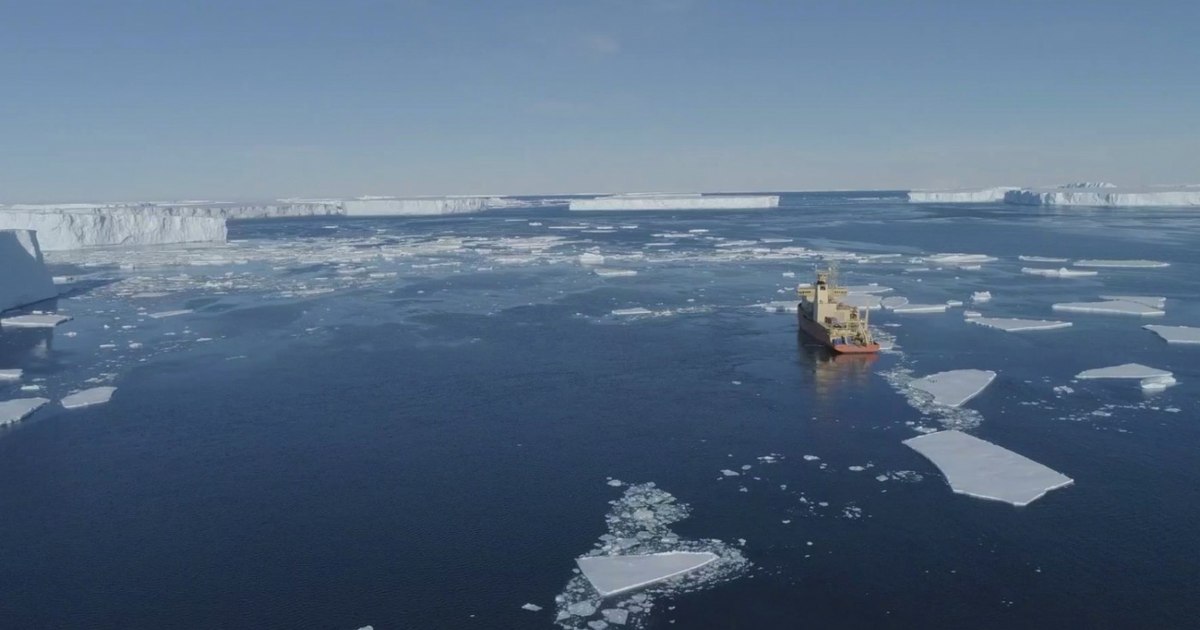
The key ocean current that maintains hot Europe could begin to stop this century, according to Dutch studies.
Global photo heating: Shutterstock
The head of the climate department of the European Union has warned that Gulf Stream could collapse in a few decades, after Dutch scientists have found that they are key ocean currents that weaken in intensity faster than they were believed.
The southern circulation of Atlantic (AMOC) is part of the Gulf Stream – a current of the Atlantic Ocean that prevents Europe from becoming ice cream – could start to stop in the 2060s as a result of climate change, according to a study by researchers at the University of Utrecht, published this week.
The European Commissioner for Climate, Wopke Hoekstra, described the conclusions in a post on social networks as a “alarm signal”.
The commissioner noted that Gulf Stream “It transports hot tropical waters to the north, maintaining winters in North Europe much milder than in regions at the same latitude, such as Canada. This new study shows that Gulf Stream could collapse during our lives ”
Stopping AMOC would lead to drastic drops of temperatures in Europe, even in the context of global warming. This would also reduce rainfall and probably bring even more dry summers, with devastating consequences for agriculture.
Earlier this month, the vice -president of the European Commission, Teresa Ribera, responsible for the EU Global Ecological Policy, suggested that AMOC should “Added to the list of national security acronyms in Europe ”given the severe impact of an interruption.
The Dutch study, which analyzes 25 different climatic models, found that, in a moderate emission scenario-that is, an increase in global temperatures by approximately 2.7 degrees Celsius above the pre-industrial levels in this century-AMOt could begin to collapse from 2063.
The planet has already been heated by 1.3 ° C and, according to the current climatic plans of the governments, is heading for a heating of 2.7 ° C. In the scenario with high emission and heating over 4 ° C, considered unlikely, the stop could take place since 2055, the researchers found.
Previous studies showed that a collapse was unlikely this century.
What are the chances?
Sybren Drijfhout, the president of the Department of Oceanic and Teresa sciences at the University of Southampton and researcher at the Royal Meteorological Institute of the Netherlands, said the UTRECHT study is “solid”.
Drijfhout, who did not participate in the elaboration of the study from Utrecht, published on Thursday a separate study that has reached a similar conclusion that AMOC will reach an inflection point in this century, entering a decline before stopping after 2100.
According to this study, the improbable scenario of high emissions has a 70% probability of leading to such a collapse of AMOC, while the moderate scenario – the 2.7 ° C increase that the planet currently registers – has a probability of 37%.
However, even a reduced emission scenario, in accordance with the objectives of the 2015 Paris climatic agreement, which limits the heating to below 2 ° C, the researchers write, has a 25% stop probability.
“Based on the current models, we conclude that the risk of an amoc interruption in the north is higher than previously believed“, Drijfhout and his colleagues wrote.
In his post, Hoekstra expressed his frustration that, despite the threat represented by global warming, the climate has become less important in the European policy of recent years.
“There is a feeling that climate change has passed on the background, because we are too busy with other urgent problems,” he wrote.
“Progress requires time … it is not linear”, he continued, insisting that “There will be times when the attention will decrease. So we thank you very much to these scientists for giving us another serious alarm signal in terms of climate.”