Work begins on the King's Road in the Zarandului Mountains. The 42 million euro road between Arad and Hunedoara


More than 42 million euros are invested in a new mountain road, built in western Romania. It received the name “King's Road” and connects the counties of Arad and Hunedoara, through the Zarandului Mountains, but its usefulness is questioned due to the depopulation of the villages in the region.
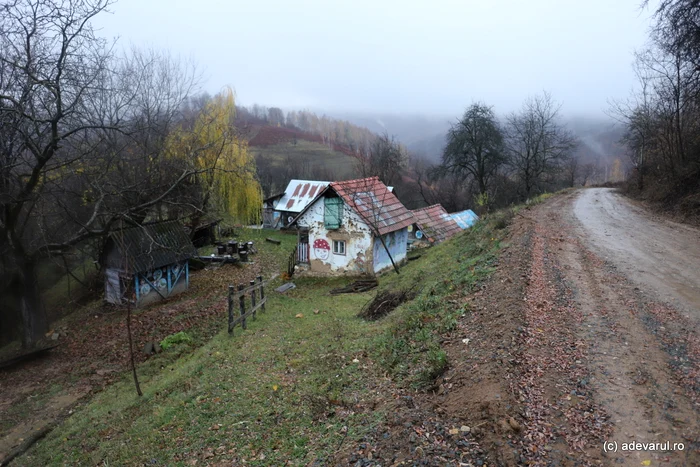
Uninhabited household on King's Road. Photo: Daniel Guță. TRUTH
The Hunedoara County Council announced the signing of the execution contract for 13 kilometers of the “King's Road” (DJ 707), a road section that will connect the towns of the Crișului Alb Valley with those of the Mureșului Valley. The new road will connect the communes of Petriș (Arad county) and Vața de Sus (Hunedoara county) through the Zarandului Mountains, with a maximum altitude of 900 meters.
The King's Road, built with European funds
It received the name “King's Road”, due to the legend that its old forest route would have been used, in the interwar period, by the royal family of Romania to travel from the Castle of Săvârșin to the Vața de Sus thermal resort.
The locals from the Zărăndan villages say, however, that such a road was impossible to use by car, and in the past people could barely climb it with carriages, to reach the forests, pastures and villages located on the “border” of the two counties. Over time, the villages in the Zarandului Mountains became more and more deserted, and the old legendary road was hardly used at all.
“Towards Vața de Sus, the road has become impassable, because the berk (forest and fruit trees) has grown on its edges, and cars can hardly pass there. I haven't gone down for many years”, recounted an old woman who lives in a village in the Zarandului Mountains, right at “zero level”that is, on the line between the two counties.
The authorities from Hunedoara and Arad counties collaborated on this project and managed to obtain European funds for the road. The first four kilometers of the new road entered the construction site in 2025, from the town of Petriș to the border of Hunedoara and Arad counties.
The tender for the second section, from the border of Arad county to Vața de Sus commune in Hunedoara county, was completed more difficult, being delayed by appeals, but the works can start soon. The estimated date for the start of the works is March 1, 2026, and the builder has two years to complete them.
“The investment aims to modernize a 13-kilometer section within Hunedoara County, part of a project with a total length of 17.2 kilometers. The modernization of the King's Road is carried out in partnership with Arad County, Hunedoara County being the leader. The objective is financed through the Western Regional Program 2021-2027, and the total value of the financing amounts to 208,617,551 lei (including VAT), of which 135,168,690 lei (with VAT) are allocated to the section in Hunedoara county, between Căzăneşti, Vața de Jos, and the border with Arad county. The Hunedoara County Council provides co-financing in the amount of 200,557 lei”informed the Hunedoara County Council.
Tourist attractions and depopulated villages
The works on the section located in Hunedoara county aim at restoring the road structure on the 13 kilometers, setting up 16 intersections with side roads, making rainwater drainage systems, repairing the four bridges, building 23 protective walls and setting up 29 accesses to properties. The mountain road will have two traffic lanes and is proposed as a solution for the revitalization of Zarandului Country, an attractive area thanks to the Vața de Sus thermal resort and the Crișului Alb Valley.
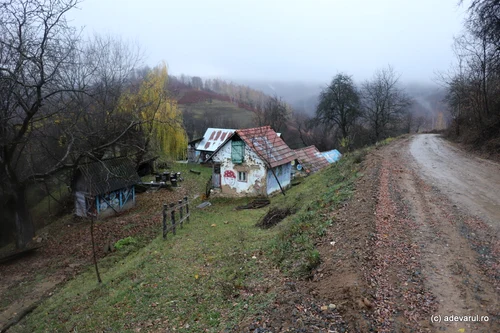
Image 1/18:
The King's Road from Zarandului Mountains Photo Daniel Guță (18) JPG
Nearby is the city of Brad, a former mining center that houses the only gold museum in Europe, and the Apuseni Mountains attract with their numerous natural monuments and the archaic villages of the Moti. In Arad, the “King's Road” will go down the Mureș Valley, near the Castle of the royal family from Săvârșin, and in Hunedoara it will reach Căzănești, the birthplace of the clergyman Arsenie Boca, and near Țebea and Baia de Criș, historical places that preserve the memory of Avram Iancu and Horea, Cloșca and Crișan.
Despite the tourist attractions proposed by this route, the locals generally doubt that the over 42 million euro mountain road will increase the attractiveness of Zarandului Country, an increasingly depopulated region in recent decades, with the decline of the mining industry in the area.
The Marble Road, the second mountain road financed with European funds
In the next three years, another spectacular mountain road, called the Marble Road (video) is promoted as a solution to the isolation of several villages in the Poiana Ruscă Mountains, located in Timiș, Hunedoara and Caraș-Severin. The new mountain road will connect, over the mountains, the valleys of Begăi from Timiș, Cernei from Hunedoara and Bistrei from Caraș-Severin and will be modernized for 56 kilometers.
The project was officially launched in the fall of 2025 and is being implemented by the West Regional Development Agency, in partnership with Timiș County Councils (project leader), Caraș-Severin and Hunedoara. According to ADR West, the works are estimated at 88 million euros (approximately 450 million lei), and of this amount, almost 48 million euros represent non-reimbursable funds, through the West Regional Program.
Most of the funding will be provided by European funds, while CJ Timiș will contribute with 135 million lei, CJ Caraș-Severin with 64 million lei, and CJ Hunedoara with approximately 4.5 million lei.
The Marble Road will have two segments. The first will connect the counties of Timiș and Caraș-Severin, on the route Coșava – Tomești – Luncanii de Jos – Rusca Montană – Voislova, and the second will connect the counties of Caraș-Severin and Hunedoara, on the route Rusca Montană – Lunca Cernii de Jos.
The new road will cross four communes: Tomești (Timiș), Zăvoi and Rusca Montană (Caraș-Severin) and Lunca Cernii de Jos (Hunedoara), which have around 8,000 inhabitants, and the authorities have announced that it will facilitate their access to the highway.
“At the moment, the roads connecting these areas are very difficult to drive by car”recently informed the West Regional Development Agency.