Trump's new global tariffs under the microscope. Expert on the consequences for Poland and Europe


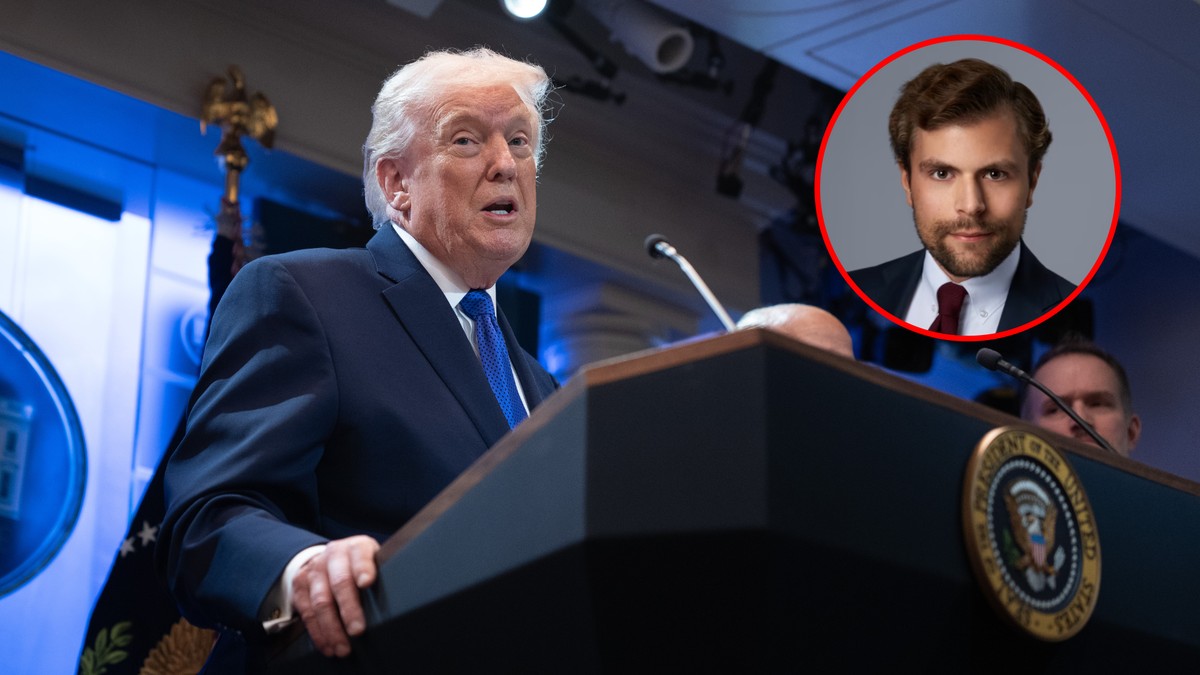
— Much is still unknown, but the U.S. Supreme Court's decision on tariffs means that rates imposed under IEEPA will most likely cease to apply. Their level varied and depended not only on a given country, but also on the category of goods they were to cover. Overall, the current rates for most goods imported from the EU to the US have been 10-15%. – says Marcin Klucznik, senior advisor at the Polish Economic Institute (PIE) in an interview with Business Insider.
New global tariffs are on the way. What about Poland?
Donald Trump announced that under Article 122 he would introduce global tariffs at a universal rate of 10%. for all countries. On Saturday, Polish time, he increased it to 15 percent. The new regulations are to enter into force – according to the president – immediately. — It will be valid for five months, and after that date Congress will need consent to extend it, which is not obvious – notes the PIE expert.
The new duty will not apply to certain goods, including some critical minerals and metals, energy and energy products. Also exempt from fees are natural resources and fertilizers that cannot be grown, mined, or otherwise produced in the United States or whose production in the United States is insufficient to meet domestic demand. The tariffs also do not include, among others: beef, tomatoes and oranges, medicines, parts of electronic equipment, some vehicles and books.
— In practice, the question comes down to this: Will the Donald Trump administration, before the November midterm elections, want to at least partially abandon the tariff policy that is unpopular in society? and will treat the Supreme Court's verdict as a pretext to abandon it, or will it strive to maintain higher import rates at all costs – says Marcin Klucznik.
In his opinion, economically new universal 10% the rate will favor some countries over others. It reminds that the amount of previous customs duties was determined on the basis of the US trade balance with a given country; some countries could later negotiate their amount individually.
— So they were country-specific. In practice, Asian countries with an advantage in exports, especially China, with which the Americans traded a lot and had a large deficit, were penalized. The new equal rate therefore favors – at least compared to other countries – Asian economies, with China at the forefront, says our interlocutor.
See also: Donald Trump lost in court over tariffs. The new ones may also be illegal
In his opinion, Poland's direct exposure and indirect exposure through Europe to American tariffs is not large. — Originally, based on higher rates from April, we estimated that the customs policy would cost us 0.37%. GDP, but the subsequent EU-US agreement at the end of July reduced this exposure to 0.22%. GDP. So now, if tariffs on some goods were to increase slightly, the effect would be marginal, in the order of one per mille of GDP, says a PIE analyst.
Reurters reported that according to the Italian association of wine producers and exporters, UIV, the ruling on customs duties risks “further uncertainty and a freeze in orders while waiting for a clearer regulatory framework.” The US is the largest market for Italian wines, worth approximately 1.9 billion euros, which is almost a quarter of total sales of Italian wines worldwide.
Another period of uncertainty regarding US tariffs
— I assume that we are again entering a time of increased uncertainty regarding customs duties after the period of stabilization in recent quarters. In five months, when the universal tariffs that have just been imposed expire, the problem from 2025 may return: at the beginning of April, on “liberation day”, President Trump presented tariffs for individual countries, which were then negotiated for months, e.g. the EU, Japan and the UK talked to the US separately. We may be in for a repeat of the entertainment, says Marcin Klucznik.
See also: Donald Trump is losing his “favorite weapon”. It may become more radical
He adds that a separate question is whether the Supreme Court's ruling means the need to return billions of dollars in unjustly collected duties to American companies. The British daily “Financial Times” reported on Saturday that following the Supreme Court's decision to invalidate the tariffs imposed by US President Donald Trump, American companies are demanding a refund of customs duties worth a total of over USD 130 billion.
According to data from the Customs and Border Protection Office, quoted by “FT”, the funds obtained by mid-December 2025 from the introduced customs duties amounted to USD 133.5 billion. In turn, data from Yale University say it is USD 142 billion. for all of 2025, and JPMorgan bank estimates that the total amount of duties collected may be up to USD 200 billion.