Serbian President Aleksandar Vucic recently openly admitted that Serbia could accept EU membership even without the right to veto.
— Membership in the European Union without the right of veto is acceptable for Serbia. The most important thing for us is access to the single market and the free movement of goods, people and capital. These are the basic values that we want to achieve through European integration, Vucic said in an interview with the German daily “Frankfurter Allgemeine Zeitung”.
The Prime Minister of Albania, Edi Rama, also expressed his readiness for such a solution.
Giving up the right of veto in exchange for joining the EU is no longer a political fantasy. Brussels is testing a solution that could completely change the rules of the game in European politics.
International relations expert Ivan Vejvoda recalled that the European Union had already operated in the “multi-speed” model. Not all countries belong to the Schengen area or the euro area, and various types of exceptions were used many times during the accession negotiations.
In his opinion, even membership subject to certain restrictions should be treated as an opportunity – provided that the principles of the rule of law, human rights and democratic standards are consistently observed.
– Every opportunity must be taken advantage of. Even if a country were to sit at the EU table with certain restrictions, it should use it as an opportunity to prove its readiness for full membership, concluded Vejvoda, quoted by the “Demostat” website.
“Necessary Evil”
Strahinja Subotić from the Center for European Policy emphasized that Belgrade's participation in the debate on such solutions works to Serbia's advantage, especially in the eyes of those EU countries that are skeptical about accepting new members.
In his opinion, Serbia could gain, among others:
representation in the European Parliament,
access to the single market and all EU funds,
the right to vote in decisions made by qualified majority (i.e. in approximately 80% of cases).
As for the disadvantages of this solution, Subotić believes that we should not focus too much on them – in his opinion, we should treat this option as a “necessary evil” and adopt a pragmatic, minimalist approach as possible.
As he explained, one of the ideas being considered is limiting the ability of new members to block the enlargement process. For example: if Montenegro had joined the EU earlier, it would not have been able to block Serbia's accession.
A similar opinion was expressed by a lecturer at the Diplomatic Academy in Vienna, Stefan Lehne. According to him, such a model of admitting new countries could make it easier for more distrustful member states to ratify accession treaties.
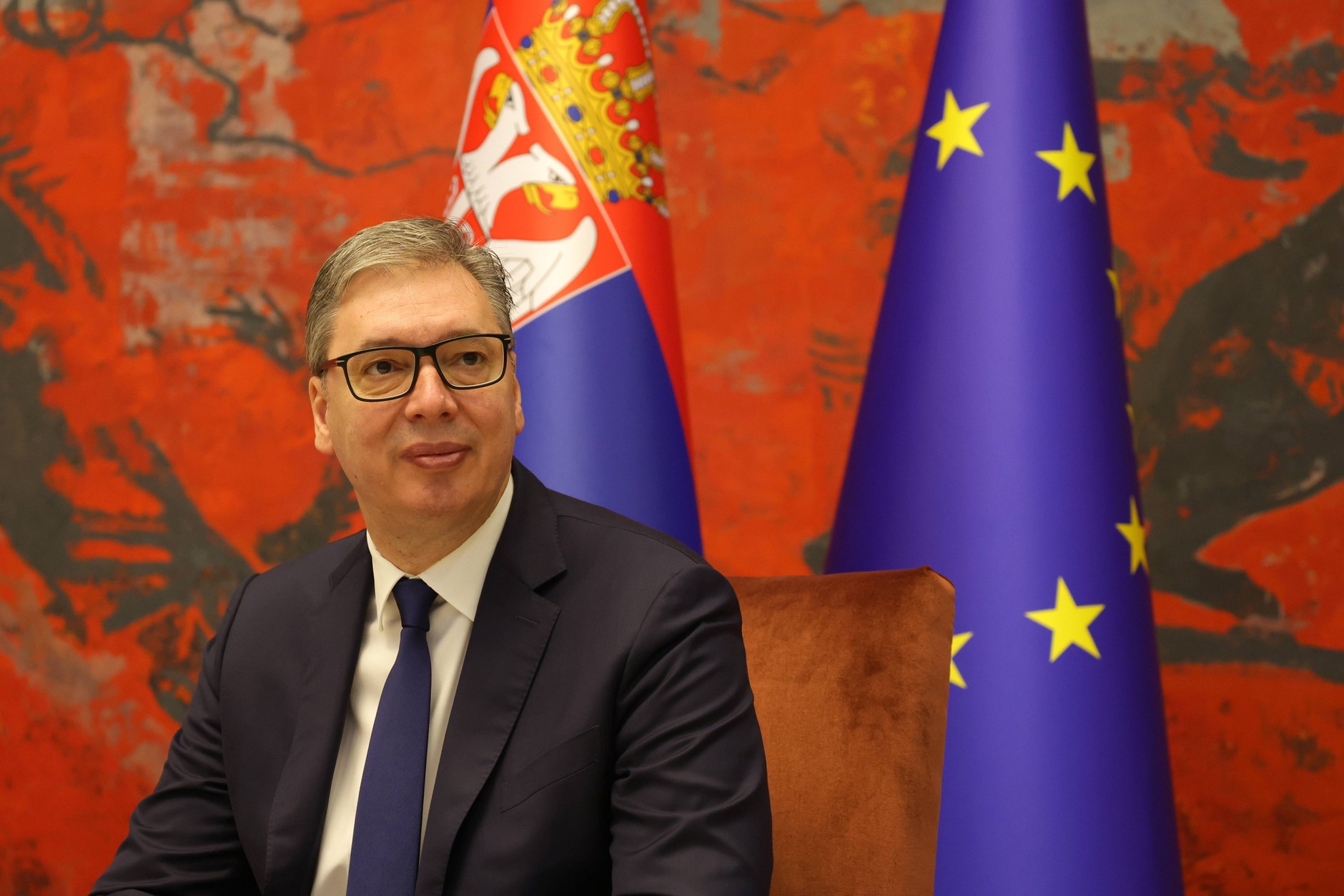
Aleksandar Vucic, President of Serbia. Belgrade, December 18, 2025EPA/ANDREJ CUKIC / PAP
As he pointed out, the possibility is being considered for the European Commission to introduce provisions into accession agreements temporarily limiting the voting rights of new members – without the right of veto – and at the same time strengthen control mechanisms in the area of the rule of law. The main goal would be to reduce the risk of political backsliding in the new countries and to encourage skeptical EU governments to support enlargement.
Lehne emphasized, however, that for now these are only speculations, and the European Commission is to present its proposals in public policy analyzes in the coming weeks.
Majority versus veto
Virtually all decisions in the European Union are made by qualified majority. This means that the “in favor” must be:
55 percent Member States
representing at least 65 percent EU population.
However, unanimity is required in matters relating to:
foreign and security policy (including sanctions),
taxes,
EU budget,
EU enlargement.
Veto power means that any member state can block a decision. When adopting sanctions packages against Russia in 2022–2023, Hungary, under Viktor Orban's government, repeatedly announced or used a veto in the EU Council.
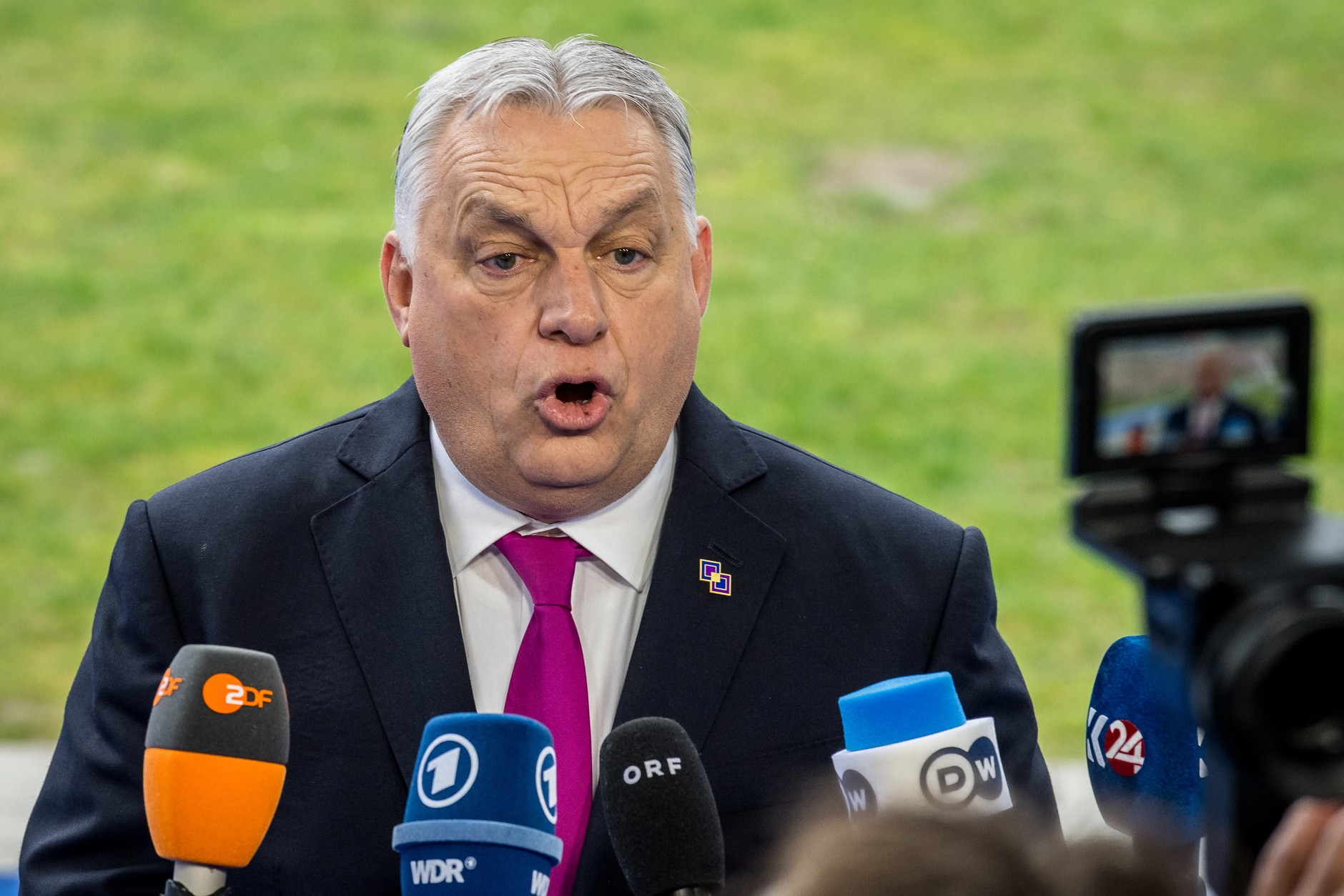
Hungarian Prime Minister Viktor Orban during the informal EU summit in Rijkhoven, Belgium, February 12, 2026.Wiktor Dąbkowski / PAP
In practice it looks like this:
1
The European Commission proposes a package of sanctions.
2
Member states negotiate in the EU Council.
3
If even one country says “no” – the decision is not adopted.
4
Political negotiations, concessions and modifications to the provisions begin.
In some cases, Hungary obtained, among others:
The article continues below the video
Who supports the idea and who is against?
Among the candidate countries, Albania was the first to make a clear statement.
Get us into Europe and I'm ready to sign an agreement in which we clearly waive our veto rights.
– the country's Prime Minister Edi Rama declared already in January.
In Germany, the idea of EU enlargement without the right of veto is supported by, among others, Green politician Anton Hofreiter – noted journalist Michael Martens in “Frankfurter Allgemeine Zeitung”. Hofreiter admitted that publicly some governments react to this idea with indignation, however conversations look different in private.
— The alternative to giving up the right of veto is that these countries will not become members of the Union at all, he said.
Adis Ahmetović, foreign policy spokesman for the SPD faction in the Bundestag, also expressed openness to such a compromise. — Giving up the right of veto could become a compromise that would speed up the accession process, he said.
However, there are many opponents of this concept. One of them is the EU Commissioner for Enlargement, Marta Kos.
— Any enlargement should strengthen Europe and must not limit the Union's ability to act. Countries that respect all EU rules should not be treated unfairly. The EU treaties do not provide for second-class membership – she emphasized.
I’m Ashley Davis as an editor, I’m committed to upholding the highest standards of integrity and accuracy in every piece we publish. My work is driven by curiosity, a passion for truth, and a belief that journalism plays a crucial role in shaping public discourse. I strive to tell stories that not only inform but also inspire action and conversation.