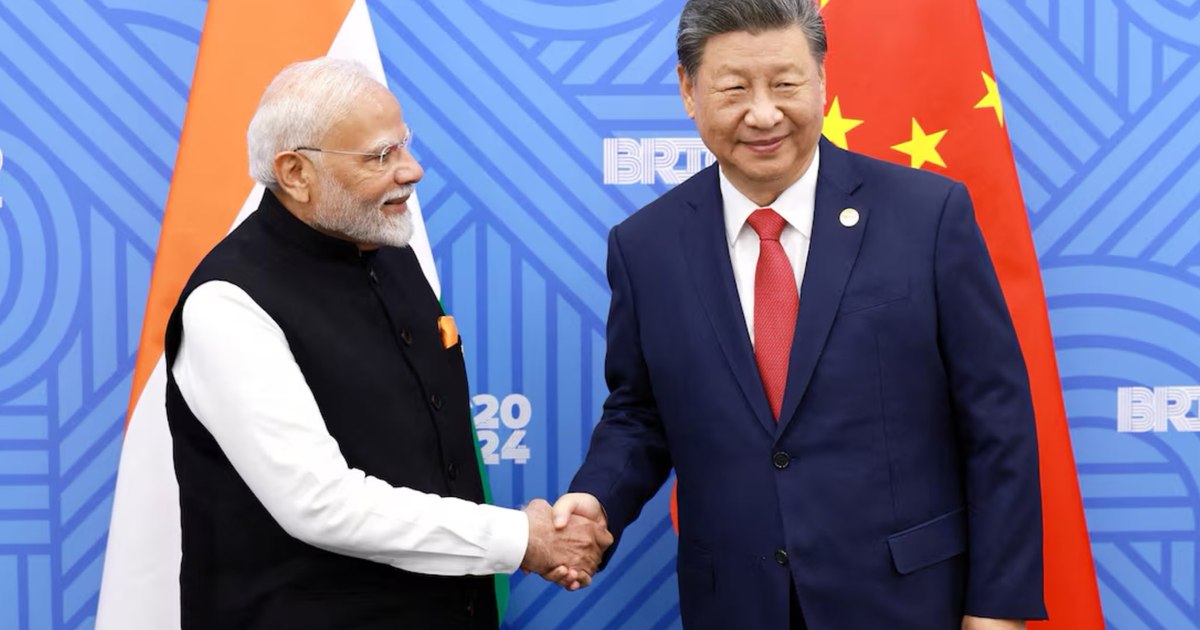
In full commercial war with the US, Chinese President Xi Jinping, trying, through a discreet letter to New Delhi, to reheat relations with India.
The letter sent by Chinese President XI Jinping A to reached Prime Minister Narendra Modi: X
While Donald Trump Lovea Beijing and New Delhi with stinging rates, Chinese President Xi Jinping sent a discreet letter to New Delhi, trying to approach India. His message to President Droupadi Murmu finally reached Prime Minister Narendra Modi and marked the beginning of an unexpected approach between the two Asian powers.
In March, against the background of intensifying the commercial war with the US, Xi Jinping sent a letter to the Indian president Droupadi Murmu, a rather symbolic figure. According to an Indian official quoted by Bloomberg, the document expresses fears about possible Washington agreements that could have affected China's interests and designate a provincial official to coordinate the proximity to India. The message eventually arrived on the table of Prime Minister Narendra Modi.
“Trump is really the great pacifier – It is worth all the credit to stimulate the incipient approach between Delhi and Beijing“, Said Ashley Tellis, an expert at Carnegie Endowment for International Peace and former American diplomat in New Delhi.”He succeeded this alone, treating India as an enemy. “
Washington tensions close to Beijing
In June, the Modi government started looking for solutions to improve relationships with China, after the US commercial negotiations had become tense. Trump's statements, which had suggested that an armistice between India and Pakistan had intermediated, irritated New Delhi. His complicated situation even more after Washington has imposed 50% rates on Indian exports due to Russian oil imports.
Against this background, India and China decided in August to intensify discussions on border disputes, an old conflict dating from the colonial period. Moreover, Modi is about to make this weekend the first visit to China for the last seven years.
The backstage of silent diplomacy
Bloomberg notes that Modi has been looking for since 2024 discreet ways to relax relationships with Beijing, considering that an approach would help the Indian economy and reduce military border costs. Although an XI -Modi meeting scheduled in the BRICS 2023 margin was postponed, the discussions continued.
In parallel, China began to publicly promote the idea of an approach. Xi Jinping described the relationship as a “tango between dragon and elephant”, Formula then taken over by officials such as the vice -president Han Zheng.
The adviser for national security of India, Ajit Doval, has become one of the main channels of communication with Beijing, making visits to China at the end of 2024 and in the summer of this year. In July, Indian Foreign Minister Subrahmanyam Jaishankar met in Beijing with his counterpart Wang Yi, for the first time in the last five years.
Small steps towards normalization
In recent months, bilateral relationships have experienced a series of relaxations: resuming direct flights, raising restrictions on Chinese urea exports and opening tourist visas for Chinese citizens. In parallel, large Indian companies, including the Adani and Reliance Industries group, have explored possible collaborations with Chinese companies.
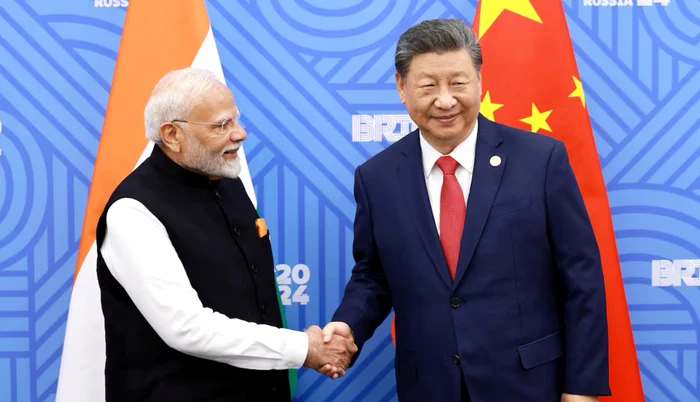
At the same time, Modi and XI are to be officially meeting on September 1, in the margin of the Shanghai cooperation organization summit, held in Tianjin.
The economic logic behind the closeness
Both India and China need each other. Beijing is experiencing deflation and industrial overcapacity, while India is looking for investments to achieve its goal to increase production to 25% of GDP. If the taxes imposed by the US remain in effect, almost 60% of India exports to Americans could disappear, reducing GDP by almost 1% in the medium term, according to Bloomberg Economics.
“Economic possibilities are huge if the two countries can solve the differences and build confidence“, Explained Antara Ghosal Singh, an analyst at Observer Research Foundation.”Trump is a good incentive for both countries to reconsider their options. ”
Obstacles remain
However, many barriers persist. China's relationship with Pakistan, India's ties with the US and the Quad alliance, as well as the Dalai Lama succession, can affect the normalization process.
“The relationships between China and India are on an indisputably positive trajectory, but they are still largely in the process of recovering the losses suffered ”warned Jeremy Chan, an analyst at Eurasia Group. “It will be more difficult to make significant progress from here before”.