2026-02-19 16:40, updated 2026-02-19 17:50
publication
2026-02-19 16:40
update
2026-02-19 17:50
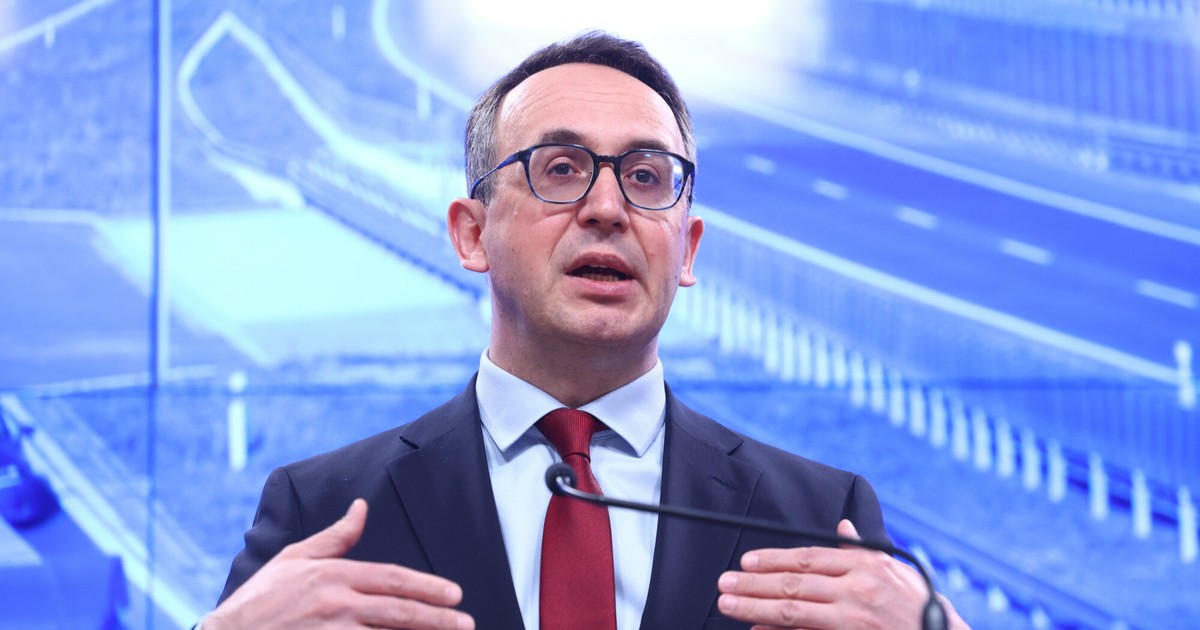
President Karol Nawrocki announced on Thursday that he had vetoed the Act on the Active Farmer. The new regulations were intended to limit the practice of applying for payments by land owners who do not conduct agricultural activity.
Minister of Agriculture Stefan Krajewski said that the president's decision showed that he was not on the side of farmers.
This concerns an act prepared by the government amending certain acts in order to strengthen the position of professionally active farmers.
– Today I also decided to veto the bill called “Active Farmer”. Once again, the ugly truth about the proposed changes is hidden under the pretty name of the act. (…) Bad law cannot hide even behind the prettiest name. Good law defends itself with content, not propaganda. The Constitution says clearly in Article 23 – the basis of the state's agricultural system is the family farm, Nawrocki said in a video published by his office on the X website.
He added that the regulations proposed in the act “reward large entities and require small farmers to prove their activity through complicated bureaucracy.” He assessed that the act assumes that if a farmer does not confirm his activity, he will lose direct subsidies. – A further consequence will be the liquidation of these farms and their demolition by large agricultural enterprises. This divides farmers into better and worse: some deserving of support and others excluded from subsidies – emphasized the president.
He also asked whether a farmer working “from dawn to dusk” becomes inactive because he does not generate the appropriate number of invoices and whether the family farm should be transformed into an accounting office. As he assessed, the act is not a reform, but “a threat to hundreds of thousands of Polish agricultural families and to the food security of the state.”
– I will not allow Polish land to be taken from family farms in favor of agricultural enterprises through bureaucracy and formal restrictions – said Nawrocki. He emphasized that the state must stand on the side of those who “feed the nation” and not those who “only care about the scale of profit.”
The Ministry of Agriculture's response is accusations of blocking reforms and political influence
On Thursday, after announcing the veto, the Minister of Agriculture and Rural Development, Stefan Krajewski, announced on the X website that the government, regardless of the president's decision, stands on the side of farmers and will do everything to ensure that the money goes to active farmers.
With his decision, President Karol Nawrocki showed that he is not on the side of farmers, but of those who get rich on subsidies at the expense of real farmers. Knowing that he had weak advisors, I asked for a meeting, wanting to present the facts and explain the need for an Active Farmer. Unfortunately, the President did not find time to talk about issues important to farmers, and the party's instructions from Nowogrodzka Street were enough to make the decision – noted the minister.
Krajewski appealed to the president to sign the act on active farmers on Thursday morning. His appeal was supported by agricultural organizations, which hoped that the regulation to the Act would clarify many of farmers' concerns, including: relating to land ownership.
The Minister of Agriculture recalled that 91 agricultural organizations participated in social consultations regarding this regulation. He emphasized that the act is a response to the needs of Polish farmers, which were reported during many agricultural protests and meetings with farmers.
Earlier, the minister said that out of 1.2 million applications submitted to the Agency for Restructuring and Modernization of Agriculture for direct subsidies, it is estimated that approximately 60,000 will have to prove their activity. people. He assured that the solutions proposed in the act do not affect the farmer's membership in KRUS, which was pointed out by opposition senators.
Who would have to document agricultural activity and how?
The Act on the Active Farmer assumed improvement of the business conditions of producers who actually conduct such activities on their farms. The new regulations – according to the authors – were intended to increase the stability of production planning and improve the use of funds from the Common Agricultural Policy.
Pursuant to the Act, persons who met the specified criteria, such as having animals or using selected payments or investment support, were to be considered professionally active farmers. Other farmers would be obliged to document the costs of agricultural activity or obtaining income from the sale of agricultural products.
The regulations assumed that farmers could prove that they conduct agricultural activities by submitting: an invoice or equivalent proof of the purchase of fertilizers, plant protection products, seed and reproductive material, an invoice or equivalent proof of the use of a service related to agrotechnical treatments; confirmation of purchase of agricultural insurance; an invoice or equivalent proof for the sale of agricultural produce, or proof of payment of rent, hired work, cultivation contract or delivery contract.
During parliamentary work, the vice-president of the Agency for Restructuring and Modernization of Agriculture, Leszek Szymański, informed that, according to the Agency's estimates, in 2026 only approximately 5 percent farmers would have to prove their activity.
According to the vetoed regulations, a transitional solution was to come into force in 2026, which would allow these farms to adapt to the new regulations. For professionally active farmers this year. Farmers who in 2025 received direct payments in an amount not exceeding the equivalent of EUR 1,125 were to be automatically recognized. This amount corresponds to the limit of payments per farm under payments for small farms, i.e. no larger than 5 ha. (PAP)
bpk/ mrr/