Ukrainian forces are systematically destroying Russian air defenses in the occupied territories. A Ka-27 helicopter, shot down in Crimea


On the night of Monday to Tuesday, Ukrainian forces destroyed two rare Russian military equipment: a Ka-27 naval helicopter in occupied Crimea, respectively an S-300VM air defense launcher near occupied Mariupol, according to the General Staff of Ukraine and Special Operations Forces, quoted by Ukrainian media.
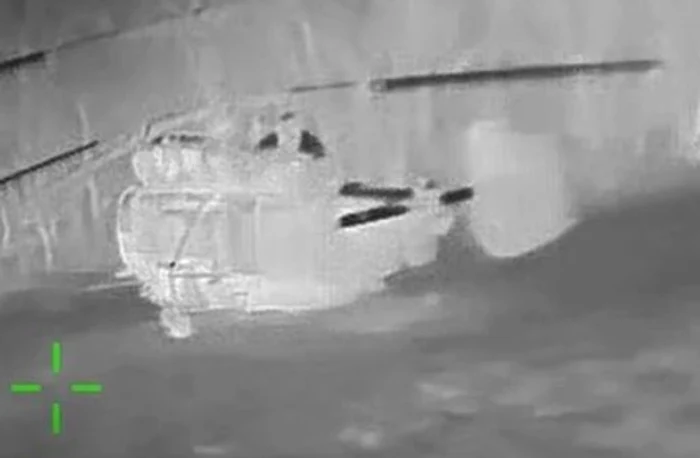
Ukraine's General Staff reported that a Russian Ka-27 naval helicopter was shot down near Kamishli, about halfway between Sevastopol and the Belbek air base — an area believed to be covered by Russian air defense systems. Thermal images captured by a drone and released by Ukrainian authorities show the aircraft moments before impact, with officials confirming a direct hit.
The Ka-27, operated by the Russian Black Sea Fleet, is a multi-role naval helicopter used for maritime patrol, anti-submarine warfare and detection of naval drones or landing attempts. Russia has lost only a small number of such devices since the start of the full-scale invasion, making this strike a significant loss to the fleet's capabilities.
The Ministry of Defense of the Russian Federation did not comment on the attack.
The device has a maximum speed of approximately 270 km/h and an operational range of approximately 800-900 kilometers. It can operate both from ships and from coastal airfields.
In 2024, the Crimean Wind Telegram channel reported the use of Ka-27 helicopters by the Russian Black Sea Fleet on missions to intercept Ukrainian naval drones and assault craft.
The last publicly confirmed destruction of a Ka-27 was reported at the end of November 2025, with Ukraine's Military Intelligence Service (HUR) releasing images showing precision strikes by its elite “Ghost” unit against Russian air defense systems and military assets in occupied Crimea.
Iskander missile depot, hit
In a separate operation, Ukraine's Special Operations Forces (SSO) announced that FP-2 drones struck an Iskander missile depot in the village of Pasichne, occupied Crimea. Officials reported loud explosions at the impact site.
Mikhail Razvojaev, the Russian-installed governor of occupied Sevastopol, described the night strikes as “some of the longest attacks on Sevastopol in recent times”, claiming that air defenses and the Black Sea Fleet had intercepted more than 24 drones. It is not clear if other targets in the city were hit.
S-300VM launcher destroyed near Mariupol
Images shared by Ukrainian sources show what has been described as a strike by the 1st Independent Center for Unmanned Systems Forces on a Russian S-300VM launcher near occupied Mariupol in the Donetsk region.
The S-300VM system is among the rare Russian air defense assets, being designed to intercept ballistic missiles and not drones. Ukrainian forces have repeatedly targeted Russian air defense systems in the occupied territories, one of the most recent targeting the radar of an S-300V system in the Donetsk region in January.
Local Telegram channels previously reported fires in the port area of Mariupol during the night.
Strikes on troop concentrations, logistics and drone control centers
The General Staff also reported strikes on Russian troop concentrations near Rozivka and Liubîmivka in the occupied part of the occupied Zaporizhia region. Logistics depots in Donetsk and near Lîdîne were also hit, as well as a communications node of the Russian 127th Motorized Division near Zelenopil.
In addition, Ukrainian forces reportedly hit three Russian drone control points near Huliaipole and Zatîșsia (occupied Zaporizhzhya region) and near Anatoliivka, in the Russian Kursk region, respectively. The General Staff did not specify what means were used in these attacks.
The SSO separately reported the destruction of a remote pilot point belonging to the Russian Rubikon unit in the village of Vîsoke, Zaporozhye region. According to the SSO, its units struck more than 10 Russian military targets between February 9 and 14, including personnel concentration areas, ammunition and fuel depots, and military equipment parks.