The history that risks repeating itself. How did Trump's customs fees be sowing with a catastrophic act 95 years ago

The new policy of increasing customs duties on import addressed by President Donald Trump is a variety of already-vu for historians and economists. And this under the conditions in which a similar act was adopted by Congress in 1930. 95 years ago the consequences of increasing taxes was catastrophic.
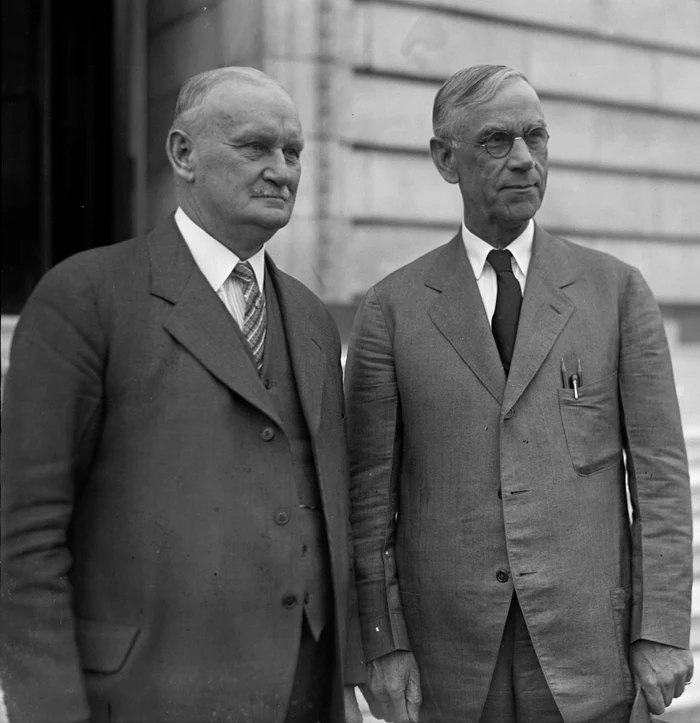
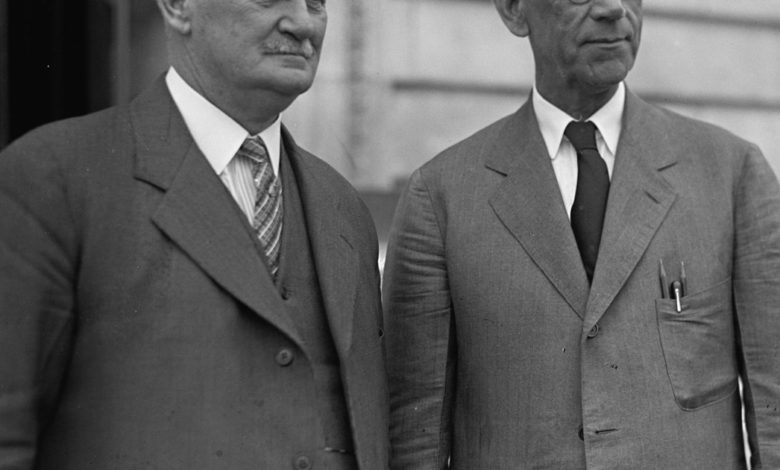
Republicans Reed Smoot and Willis C. Hawley Photo Wikipedia
On April 3, 2025, President Donald Trump announced the increase of imports for imports, postponed for 90 days. The new customs duties vary between 10% and 34%, depending on the economic and political relations between the United States and the respective states. The stated purpose is to reborn the American industry by encouraging consumers to buy more products made in the United States. Through these measures, Trump hopes to reduce the commercial deficit of the United States. The measures taken by the Trump administration have not been unanswered by the affected countries, which announce reprisals and increases at tariffs applied to American products. Although all these are events as current as possible, specialists in history and economy say that history risk being repeated. And this under the conditions in which a similar act took place 95 years ago, for the same purpose. However, the results were catastrophic on the American economy and beyond.
The great economic crisis and a huge challenge for the world economy
The story begins with the great economic crisis from the late 1920s. After the First World War, the United States has experienced a special prosperity, becoming a great world power. This has translated into unprecedented economic growth, doubled by a cultural and technological explosion. It was the years known in history as “the roaring 20's”.
Bankers and industrialists were national heroes and everyone dreamed of getting rich in one way or another. And this American dream was fueled by Charles Mitchell, the National President of City Bank, the kind of rich and envied by any ordinary American. Mitchell, inspired by the Liberty bonds of the last two years of the First World War, obligations to support the ally effort, introduced the concept of investment in the minds of simple Americans. Basically, the great American rich man encouraged Americans to invest massively in the action market. The scholarship game has become a national sport in the United States, being the mirage of enrichment. Everyone borrowed money or spent their savings to play on the stock market, and the brokers were the people of the moment. The banks also entered the game and came to the situation where 90% of the value of the shares are on credit.
Speculative loops, illegalities, dirty games also appeared. During this time the disaster is prefigured. Due to the innovations of technology, industrial production has increased and produced more than could be bought. The agricultural production was in the same situation, the offer far exceeding the demand. Farmers came to sell their merchandise on nothing, and the industrialists let their goods lie through warehouses. At the stock exchange, the value of the loans exceeded that of the real earnings. On October 24, 1929, on Wall Street, in New York, the center of the scholarship speculation, the catastrophe was produced.
Over 2.6 million shares were sold chaotic. Over $ 120 million were paid to foreign investors who left the country. Everyone was selling for themselves, but no one bought. The scholarship collapsed. The implications were devastating and the shock wave hit the whole world. The great economic crisis began. Between 1929-1933, in the United States the unemployment had reached the share of 30%, and over 20% of the population lived from government aid.
Republicans found the solution: increasing customs tariffs
President of the United States during the great economic crisis was Herbert Hoover, a Republican. He won the elections in 1929 and promised that he would try to solve the economic problems. He convened a special Congress session and proposed, as a first solution, a limited revision of the tariffs for import agricultural products to increase the income, but also to provide protection to American farmers in the face of the European area, in particular. President Hoover, after this proposal, made the mistake of distance from these debates on the increase of tariffs.
The Republicans of the Senate Finance Commission, as well as those in the Chamber of Representatives, found the opportunity to launch new proposals to increase import fees, including industrial products. In particular, those who supported the increase of customs tariffs for imports by 20% were Reed Smoot, Senator from Utah and chairman of the Senate Finance Commission, but also Willis Hawley, chairman of the Commission of the Chamber of Representatives. The very high level of customs duties proposed by Republicans has aroused heated discussions and the total opposition of the Democrats.
Even President Hoover, as well as the group of moderate Republicans tried to temper the colleagues' advancement. The negotiations on this topic lasted a year and three months. Paul Douglas, an economist from Chicago, supported by over 1000 colleagues, has addressed a memory to President Hoover to use his veto and to block the raising of tariffs. Even under these conditions, at the pressures of the party colleagues, Hoover signed the increase of the tariffs on imports on June 17, 1930. It remained known in history as the smoot-hawley act.
The most disastrous act in the history of American Congress
The increase in import rates has aroused protests among economic partners around the world. Some of them took punitive measures and, in turn, increased taxes for American import products. The exports of the Americans decreased by up to 31%. Even under these conditions, initially, the smoot-hawley act seemed a success. “Payment states from factories, construction contracts and industrial production have grown abruptlyC, “said the historian Robert Sobel. Only at the beginning. The subsequent smoot-hawley began to show his limits. Moreover, the punitive measures of the over-term countries have made the American exports in the long term.
The figures were eloquent. Exports decreased by 61%, and imports by 66%. All this was reflected in major financial losses. The economic crisis, instead of relaxing, was exacerbated by the smoot-hawley act. The unemployment reached in 1933, at 25%, given that the import-export industry was strongly affected by the smoot-hawley act, and in that field unemployment increased. Globally, it has led to a limitation of trade, being considered the most disastrous act in the history of American Congress. The reduction of tariffs and contacting the smoot-hawley act occurred after Democrat Franklin Roosevelt won the elections on March 4, 1933.