Iran launched missiles towards the Strait of Hormuz. Iran's supreme leader threatens to sink US warships

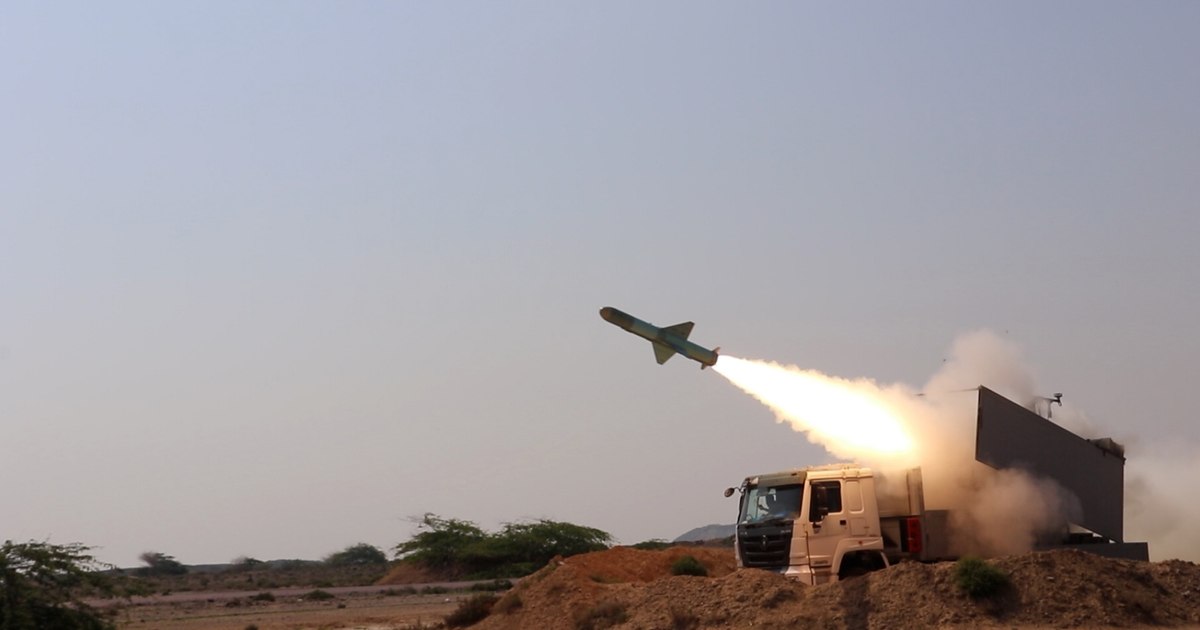
Iran fired live missiles at the Strait of Hormuz, a vital strategic sea route, on Tuesday, ratcheting up tensions just hours after the country's supreme leader issued a stark warning to Washington. Ayatollah Ali Khamenei said that while a US warship deployed in the Gulf is “a dangerous weapon”, Iran has “even more dangerous” weapons capable of sinking it.
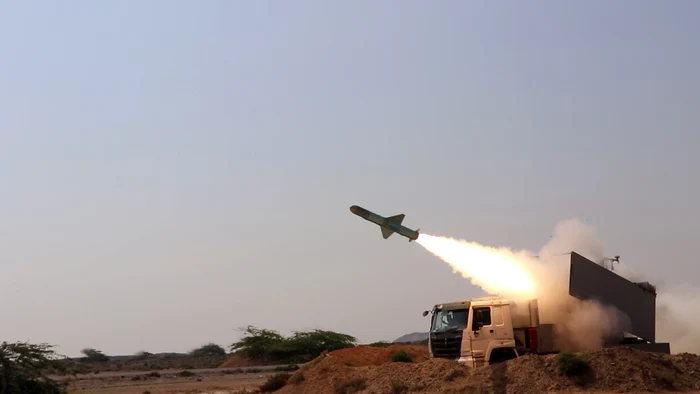
PHOTO EPA-EFE
The remarks came as US and Iranian officials met in Geneva for a second round of talks on Tehran's nuclear program, highlighting the delicate balance between military shows of force and diplomatic efforts.
“Let's negotiate on your nuclear energy, and let the outcome of the negotiations be that you don't have this energy. And if there really needs to be a negotiation, because there is not always room for it, to determine the outcome of the negotiation in advance is a wrong and stupid act,” said the Iranian supreme leader during a meeting in Tehran with representatives from the province of East Azerbaijan.
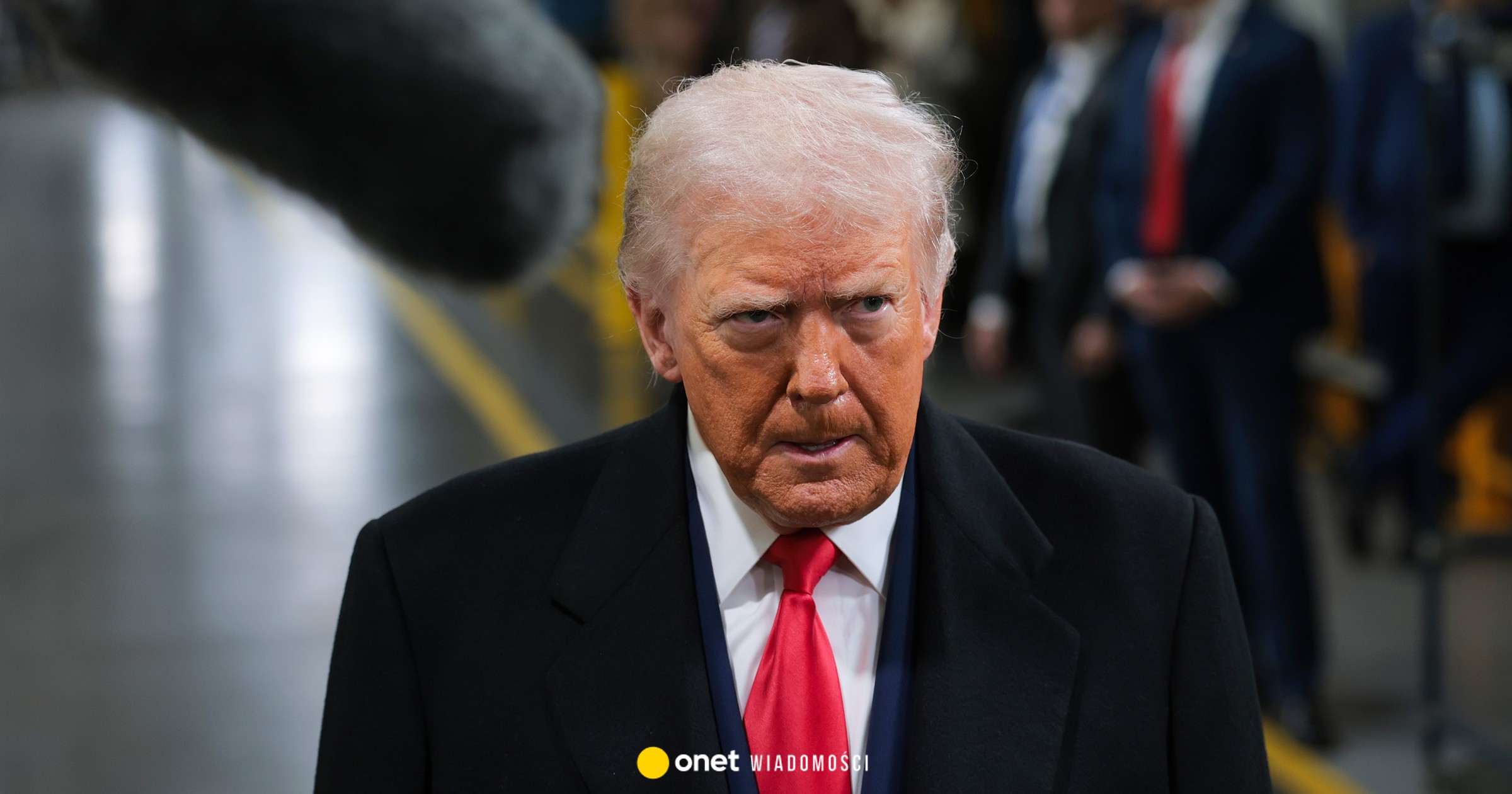
Khamenei said that Trump, by warning and saying what Iran can and cannot do, is trying to “subjugate the Iranian people”.
“The US president said that 47 years have passed and they still haven't succeeded in destroying the Islamic Republic. It's a bold admission. I say: you won't be able to do it either,” Ali Khamenei said.
Donald Trump keeps repeating that his military is the strongest in the world, but even “the strongest military in the world can sometimes get hit so hard that it can't get up,” he said.
“Well, an aircraft carrier is certainly a dangerous machine, but more dangerous than the aircraft carrier is that weapon that can send it to the bottom of the sea,” the ayatollah threatened.
Negotiations against the backdrop of military maneuvers
The talks, held in Switzerland, lasted about three hours and were described by Iranian Foreign Minister Abbas Araghchi as “more constructive” than the previous round earlier this month. Araghchi said both sides have agreed on “a set of guiding principles” that will underpin the drafting of a possible agreement.
“Finally, we managed to reach a broad agreement on a set of guiding principles, based on which we will move forward and start working on the text of a potential agreement,” Araghchi told Iranian state television after the meeting in Geneva.
Washington was represented by emissaries Steve Witkoff and Jared Kushner, sent by President Donald Trump as part of renewed efforts to curb Iran's nuclear ambitions.
Despite the diplomatic progress, the context remained tense.
Strait of Hormuz: a hot spot
Before the negotiations, Iranian media reported that live missiles had been launched towards the Strait of Hormuz, one of the most important transit points in the world. About 20% of global oil shipments pass through this narrow route every day.
Iran had previously announced large-scale maritime exercises in the region, citing “security reasons and maritime concerns”. The semi-official Tasnim news agency reported that missiles fired from inside Iran and along its coast successfully hit designated targets in the strait.
Iranian state television broadcast images of mobile land-based missile launchers hitting targets in the Strait of Hormuz, off the southern coast.
During this military exercise, speedboats equipped with rocket launchers were deployed, according to a press release from the Revolutionary Guards.
“The missiles hit targets in the Strait of Hormuz, being launched from land, from the coast and from Iranian islands in the Persian Gulf,” the statement said.
Parts of the strait were closed to maritime traffic for several hours for security reasons, Iran's Fars news agency reported.
Security firm EOS Risk Group said ships in the area had received radio warnings that the northern shipping lane — in Iranian territorial waters — could be affected by live-fire exercises. Iranian state television did not explicitly confirm the warning.
It is the second such warning issued by Iran in recent weeks, underscoring the high level of military preparedness in the Gulf.
Strengthening the US military presence
Meanwhile, the United States has expanded its military presence in the region. President Trump recently announced that the USS Gerald R. Ford, the world's largest aircraft carrier, will be sent to the Middle East from the Caribbean Sea. The ship will join the aircraft carrier USS Abraham Lincoln and its guided-missile destroyers already stationed in the area.
Tensions rose further last week when US forces shot down an Iranian drone that approached the aircraft carrier Lincoln. On the same day, Iran allegedly tried to stop a US-flagged ship in the Strait of Hormuz.
Gulf Arab states have warned that any direct confrontation could degenerate into a wider regional conflict in a Middle East still scarred by the aftermath of the war between Israel and Gaza.
Nuclear standoff and sanctions pressure
At the center of the renewed negotiations is Iran's nuclear program. The Trump administration is seeking to impose clear limits to ensure Tehran does not develop nuclear weapons. Iran maintains that its program is for peaceful purposes, but has so far refused demands to halt uranium enrichment or surrender existing stockpiles.
Before the 12-day war with Israel in June halted earlier negotiations, Iran was enriching uranium to 60 percent purity — a level one technical step short of the threshold needed for nuclear weapons. During that conflict, the US bombed Iranian nuclear facilities, possibly destroying numerous centrifuges used to enrich uranium. The Israeli strikes also damaged Iran's air defense systems and targeted its ballistic missile arsenal.
Tehran has signaled a possible openness to compromise — but only if the sanctions issue is addressed.
“The ball is in America's court,” Deputy Foreign Minister Majid Takht-Ravanchi told the BBC. “They have to show that they want a deal with us. If we see sincerity from them, I'm sure we'll be on the way to a deal.”
He added that Iran is ready to discuss its nuclear program, provided sanctions are also on the agenda for negotiations.
Domestic pressures and political tensions
The diplomatic efforts come at a sensitive time for Iran domestically. The country is marking 40 days since one of the bloodiest episodes of the nationwide crackdown on protests. Activists claim that at least 7,015 people were killed during the unrest, many of them in a violent crackdown on the night of January 8-9.
The US-based Human Rights Activists News Agency, which provided the latest figures, says it relies on a network of activists inside Iran to verify the death toll. Iranian authorities blamed the protests on “violent actions by armed groups allegedly directed by foreign intelligence agencies.”
A fragile road ahead
As missile exercises ring out in the Gulf and warships patrol its waters, diplomats in Geneva are trying to chart a way to avoid confrontation. The coexistence of negotiations and military escalation illustrates the precarious balance that defines US-Iran relations.