The rapid anti-drug test done by Robert Negoiță in the courtroom brings back to the discussion the issue of the veracity of this type of testing, but also of its widespread use. In 2024, the authorities wanted to introduce drug tests in schools, to detect consumption among students. Such approaches can be dangerous, experts warn. “These tests are actually only intended for large screening actions, respectively for monitoring a treatment, but not for consumer identification. It's a totally wrong policy!”says Gabriel Gorun, forensic expert in forensic toxicology. He explained to Adevărul how these tests work, but also why they can panic or calm down unjustifiably.
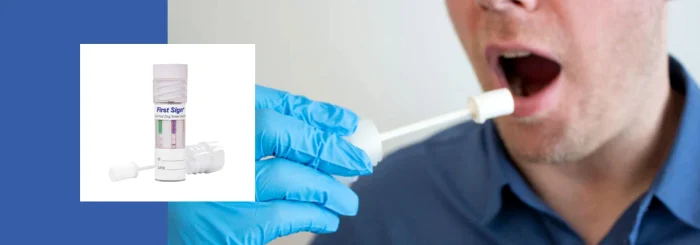
PHOTO Australia Drug Testing
How Rapid Drug Tests Work
“These rapid tests are a compromise from a technological and scientific point of view between the need to have information as quickly as possible, which can be obtained by a person who has no technological or medical training, with as little cost as possible. This is a desideratum that often proves necessary, such as sorting drivers in traffic, in order to succeed in suspecting those who might be under the influence of psychoactive substances. Unfortunately, however, you cannot have a cheap test, fast and very easy to use that also has maximum accuracy”, draws the attention of Dr. Gabriel Gorun.
The coroner, who has more than 25 years' experience, explained how rapid drug tests work. The method is called immunoassay:
“It works on a simple principle: that a molecule finds an opponent in the test (an antimolecule, an antibody) that produces a reaction. For these types of tests, the reaction is a change in the color of the substrate. So, when a specific molecule is in a biological sample and finds the antibody on the substrate that we have standardized, this reaction takes place.”

Dr. Gabriel Gorun, senior medical examiner, expert in forensic toxicology
Why false results can occur
“These tests based on a coupling reaction of two complementary molecules, of the key frog type, also allow approximate coupling reactions. So, if these molecules are not the ones precisely designated to produce the reaction, but ones similar to them, they can give positive reactions, without the substance being targeted being in the body”explains Dr. Gabriel Gorun.
And the way the testing is done is important:
“Since it is a molecule – that is, a very complex organic substance – it can happen that it undergoes changes due to exposure to the environment. Therefore, if the tests are not administered in perfect working conditions (without exposure to strong light, without being stored at extreme temperatures, without the testing itself taking place at extreme temperatures) it is possible that the antibody substrate that the manufacturer put in the test will be denatured. So, obviously, the reactions that we end up not being the right ones”.
False-positive reactions can also occur due to similarities between various molecules. “If there is a molecule in the biological sample that is chemically similar to the substance I'm targeting, it might get a false-positive reaction.”says the doctor.
Moreover, he explains:
“Each of the substances that can be detected by these types of tests, in turn, has a plethora of other substances that it can cross-react with. For example, in the case of cocaine, it can cross-react with some antibiotics, it can cross-react with some types of local anesthetics, maybe even with new components in chewing gum. The reactions are unpredictable.”
Rapid drug tests can also produce false-negative reactions.
Tests with the highest error rate
Rapid drug tests are divided into categories and can test from one to up to 12 substances. The accuracy of the results differs from one substance to another. In some situations the errors far outweigh the correct results.
“Generically, these tests have a sensitivity and specificity somewhere around 80%. While for certain types of substances they can give false-positive reactions up to 80%. So the accuracy is only 20%. For other substances they can even have 95% accuracy.
The biggest errors occur with amphetamines and methamphetamines. That's where most of the errors are, usually false-positive reactions. For cannabinoids, the tests are somewhere between 70% and 80% accurate.”
“I can create a false sense of security”
Testing in everyday life can be risky, explains Dr. Gabriel Gorun, and false images of consumption can easily be created. This is precisely why he does not recommend testing in the family or in schools, as the Capital Prefecture wanted in 2024:
“These tests, misused – meaning >,
Furthermore, the fact that someone comes up negative on a particular type of rapid test does not mean that they have not consumed other prohibited substances. It's a vicious circle, which cannot really incriminate or decriminalize.
“The test was only done for cocaine. That does not mean that if the test had come out negative for cocaine it is not possible that there was a whole plethora of other substances that the test does not identify. The most complicated tests of this type of method have up to 12 substances at most. Or imagine that a toxicology machine, which does confirmatory certification tests, has a data library of several thousand substances”. says the forensic specialist in toxicology.
The biggest danger: migration to hard-to-detect substances
One of the biggest percolation may be the migration of young people to substances that are more difficult to detect by rapid tests.
“Information is very easy to obtain at the moment. We have to bear in mind that anyone can make two clicks and three searches on the Internet and get all the information they need, and then what is called the shift of consumption from generic substances that can be identified through such tests to substances that they find out on the Internet are very difficult to detect. And this is perhaps one of the explanations why we have this explosion of consumption of ethnobotanicals in Romania. Precisely because it is notorious that they are difficult to detect toxicologically, many people abuse them”draws the attention of Dr. Gabriel Gorun.
Confirmatory tests, required
What do we need to know? That these tests, although they may be useful, have no absolute value in identifying consumption.
“This is how a good idea, that of testing, can turn out to be extremely wrong when it is not done properly or, above all, when it is not followed by confirmatory tests or when it is assigned an absolute purpose. The best way to use these tests, however, is to do it after a very good information, after a very good weighing of the benefits that the result could bring you, and that is why these tests are actually only addressed to the large actions of screening, respectively of monitoring of a treatment, of adherence to a treatment, but not of identification of consumers. It is a totally wrong policy!”, concludes the doctor.
And the high rate of false positives with drugtest machines in traffic reinforces his point. Not for nothing, there was the requirement that all drug tests performed by police officers be confirmed in the laboratory within 72 hours.