Nicușor Dan, the first reaction after Romania's entry into the technical census: “It's not something we're discovering now” and “We have reasons for optimism” / Messages to “political leaders and citizens”


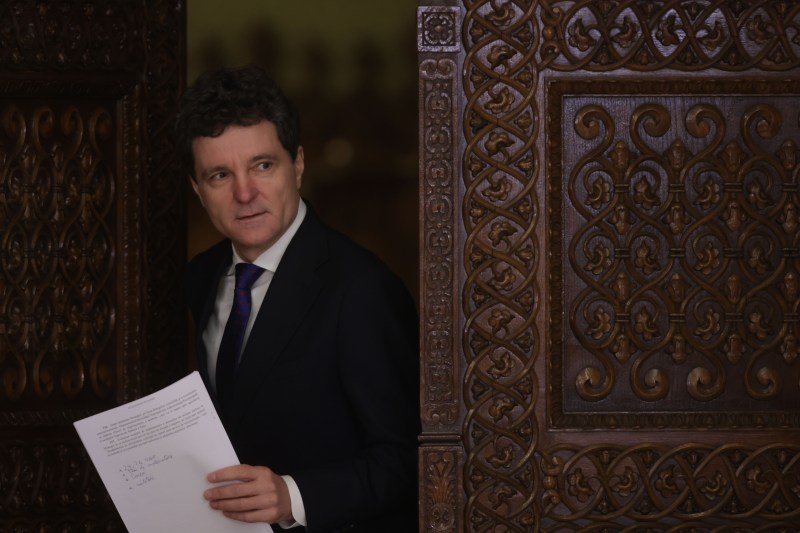
President Nicușor Dan. Photo source: Inquam Photos / George Călin
“I invite you to take a balanced look at the data published today by the INS”, the President of Romania begins his message, after Statistics showed that Romania entered a technical recession. Nicușor Dan states that Romania's economy has been slowing down for four years, but there are still reasons for optimism. Finally, he tells “politicians to concern themselves more with structural issues and less with noise and slogans.”
“The economy suffered a contraction of 2% because consumption was reduced. For some, the reduction in consumption came from the decrease in purchasing power, for others from prudence towards the economic future”, writes Nicușor Dan, in his message on Facebook.
He recalls, however, that Romania managed to reduce the budget deficit without resorting to external financial assistance and without being affected by a crisis of the magnitude of the one in 2009-2010.
“Less noise and slogans”
Nicușor Dan claims that Romania's economy has had a low growth rate in the last four years, and its resumption depends on limiting corruption, increasing competitiveness, the correspondence between the expectations of the private environment and what the politician is doing are things that we have had to solve for a long time.
“We have reasons for optimism. We have a solid private economy. The SAFE program was well drawn up by the government and it will generate development. European funds, and PNRR, and structural funds, will generate development. There is slight progress in reducing tax evasion”, believes the president.
Nicușor Dan ends his post with two messages, one addressed to political decision-makers, the other to citizens.
“Political leaders should be more concerned with structural problems and less with noise and slogans. And you, the citizens, continue to put, with balance, pressure on the political decision-makers to solve these problems. I remain involved and with you in this endeavor, supporting the same objectives and the same public responsibility”, concluded the president.
What the statistics show
The Romanian economy registered a contraction in the last quarter of 2025 (by 1.9% compared to the previous quarter), after the economy had also decreased in autumn compared to the summer of last year.
Technically, Romania is in recession although, for the whole year, there was an increase of 0.6%, according to the announcement made by Statistics on Friday.
A technical recession is a decline in real Gross Domestic Product for two consecutive quarters and indicates a slowdown in economic activity.
 What is a technical recession? How a family feels and especially how to get out of it. Recent cases in the EU
What Prime Minister Bolojan says. Criticisms and attacks from the PSD
Prime Minister Ilie Bolojan says that the technical recession that Romania has entered is an “anticipated and inevitable” cost of the transition it has begun, because the old “economic model has put our backs against the wall”. In his message, the head of government speaks critically of the prime ministers before him, whom he says made “rigid expenditures” and promoted “compensation of social and inflationary pressures”.
Ilie Bolojan claims that since taking over the position of prime minister “we started the transition from a model based on deficit and consumption, apparently generating prosperity, but in fact destructive, to a model based on investments, productivity, export and budget discipline”.
Instead, PSD president Sorin Grindeanu states that he is the main culprit for the wrong direction in which we were pushed” and reproaches Prime Minister Bolojan for being “stubborn and obsessed” with his own image. “If a government is not for the people, then it won't exist at all,” Grindeanu tells Bolojan.
 Ilie Bolojan, the first reaction after Romania went into recession: It is a necessary cost to build a more solid and competitive economy. We are not going through a crisis