Peter Gauweiler is a German lawyer and former politician. In the years 2002-2015 he sat in the Bundestag on behalf of the Bavarian Christian Social Union (CSU).
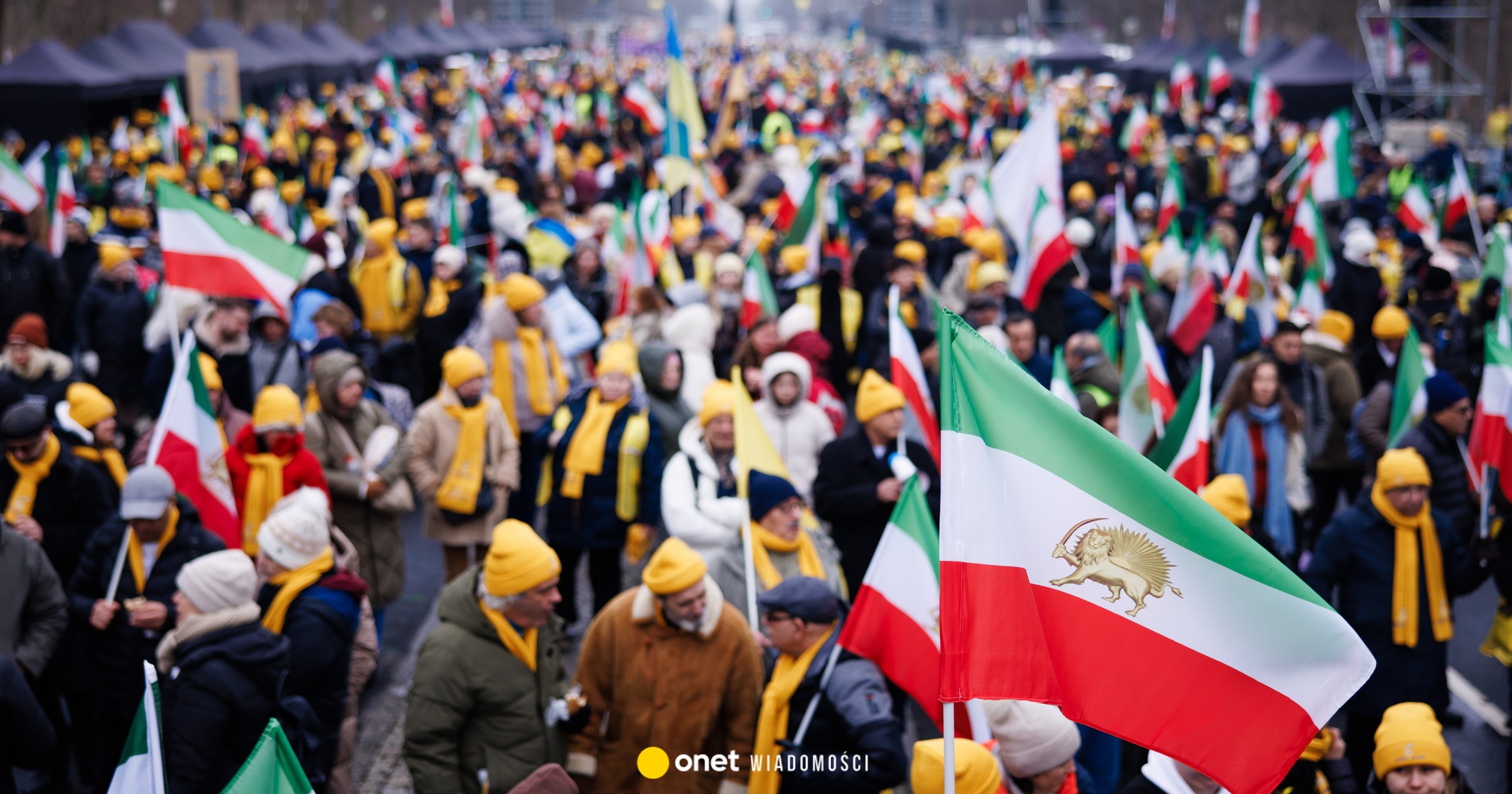
In Berlin, thousands of people take to the streets to demand the closure of all Iranian embassies in Europe. This impulse is understandable, even if fruitless. But the political issue behind it is different — and troublesome. The question is not “is this right?” but “what will happen next?” Whoever cuts off all channels of conversation, as the demonstrators demand, cuts off not only the other side. It also cuts off the path to crossing yourself.
History teaches us that systems rarely fail because of the moral superiority of their opponents. They fall when you manage to organize a way out for them — for the elites, for the security apparatus, for religious authorities. Whoever deprives those currently in power of any possibility of retreat, forces them to tighten their course as much as possible in the name of saving their own skin. For generations, the entire society is drawn back into a great conflict that can only be resolved by victory or defeat.
The memory of the 1967 riots in West Berlin serves as a warning. The international delegitimization of the Shah's regime at that time was morally justifiedhad political consequences — but it opened a space in which the most radical forces took over. A decade later, this path ended not with liberalization, but with an Islamic revolution. The actors were different, but the dynamics were similar. This exact logic of confrontation must not be repeated – even if the roles are reversed.
Political changes are successful where the transformation is organized. A classic example is Spain after the era of General Franco. The transition to democracy did not come through settlements, but through a controlled opening, for which Juan Carlos I was responsible: amnesty, talks, institutional continuity. All this was morally imperfect, but politically effective. The country was not divided into winners and losers, but led towards a common future. It's not about idealizing Spain. The point is that designing transformation is a political art of its own. Anyone who ignores it leads the country down another dead end.
The article continues below the video
There is more than just the government behind what demonstrators generally call the “mullahs' regime.” There is also a Shiite form of religion behind it, with its own order of authority, its own language of responsibility, guilt and limitations. This form designates a special one the path to God to which millions of people in Iran still remain faithful and which they want to follow further. Anyone who believes that a transition in Iran is possible without any cooperation with the highest religious authorities of this religion does not understand the social reality of the country.
Of course, the government of Iran's Guardian Council can be threatened with “beheading” — not only militarily, but also legally, economically, and politically. Such blows hit individual people, but they do not replace lasting transformation. Without bridges for millions of followers of Iran's dominant religion, European capitals would be left with only the angry clamor of demonstrations, attractive pictures, graceful shots, a few scuffles, and politically: an emptiness.
An authority that the West too often forgets
In this situation, a figure who is often underestimated in Western debates comes to the fore as a key conversation partner: Grand Ayatollah Ali al-Sistani from Najaf in neighboring Iraq. He is not a marginal figure, but probably the most influential Shiite authority outside Iran – precisely because he exercises no real power.
al-Sistani's authority is based on self-limitation. He does not rule, but teaches and observes. His interventions are very rare and therefore effective. It represents the Shiite tradition of understanding religion as an instance of conscience, not a substitute for government. Politics should be about accountability, not about sacralized power.
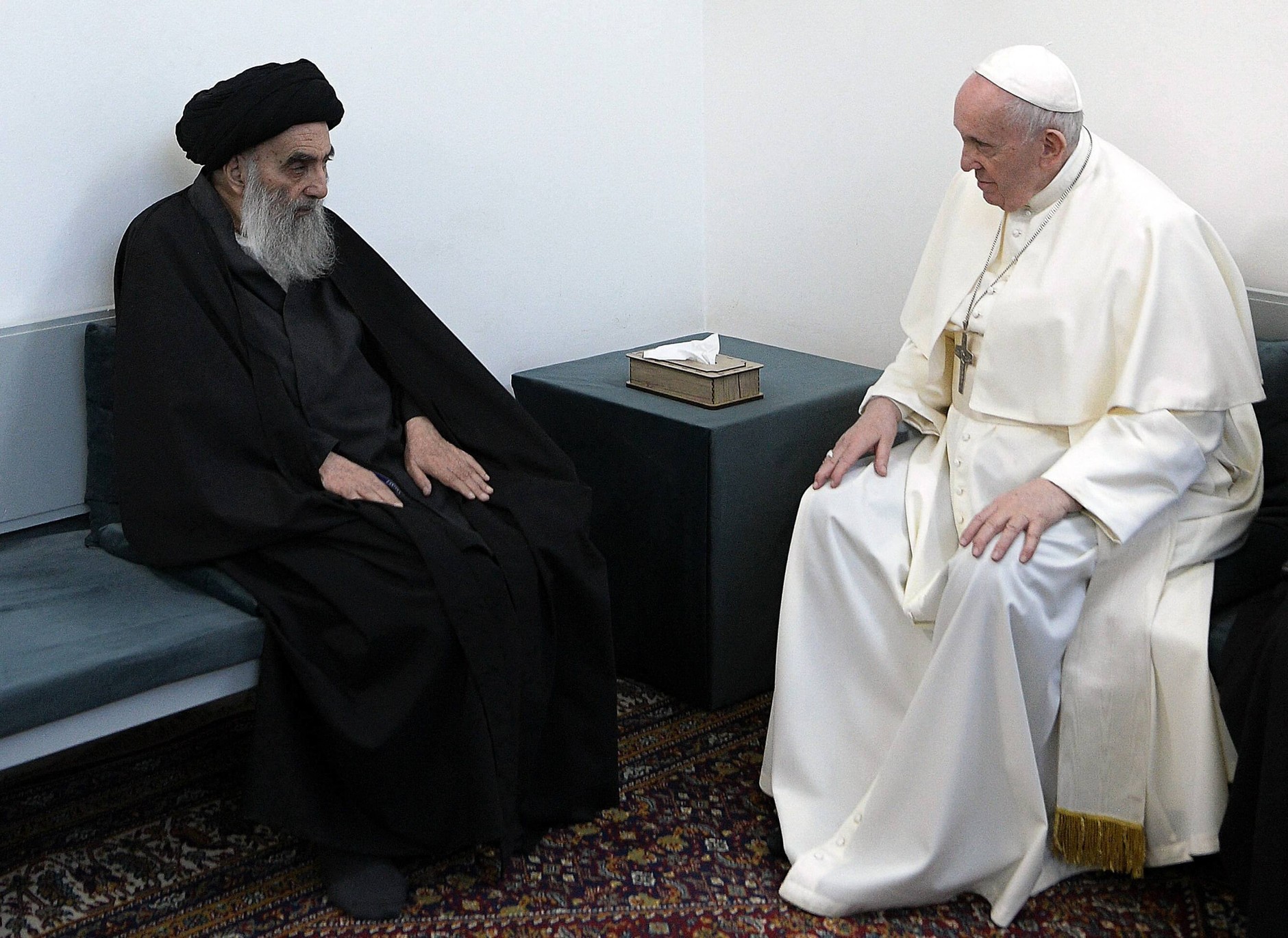
Meeting of Ayatollah Ali al-Sistani and Pope Francis. An-Najaf, March 6, 2021Abacapress.com / PAP
His role in Iraq after 2003 was exemplary: he insisted on elections, constitution, state order – without becoming a politician himself. Even his 2014 fatwa against the terror of the Islamic State was clear but balanced: protect the country, protect the population, no sacralization of violence.
And the meeting with Pope Francis, who visited him on foot in a modest house in An-Najaf, had a meaning much greater than symbolic: was proof that dialogue, protection of minorities and coexistence can also be justified by the dominant strand of Shiism. Anyone who wants to enable a transition in the Shiite world without new civil wars needs contact with this type of authority.
What will Reza Pahlavi do?
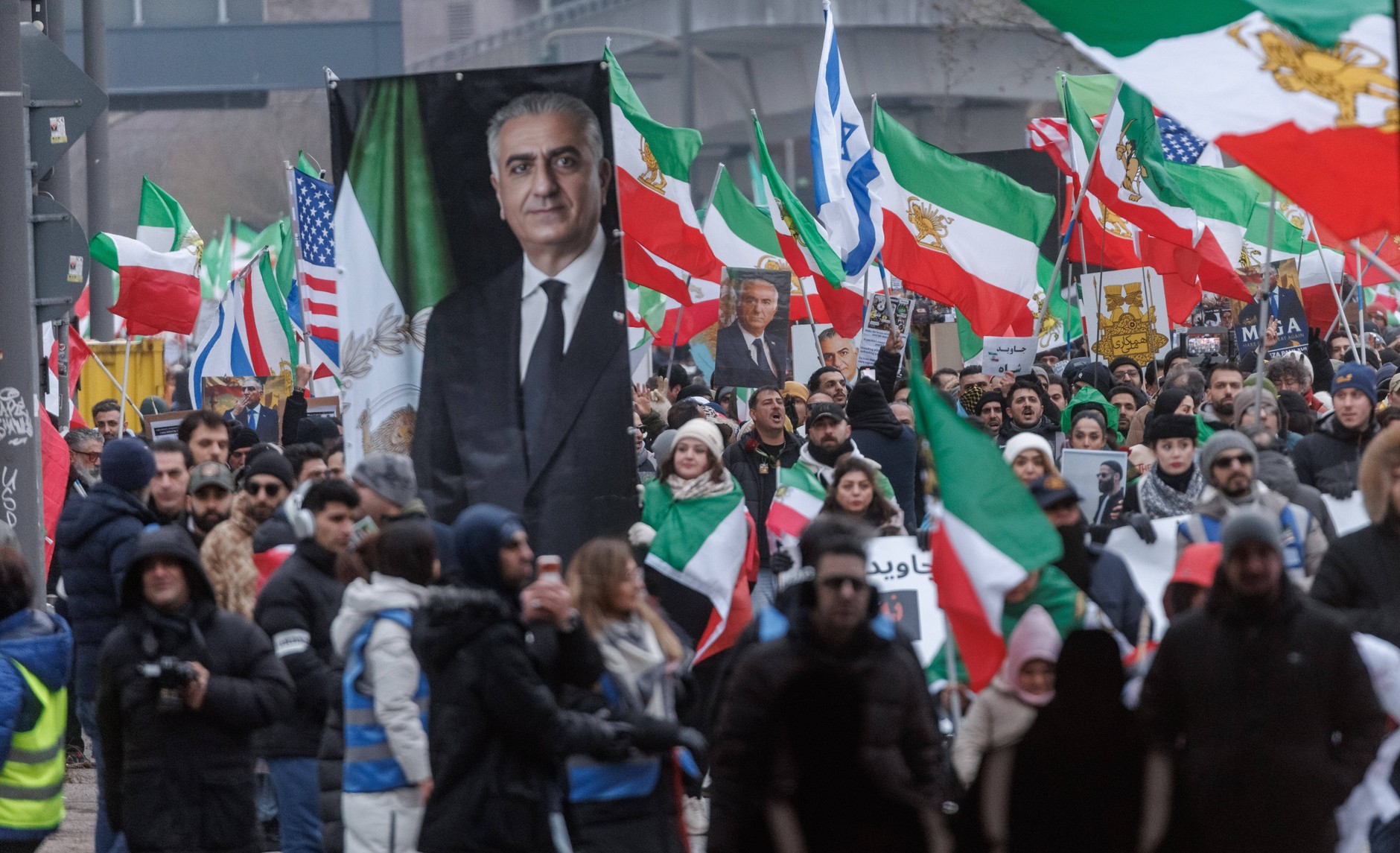
At the same time, in exile, Reza Pahlavi is emerging more and more clearly as a point of reference and conversation. His name evokes extreme reactions – that's why it is politically important. For some it symbolizes national continuity beyond theocracy, for others it symbolizes the burden of the past. The role he chooses is crucial.
As a transitional actor, he can only convince if he does not propose the restoration of the old order, but a real, feasible route of passage: referendum, transitional framework, institutional safeguards. Its strength is the ability to operate in the international arena, but its weakness is the lack of religious roots. And this is where it all comes together.
Protesters hold a photo of Reza Pahlavi, son of the former Shah of Iran. Hamburg, January 31, 2026MARKUS SCHOLZ DPAdpa Picture-Alliance / PAP
The Shah's son intends to appear at the Munich Security Conference at the Bayerischer Hof hotel. This is certainly the right and sensible step. If Reza Pahlavi wants to be seriously seen as a transitional figure, however, he should immediately do what Pope Francis did earlier: go to An-Najaf. Not as a supplicant or pretender to the throne, but as a political actor who seeks advice: how can a democratic transformation be carried out? How to avoid the mistakes that led Iraq to crisis and the ubiquity of militias after 2003? This would be a true sign of the transition to freedom.
History cannot be allowed to repeat itself again
Iran doesn't need another revolution, but transformation that will make the country viable again. Whoever wants the future must leave the opponent a way out. Whoever destroys all bridges forces history to repeat itself, only this time with the roles reversed.
Thanks to an experienced expert on the Islamic world, Peter Scholl-Latour, we know that Shiite culture of dialogue does not have to be a concession to modernity, but it lies in the tradition of this religion. For centuries, it has been marked not only by mourning after the violent death of Ali, the first imam and son-in-law of the Prophet, but also by hope for the return of his rightful successor. This hope is her true treasure.
“It's hard with religion,” Albert Einstein is said to have said, “but without it it's even harder.” He knew what possibilities and chances for reconciliation lie in religion. If only they are noticed, taken seriously and used.
I’m Ashley Davis as an editor, I’m committed to upholding the highest standards of integrity and accuracy in every piece we publish. My work is driven by curiosity, a passion for truth, and a belief that journalism plays a crucial role in shaping public discourse. I strive to tell stories that not only inform but also inspire action and conversation.