Kremlin paranoia. This is how Moscow wants to take final control over the Russians

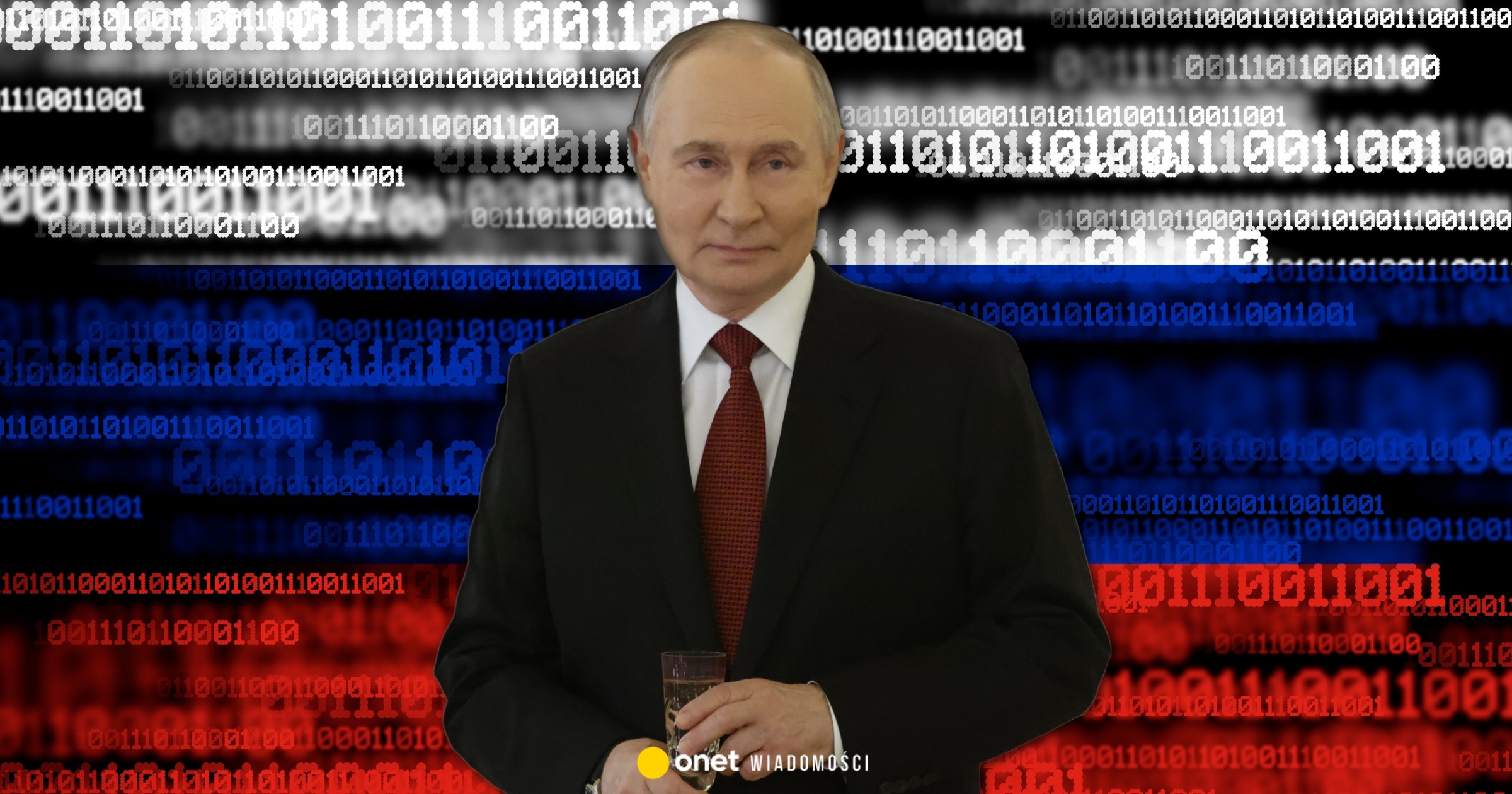
Deep in Russia, the world of digital communications is spiraling. Moscow has already taken steps to block its citizens' access to popular social media (e.g. Facebook and Instagram), slow down YouTube, and restrict access to instant messaging and networks providing content deemed to be inconsistent with censorship. Russia is also redoubling its efforts to monitor the use of virtual private networks (VPNs).
In its 2026 report, Human Rights Watch (HRW) describes how Russian authorities have now begun to restrict voice calls via WhatsApp and Telegram — even considering blocking the Meta messaging app altogether.
Russia does not deny what is happening. The Russian website Meduza reported in August 2025 that the state would partially restrict calls on WhatsApp and Telegram “to fight criminals” and that users had started “complaining about disruptions in messaging services.” The journalists cited Roskomnadzor — Russia's media censorship executive — which said messaging apps “have become the main voice services used for fraud and extortion of money and to trick Russian citizens into sabotage and terrorist activities“.
The move follows a July 2025 bill that would impose fines on ordinary Russian citizens for allegedly intentionally searching for “extremist” content on the internet. Additionally, Ekaterina Mizulina, head of the Kremlin-linked Safer Internet League, called VPNs a “portal to hell.”
BBC Monitoring, in an October 2025 article, noted that “the latest restrictions are seen as part of a wider tightening of state control over digital communications,” pointing out that the plan is to keep ordinary Russians in line with the Kremlin's point of view, perspective and message.
The authors added that Russia's actions against Telegram even caused a “negative reaction among… [rosyjskich] “pro-war commentators” who warned that “cutting off Telegram could harm Russian military communications.”
Broader Kremlin policy
In a July 2025 article, HRW cited estimates that about half of the country's population “don't know how to use VPNs” and “only have access to websites and online services that have not yet been blocked by the Russian government,” further limiting Russian citizens' access to Western communications tools and signaling Russia's relative hegemonic success. According to the report, an increasing number of independent media, websites of human rights organizations, opposition politicians and foreign social media platforms are no longer accessible. Websites turn into windows with the message “connection timeout” and “this site is blocked”.
The changes in Russia are a continuation of what HRW calls “the state's long-standing and meticulous policy towards transforming the Russian part of the internet into a state-controlled and isolated forum“The Kremlin-occupied territories of Ukraine are also subject to similar censorship and disruptions in Internet access by Russian authorities.
In its report, HRW also refers to regular cases of mobile internet blocking across Russia. The blockades take place under the pretext of protecting public safety against attacks by Ukrainian forces.
Russia blames only Ukraine for these outages, and Meduza states:
The number and scale of breaks began to increase in spring [2025 r.]but it intensified in June after the Ukrainian Operation Spiderweb, during which remotely controlled drones (using mobile Internet) attacked strategic airports deep in Russia.
However, it seems that when taking some actions, Moscow is balancing on the verge of risk. The Center for European Policy Analysis (CEPA) explains that the Russian government also needs the same tools it apparently intends to ban. In a November 2025 article, CEPA explains that “VPNs connect enterprises to international systems and enable government agencies to contact foreign suppliers and customers.” In addition, instead of a total ban, Moscow has chosen lack of clarity – a strategy that suits authoritarian control.
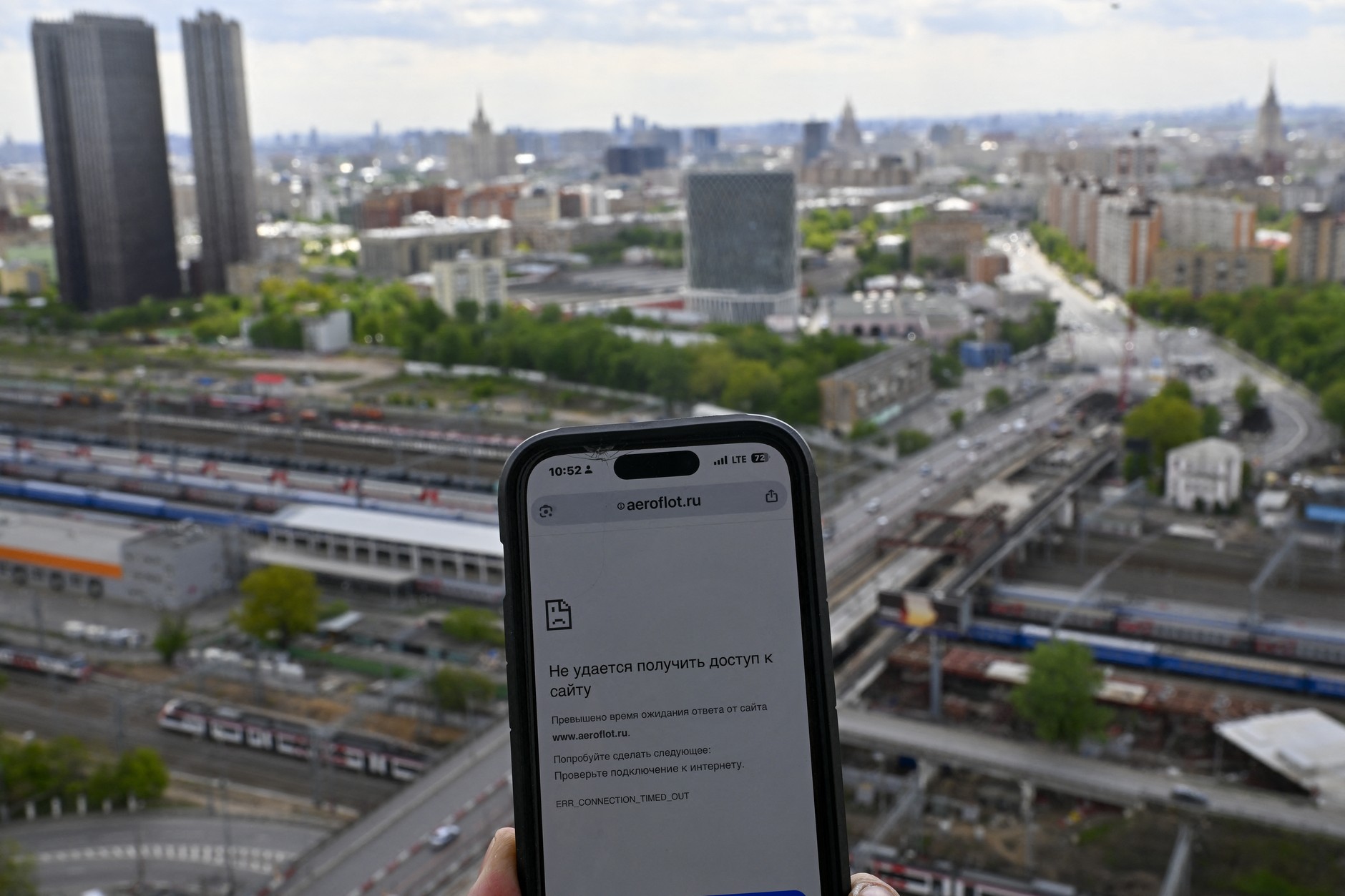
Problem with access to mobile Internet, Moscow, May 7, 2025.SEFA KARACAN / AFP
“Digital Iron Curtain”
Not only does Russia continue to restrict access to more common and popular Western messaging services, but it has also introduced its own messaging app, Max — launched in March 2025 by VK, the company behind Russia's leading social network VKontaktie.
The Russian news site Verstka stated in August 2025 that in at least 57 regions of Russia, public sector employees and officials are forced to switch to Max messenger. The Paris-based organization Reporters Without Borders (RSF) wrote in November 2025 that, in turn, in the occupied territories of Ukraine, the Kremlin's communication application is building a “digital iron curtain”.
The application resembles a closed bubble. According to RSF, Max is only available through a Russian or Belarusian phone number, blocks communication with free Ukraine and collects 100 percent. user data, while also acting as the main one propaganda tools. The organization draws attention to the rapid increase in the number of application users to 50 million. At the same time, this increase is anything but natural — especially since it is supported by Russian President Vladimir Putin, who has reportedly ordered his administration to “accelerate implementation.”
Despite the obvious importance of a national communications platform that the Kremlin regime can closely monitor, investments in user experience have so far raised some concerns. The BBC Monitoring report states that despite an extensive promotional campaign, Max faces “allegations of poor performance, with campaigners raising concerns about the potential government surveillance“.
Interestingly, despite suggestions that Max could cut off Russians from countries that Moscow considers unfriendly, the Russian news agency TASS published an article on the potential expansion of the application, citing comments from American IT consultant Jozef Schutzman. “Max has the opportunity to expand its ecosystem and attract users from abroad to its platform to communicate with users in Russia,” Schutzman said. Whether this is ultimately the Kremlin's intention remains to be seen, given its obvious concerns about “extremist” content coming from the West.
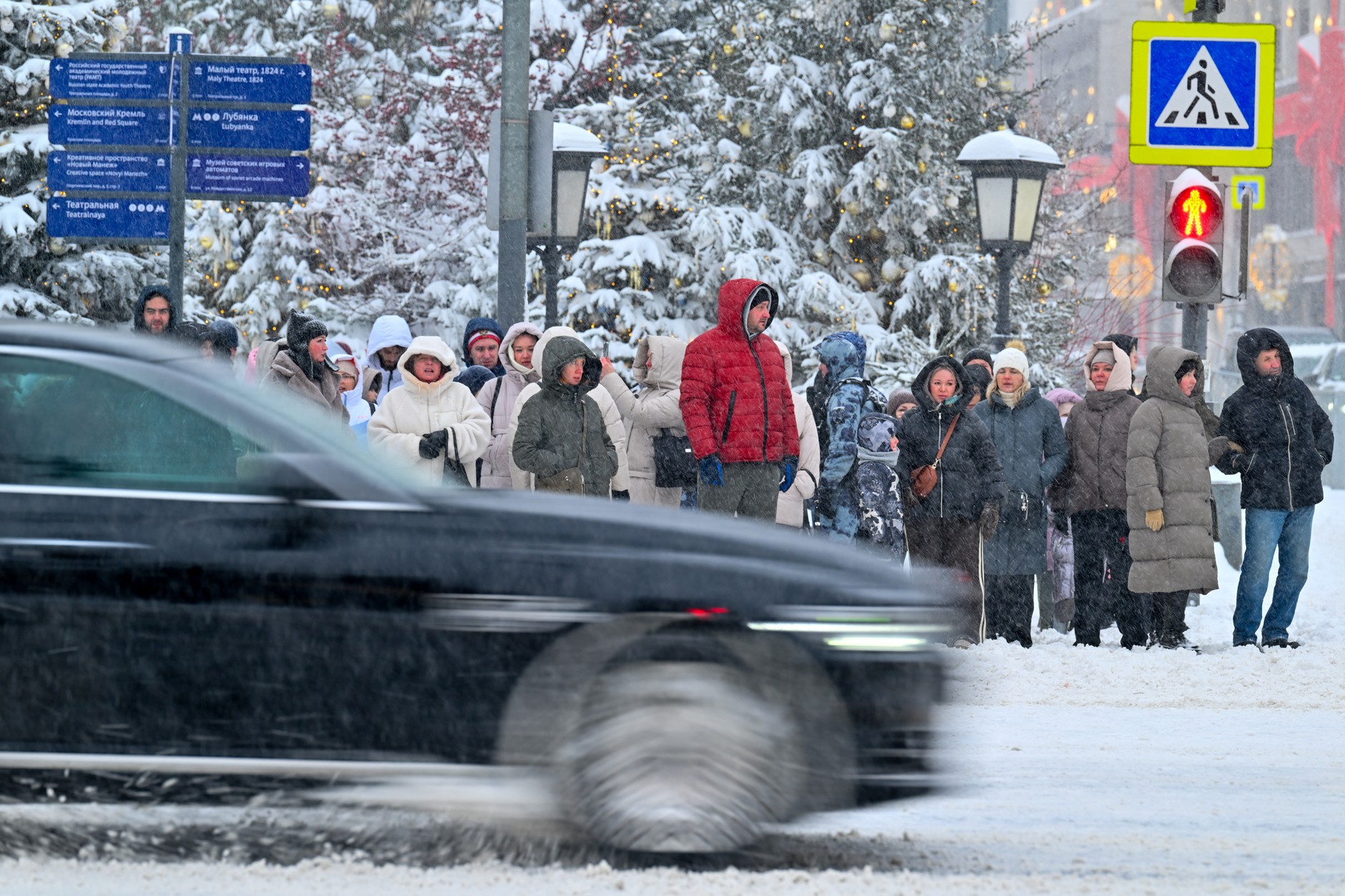
Everyday life in Moscow, January 9, 2026.SEFA KARACAN / AFP
Citizens under control
It is no secret that the Kremlin uses surveillance tactics against its citizens.
Some Ukrainians who have friends or relatives in Russia face obstacles in maintaining contact and even come into direct contact with Russian eavesdroppers.
One Ukrainian citizen who wished to remain anonymous tells the Kyiv Post about the strange encounter. — I have a grandmother in central Russia. I tried calling her on Viber Out to congratulate her on her birthday, but it seems to be FSB [Federalna Służba Bezpieczeństwa Rosji] intercepted the call. I asked who was on the line and said I wanted to talk to my grandmother, but the caller told me “she's busy” and even tried to tell me that he was her grandson. However, she lives alone and has no other grandchildren. I just hung up, says the Ukrainian.
In December 2025, The Odessa Journal cited Ukrainian intelligence services and described how Russia imposed restrictions on international connections from selected unfriendly countries. The measures are to be “presented as an initiative to combat telephone and internet fraud.”
Russia widely intercepts domestic telephone calls, internet traffic and other forms of communication through its System of Operational Investigative Activities (SORM). According to threat intelligence firm Recorded Future, SORM has “evolved from intercepting landline and mobile communications to monitoring internet, Wi-Fi and social media traffic.” Its latest version (SORM-3) enables the collection and long-term storage of traffic and subscriber metadata in a searchable database.
Narrative control
Russia continues to make significant efforts to spread disinformation and stoke uncertainty internationally and domestically. Moscow remains determined to enforce a single, state-sanctioned narrative. Tightening control over digital platforms and communication channels is not just about silencing what Putin sees as dissent. It is about ensuring that only what is heard and accepted within the country's borders Kremlin's point of view.
However, the evidence does not tell us what the Russian public really thinks and feels about information blocking.
Ukrainians wonder how so many ordinary Russians can remain silent in the face of the ongoing invasion and relentless brutality against civilians. However, with protests banned in Russia, turning a blind eye or blocking information are two obvious ways to do so avoiding serious consequences and penalties from the state. The Kremlin's actions to restrict the flow of information from the West simply make it easier.