From Hel to Zakopane by electric car in one day – I admit that the “challenge” that Audi decided to pose by organizing this event was very unusual. AND I found out what it actually was only on the way.
Objective? Travel from Warsaw to Jurata in one day (438 km), on the second day from the seaside to Zakopane (773 km), and on the third day to return to the capital (411 km) from the Polish Tatra Mountains. This direction was chosen on purpose, not the other way around – driving “uphill” to Zakopane was to more effectively check the efficiency of the range. And whether really electromobility is suitable for long routes in Poland.
A machine was made available for implementation – the Audi SQ6 Sportback e-tron in the richest version and with a more powerful battery with a net capacity of approx. 95 kWh (available). There is no denying that this is an option that only a wealthy fan of electromobility will be able to afford – the price of such a vehicle is (depending on the selected options) approximately half a million zlotys. The conclusion would be simple – if such a car could not cope with the trip, the average person would not be able to dream about traveling in his electric car.
So let's go!
Charging. Not what I thought
Obviously, I was most interested in the issue of charging – crucial in such a long journey and what distinguishes cars with green plates from conventional ones. I write more about their costs at the end of the article.
On the way from Warsaw to Hel, we loaded up twice. It's a challenge, but – and here's the first surprise – charging was faster than I expected. Stories about us being condemned to long hours of waiting can be considered fairy tales.
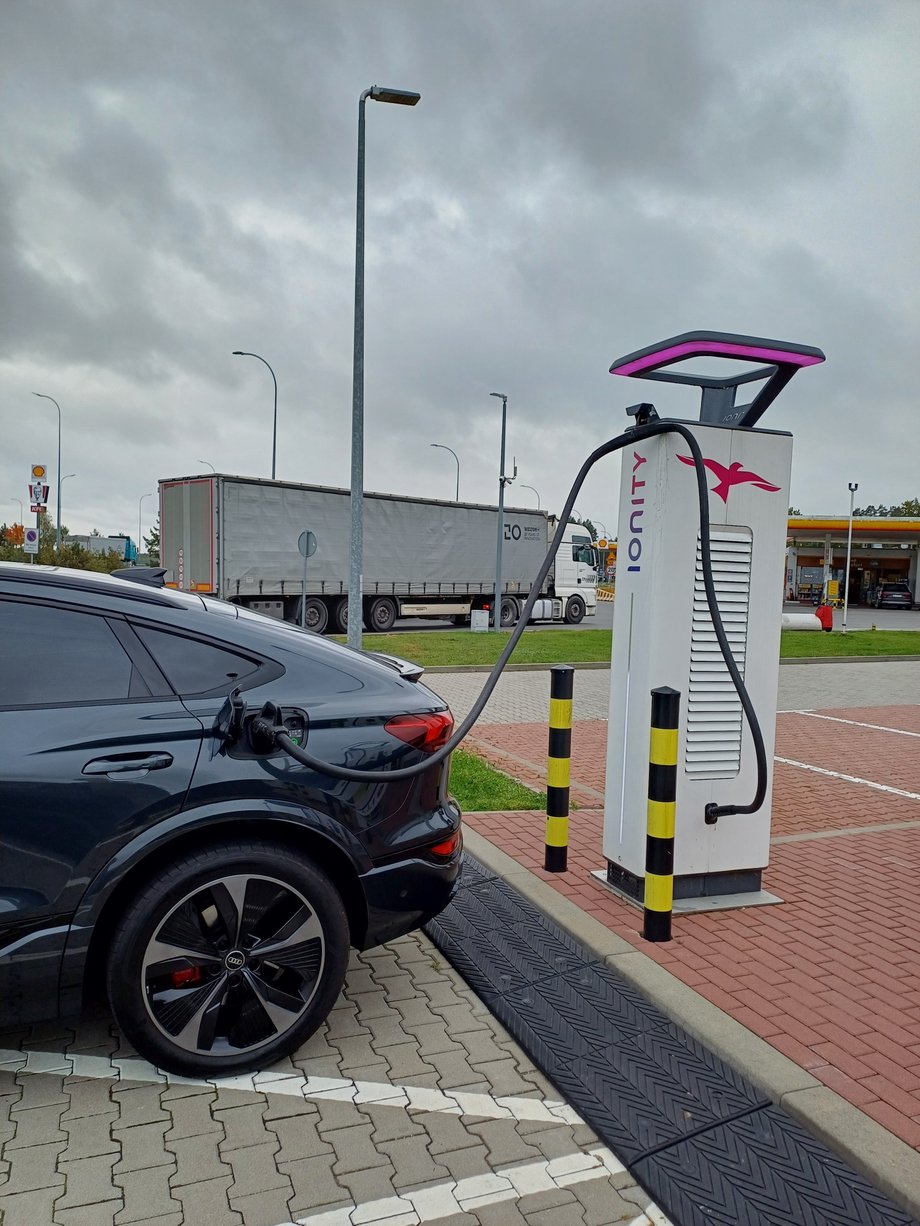
The charging process itself did not turn out to be a problem. However, finding the chargers was a bit of a problem. In some places there are no signs or even roofs in case of rain.
|
Grzegorz Kowalczyk / Grzegorz Kowalczyk
The fastest chargers with power ranging from 150 to 350 kW were available along the route. This means that the car charges really quickly – reaching 80 percent. it takes about 15-20 minutes. This means that during even a shorter trip to stretch your legs or go to the toilet, the car will lose 20-30 percent of its energy. is able to charge up to approx. 60%.
The rest of the article below the video:
There's a little catch here — the more discharged the battery (but not less than 20%), the faster the car charges. After exceeding 80 percent power drops significantly and the last 20 percent we would have to wait a really long time. While on the road, waiting for a 100% charge. (in our case, giving a range of approximately 320 km on highways and expressways) is therefore out of the question. We have to settle for a slightly smaller range, reaching over 200 km.
Well, unless we plan a longer lunch break. “Full charging the battery” is not recommended by the manufacturer itself. He recommends keeping the battery between 20 and 80 percent. A full charge is only indicated as optimal before particularly long journeys.
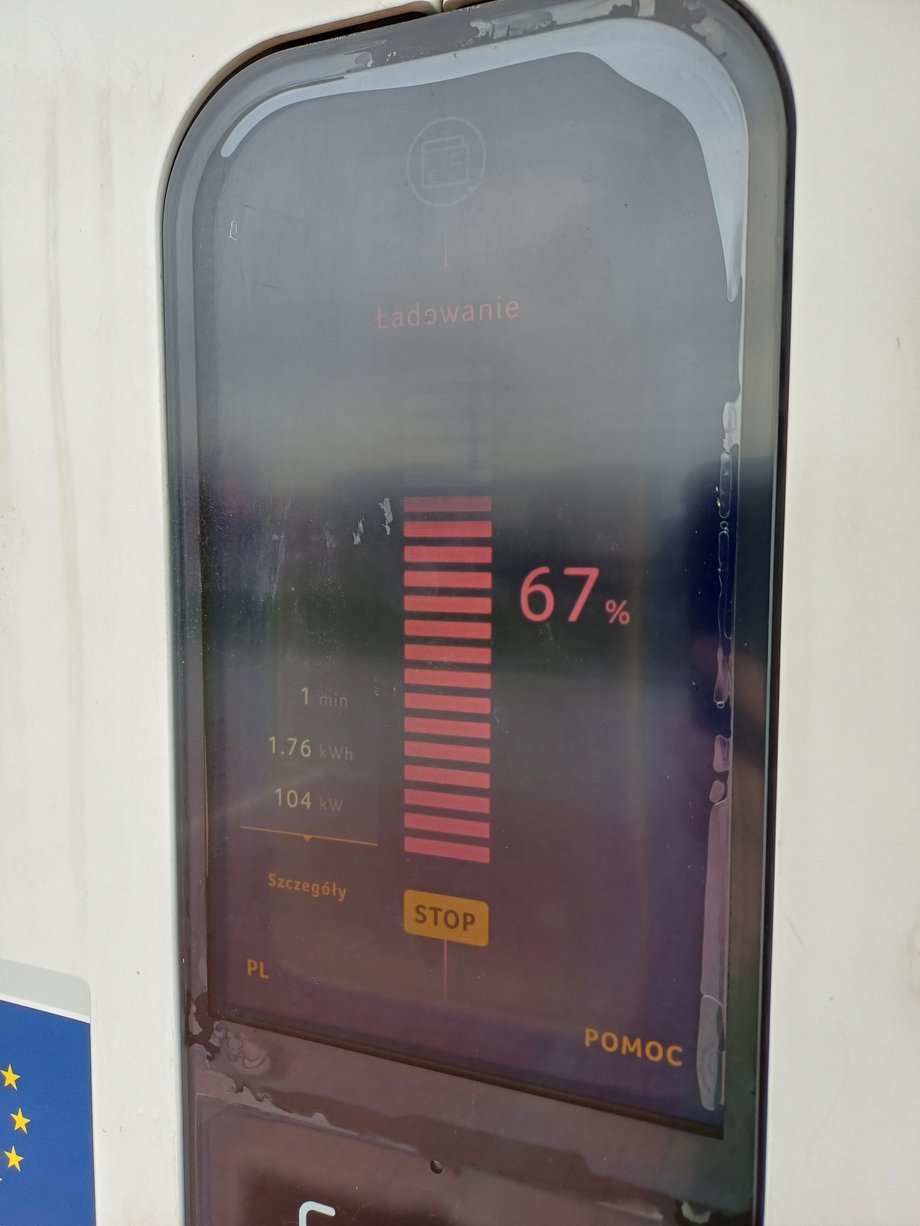
Charging to 80 percent was faster than I expected.
|
Grzegorz Kowalczyk / Grzegorz Kowalczyk
The charging stops certainly didn't prove to be troublesome. The troublesome thing, however, was that to some extent they were dictated by the fast chargers scattered along the route. Using those below 100 kW would be pointless. Then one charging could last even more than 40 minutes.
Problems with chargers
The Achilles heel of the journey is not the issue of charging speed, but the availability of fast chargers. We found out about this when leaving Jurata. After less than three hours of driving, the car had to be charged at the height of Pelplin, although the battery level was over 65%. Why? Accessing another fast installation located in Kutno on “one tank” would prove to be too risky. A quick ten-minute stop solved the problem. But it was necessary for peace of mind.
Especially since charging points turned out to be out of use on our route were the norm. On the way from Warsaw to Jurata, a non-working charger in Rumia meant that we had to go to the next point in Puck. This could be done, but it slightly increased the time it took to finally reach the destination.
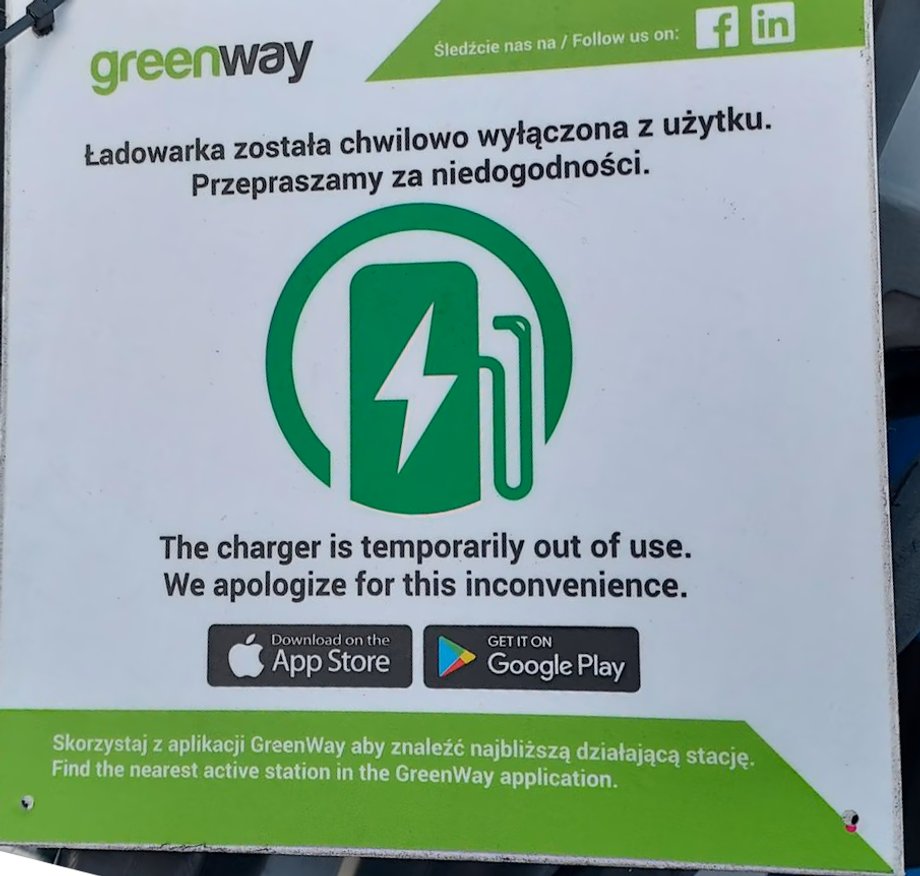
We noticed a sign with this content at the station in Rumia. And sites excluded from use were a common occurrence along the route
|
Grzegorz Kowalczyk / Grzegorz Kowalczyk
During the trip from Jurata to Zakopane, we charged the car three times (at Pelplin, in Kutno and Radomsko, the last time to 100% during the lunch break). The process went surprisingly smoothly, but at each station at least one charger was out of use.
Perhaps the biggest problem for electricians on such a long route in Poland is the psychological one. This requires checking the route in advance and thinking about where we can recharge in the next place. This is an issue that does not bother anyone in the case of combustion engines – gas stations are practically everywhere. Although apparently – as regular users of electric cars assured me – you can get used to it.
The question is, however, do we need a really impressive and comfortable premium car and then look nervously for the scattered charging points? Each user must answer this question for themselves. The fact that the number of chargers in Poland has been growing dynamically recently is certainly a plus. This can be seen in the example of this trip – a few years ago it would certainly have taken much more time, or maybe it would not have been possible at all. We reach Zakopane – including breaks – about an hour later than would be possible in a combustion engine. Although, honestly, it's hard measure it with great precision – perhaps in a petrol car some stops would last shorter if it weren't for the belief in the back of our minds that they can be longer because the vehicle is charging anyway.
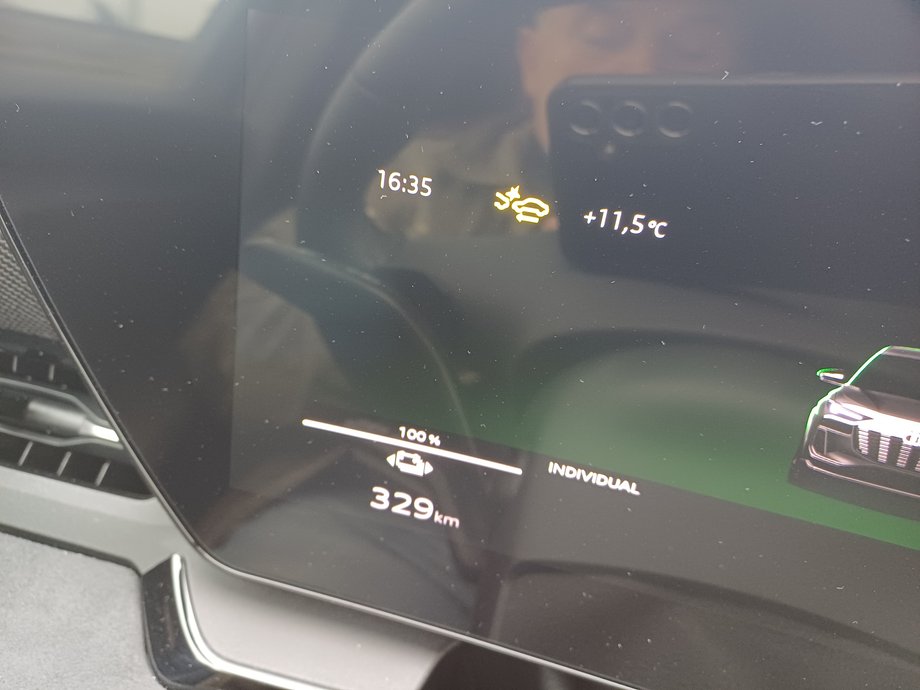
On the highway, the range decreased noticeably faster
|
Grzegorz Kowalczyk / Grzegorz Kowalczyk
Advantages of an electrician
What are the advantages of an electric car on the Polish route compared to a traditional drive? There are several of them – everyone must decide for themselves how important they are for him. The immediate acceleration available “under the boot” in the case of electric motors is certainly useful – although, unfortunately, frequent use of this facility comes at the cost of a faster range drop. While moving along the route, I saw that at a speed of 140 km per hour. the range decreases much faster than at 110-120 km per hour. Therefore, paradoxically, the range decreased noticeably more dynamically on highways in the center of Poland than in mountainous areas, where you had to drive slower.
An electric car is actually quieter and does not “shake”, which is a certain convenience when traveling for many hours, especially compared to older cars. It is known that in this case we are also talking about a car from the premium segment – comfortable, quite roomy and with the latest technological solutions – which makes the journey more pleasant, but it is not comparable to many other electric cars.
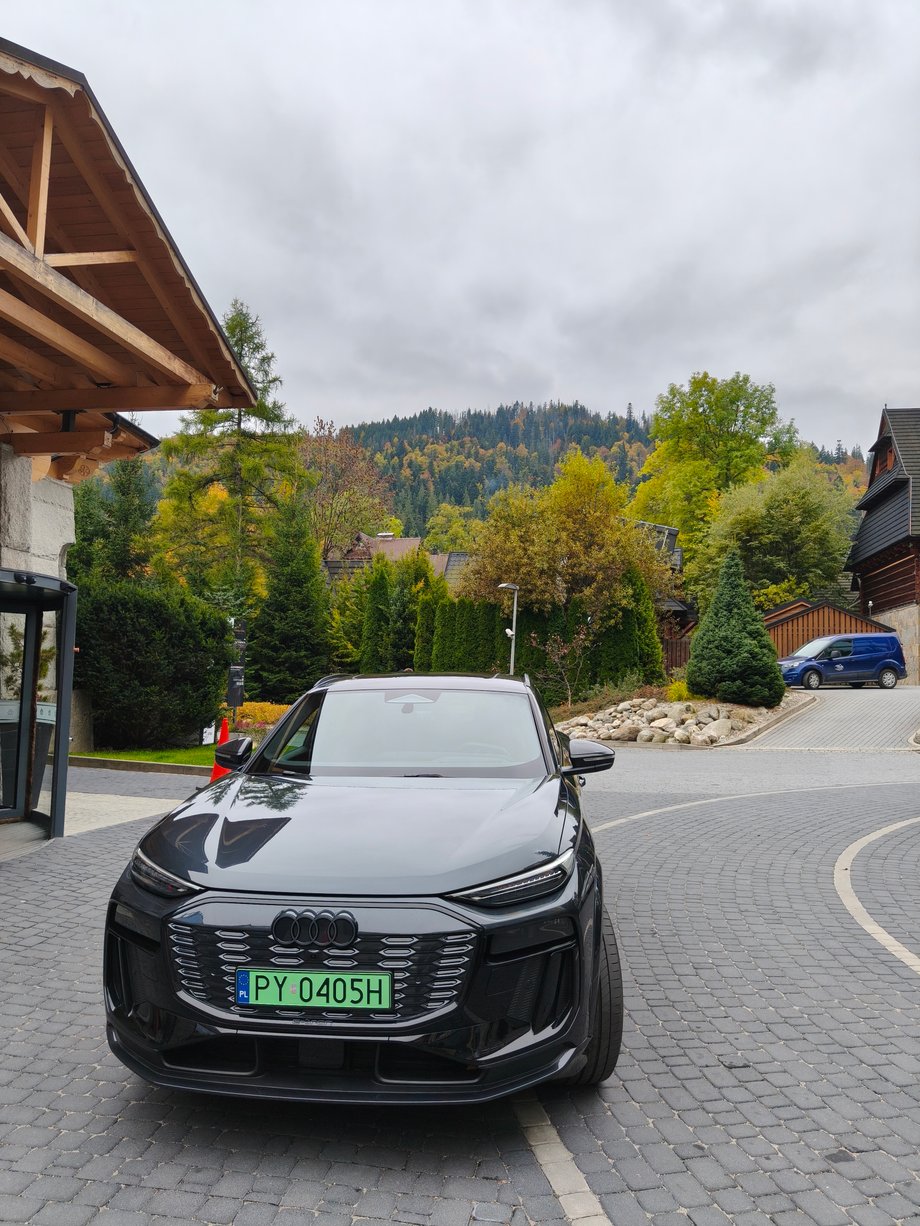
In a premium electric car, even such a long journey is comfortable. It would probably be much more difficult for “ordinary” people
|
Grzegorz Kowalczyk / Grzegorz Kowalczyk
During the trip, I managed to use… a “legal advantage” that is actually useful and available for all electric cars. Due to the congestion of the Krakow bypass, we were forced to drive through the city. And here, traveling using bus lanes turned out to be invaluable as it shortened the travel time.
Is electric cheaper? It depends
In the case of electric cars, faster driving also means much more expensive driving. We used IONITY fast chargers, see price lists 1 kWh costs PLN 3.50. When a car consumes approximately 27 kWh per 100 km, the calculation is simple: on a route of approx. 1,620 km, we would pay approx. PLN 1,530. This is a lot and noticeably more than in a conventional drive.
Fortunately, this amount can be reduced by charging at home (at a favorable tariff), using slower chargers, and driving slower – when driving at a speed of approximately 110 km per hour. consumption is noticeably less. However, it is known that taking these possibilities into account, the journey will also be longer. That's why car manufacturers sometimes offer cheaper charging services as part of a package. This is also the case with Audi. With the Audi Charging plus service (subscription fee is PLN 51.5 per month), prices on Ionity chargers would be PLN 2.05 per kWh. This means that such a trip would cost less than PLN 900 + subscription. In our case, this would mean a cost of approximately PLN 55 per 100 km.
You can travel comfortably and relatively quickly with a premium electric car, even on such a long Polish route. However, this means a certain change in habits compared to what we are used to with combustion engines.
Grzegorz Kowalczyk, journalist of Business Insider Polska