Stalinization by starvation of the Bessarabians. The Soviet-organized famine that killed 300,000 people

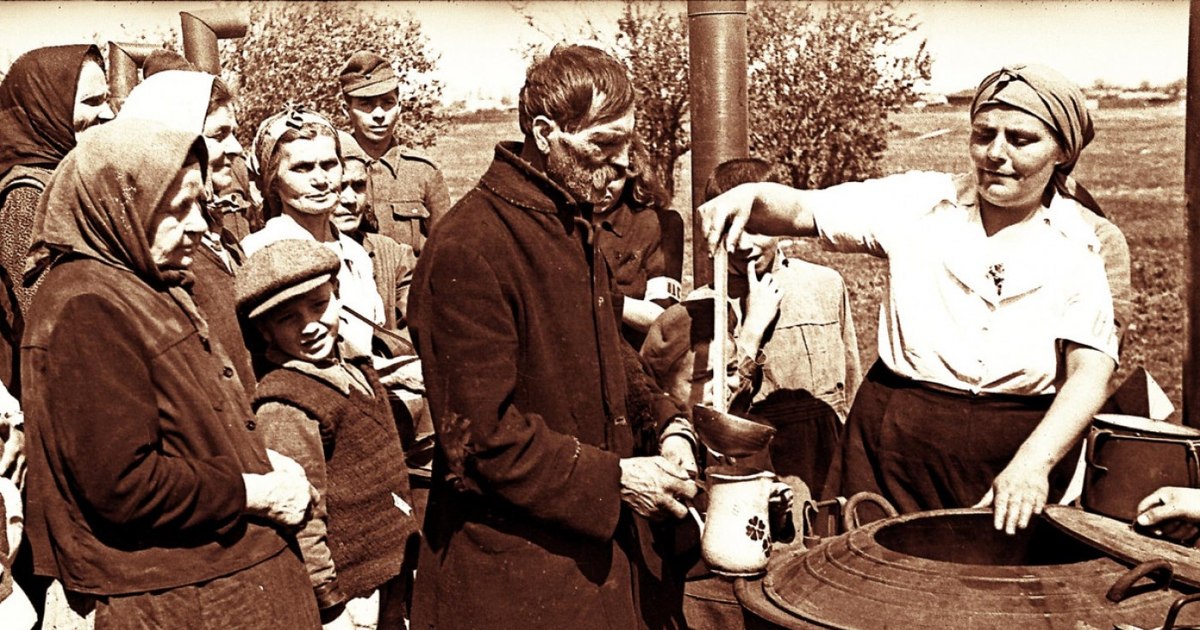
For about two years, Bessarabia was subjected to an organized process of starvation by the Soviet Union. It is about the period 1946-1947 when the Kremlin authorities decided on the total sovietization of the region, with dramatic consequences for the population.
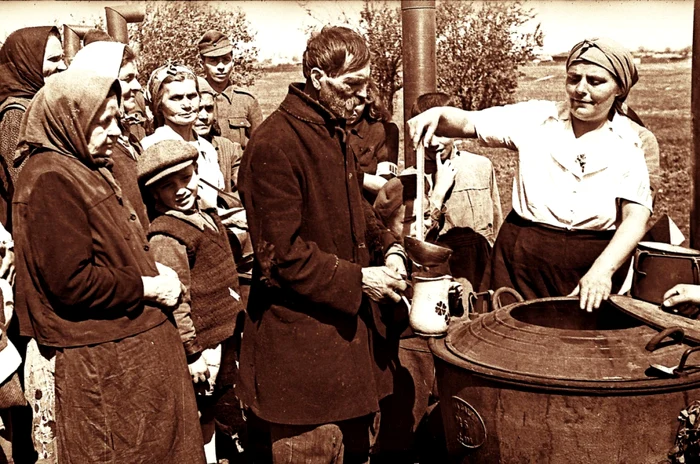
Famine also hit Romania PHOTO ziarullumina.ro
One of the most terrible events in the history of Europe happened in the period 1932-1933, in Ukraine, then part of the Soviet Union. According to the data collected, about 10 million people lost their lives due to an organized process of starving the population. Entire regions were cut off from the rest of the world, people intimidated, systematically starved and brought to the brink of dehumanization. All with Stalin's twist, a real genocide for reasons of political control and to break the Ukrainian peasants' resistance to collectivization. It remained in history under the name of Holdomor, which means “death by starvation”. It was one of the most inhumane methods of Sovietizing and bringing under total control the regions and populations of the former Soviet Union. Although on a much smaller scale and with a larger complex of causes, 13 years later, a similar tragedy took place, also on the territory of the Soviet Union, but to which Romanians from Bessarabia fell victim. It is about the great famine of 1946-1947, which took the lives of more than 300,000 people from today's territory of the Republic of Moldova. Some authors say that it was also an organized process of starvation with the aim of the total Stalinization of Bessarabia and the destruction of the resistance to collectivization of the Bessarabian peasants.
Bessarabia, the pearl of Stephanian Moldavia kidnapped by the Soviets
Bessarabia was part of the Principality of Moldavia until the beginning of the 19th century. With the expansion of the Tsarist Empire, the Romanian Principalities, vassals of the Ottoman Empire, were always coveted by the Russians. Following the Russian-Turkish war of 1806-1812, the Principalities were occupied by tsarist troops. There was a plan from the time of Catherine the Great to create a “Dacia” under tsarist rule. Pressured by the war with Napoleon, the Russians, although victorious, hasten peace with the Ottomans in order not to be caught on two fronts. Initially, Tsar Alexander I asked the sultan for both Moldavia and Wallachia.
The Tsar had also imagined what the new territory would look like administratively divided. Moldova and Wallachia would have been divided into four governorates: Bessarabia, Moldova, Oltenia and Muntenia. The Sultan objected and offered them only that part of Moldavia beyond the Prut, i.e. Bessarabia. “I give you Prut; nothing more; Prut or war. I have sacrificed a great deal so far. Ismail alone pays for your war and you still have four fortresses – that is, Chilia, Akkerman, Bender and Hotin – and a brilliant province, Bugeacul together with the lands of Gregeni, Codru, Lăpuşna, Orheiu, Soroca and the Transprutian parts of the lands of Iasi and Cârligătura”. the grand vizier Laz-Ahmed Pasha conveyed to the Russians. The Russians immediately accepted because Napoleon was knocking on their door. Besides, Bessarabia was the richest part of Moldavia. The Principality of Moldova had lost a territory of 45,630 square kilometers with over 480,000 inhabitants. In this territory there were strong defensive fortresses, towns, villages and lush plains and special wine-growing areas.
“They took the eastern part of Moldova, that is, the best part, the most suitable for raising cattle”, Nicolae Iorga also specified. “Bessarabia is a beautiful country, it brings us great benefits”, said Admiral Tsiceagov, the commander of the Russian troops who had taken Kutuzov's place in the Principality. After the death of Alexander I, in 1825, things will change radically in Bessarabia. Nicholas I comes to the throne, who ratifies Vorontsov's regulation. It is an act that actually begins the Russification of Bessarabia, by canceling the liberties of the province. In addition, the Romanian language is prohibited in public documents. The province will be run and administered only by Russians. Bessarabia had become a governorate in the true sense of the word. The region would return to Romania after the First World War, in 1918. After only two decades, it would be lost again. Through the agreement concluded by Hitler and Stalin in 1939, the well-known Ribbentrop-Molotov Pact, the Russians demanded Bessarabia in exchange for neutrality and non-aggression. On June 26, 1940, the Romanian Government received an ultimatum from the USSR: it was informed that it had to withdraw its troops from Bessarabia and hand over the province to the Soviet Union. The official reason cited by the Russians was that, in 1918, Romania had abusively occupied this province that would have belonged to Russia and, in the view of the Soviets, it was mostly populated by Ukrainians.
“In 1918, Romania, taking advantage of Russia's military weakness, detached a part of its territory, Bessarabia, from the Soviet Union, thereby breaking the secular unity of Bessarabia, populated mainly by Ukrainians, with the Ukrainian Soviet Republic.(…) Now, when the military weakness of the USSR has passed into the past, and the international situation that has arisen demands a quick resolution of the issues inherited from the past in order to lays the foundations for a solid peace between the countries, the USSR considers it necessary and appropriate that in the interests of restoring the truth, it steps together with Romania to immediately solve the issue of the return of Bessarabia to the Soviet Union”the ultimatum showed. For a short period of time, i.e. approximately 4 years, Bessarabia will return to Romania, following Operation Barbarossa, initiated by the Germans to conquer the USSR. After the failure of the Stalingrad offensive and Operation Uranus, the Soviet counter-offensive was launched, and Bessarabia was once again occupied. This time, Romania definitively lost this part of Moldova and Bessarabia was integrated into the Soviet Union.
Drought, war and sovietization
The Soviet Socialist Republic of Moldova, as Bessarabia was called under Russian occupation, suffered terribly from the war. In addition, in 1946 came a terrible drought. “The drought of 1946 had been of unprecedented severity in the last 50 years, but not necessarily from the total lack of rainfall, but from the inappropriate distribution for the agricultural season. The rains came at an untimely time for agricultural needs, thus compromising about 75% of the usual harvest of cereals and other crops”states Dorin Luca, in “The famine of 1946-1947, a tool of control at the hands of the communists”, for the Army Media Agency. This drought had a particular impact on wheat, corn, potato, soybean, millet and bean crops. What accentuated the crisis, however, was Soviet policy. More specifically, the Kremlin's decision to massively and forcibly requisition food despite the drought. The Russians demanded absolutely impossible amounts of grain, especially in drought conditions. The plan for the Moldavian SSR, on July 5, 1946, was set at 165,000 tons, i.e. half of the harvest of the entire region. Just over a month later, the plan was readjusted to 72,000 tons, but even so they were far beyond the country's agricultural capabilities. “In addition to grain, the Soviet state squeezed 25,659 thousand eggs, 419.9 tons of cheese, 12,792 tons of milk, 8,607 tons of fruit, 4,477 tons of vegetables, 10,082 tons of sugar beets and other agricultural products from the peasants on the eve of the famine.stated Maria Țăranu, from the Sighet Memorial in “The organized famine of 1946-1947 in Bessarabia”. At the same time, the tax burden on the locals had also increased. The plan was effectively criminal for the possibilities of the population and the authorities were concerned only with carrying out the plan and satisfying Soviet demands.
“In 1944, the RSSM plan for the delivery of grain to the state was 201.2 thousand tons, in 1945 – 272 thousand, and in the year of terrible drought 1946 it decreased insignificantly to only 265 thousand tons. To an even greater extent the fiscal burden intensified. Thus, if in 1945 the general plan for mobilizing means money from the population of the republic was 147,340 thousand rubles, in 1946 it was 219,050 thousand rubles, which meant an increase of 48.6%”shows Maria Țăranu, in the same material.
Hundreds of thousands of people knowingly left to starve
Famine began to wreak havoc in Bessarabia. The measures taken by the authorities were weak and ineffective. Only the plan and what the Kremlin demanded mattered. “They ate dogs, cats and children ate them. With that hunger it was hard. I was turning the grinder, I was small, the father was concentrating and the mother with small children. It was hard on that hunger”, stated Elena Ciobanu, for Free Europe Moldova.
“The bloated people were walking on the road. When we came out of the puddle, they would take the dead on a sled two or three at a time to the cemetery and leave them in the grave. They didn't make a hole for them anymore, because there was no dinner to dig the hole. They weren't able to dig that hole, the people didn't have any strength. It was a great destruction”stated Dumitru Novițchi for Radio Chisinau. The luckiest ones managed to collect weeds and, mixed with pomegranate, turned them into cakes. Especially the elderly and children were dying on their heads. “Children up to the age of 14 were the ones who suffered the most from hunger. Almost half of those officially registered as dystrophic (400,000) were children (200,000). Children and the elderly were the categories among which the highest mortality was recorded”it says in “The famine of 1946-1947, a tool of control at the hands of the communists”. Some locals even resorted to cannibalism to survive. In total, 153 cases of cannibalism were attested, although it is possible that there were many more.
Moreover, the inhabitants of Bessarabia were imprisoned as in a real starvation camp. A part of the people, maddened by hunger, tried to cross the Prut into Romania. To prevent this, Colonel Vladimir Nikolaevich Asahmanov, head of the 22nd Moldavian Detachment of Border Guards, based in Cahul, was sent to resolve the situation. All those who were caught trying to cross the border were shot. Also, all those who were caught on Romanian territory and surrendered (Romania was under the control of the Red Army) were executed. It is estimated that they died of hunger between December 1946 and August 1947, that is, in nine months, about 300,000 people.
An organized starvation in the name of Stalinization
According to specialists and the testimonies of some survivors of the famine, the whole phenomenon was organized and maintained by the Soviet people for the destruction of the Romanian population, the breaking of the resistance to collectivization and the acceleration of Sovietization. “QIn the first years of the second Soviet occupation of Bessarabia, the Kremlin authorities tried to starve the population, which culminated in the organized famine of 1946-1947. The main reason why the Soviet regime triggered the famine, even if the climatic conditions favored the shortage of food products, was its rapid sovietization, the destruction of the Romanian identity of the population. Terror through starvation was possible because the foundations were being laid for a new social order that could not appear naturally – the Soviet order. The target group were the peasants, promoters of national traditions and values, the vast majority of whom had a hostile attitude towards the Soviet regime, including the creation of kolkhozes and the suppression of any form of resistance. In the summer and autumn of 1946, the republican authorities were not concerned with saving the population from starvation and stopping the increasing mortality, but with fulfilling the collection plans at any costi”, say the Sighet Memorial specialists.
Moreover, on October 12, 1946, the Soviet of the Moldavian Soviet Socialist Republic had taken the decision to intensify the collection of agricultural goods at any cost. “They made them suffer in order to exterminate as many Bessarabian Romanians as possible. With that hunger in these valleys down here, people died like flies.” stated Vasile Ciobanu, a famine survivor, for Radio Europa Liberă Moldova.