“Aquarium full of girls.” How Epstein entangled the world's elite in his web. “Billionaires like to stick together”


When Jeffrey Epstein wanted to meet former French president Nicolas Sarkozy, he turned to one of his friends.
“I would like to meet him,” he wrote in October 2013 to Olivier Colom, a former French diplomat. “If you think it'll be fun.”
“I'll ask,” Colom replied. “He can be cool. And now he speaks English!”
This exchange is one of many messages contained in millions of emails released by the US Department of Justice. They provide a detailed insight into the discreet ecosystem of wealth and power in which Epstein and his associates feverishly amassed contacts, exchanged favors and blurred the lines between personal relationships and public influence.
Leaked emails show how Epstein — a convicted sex offender who died in prison in 2019 — placed itself at the center of a kind of global networkwhich included the Norwegian princess, leading representatives of the financial world and former heads of state and European government.
It is not clear from the emails whether Epstein managed to meet with Sarkozy. The representative of the former French president said that no evidence had been found that such a meeting took place.
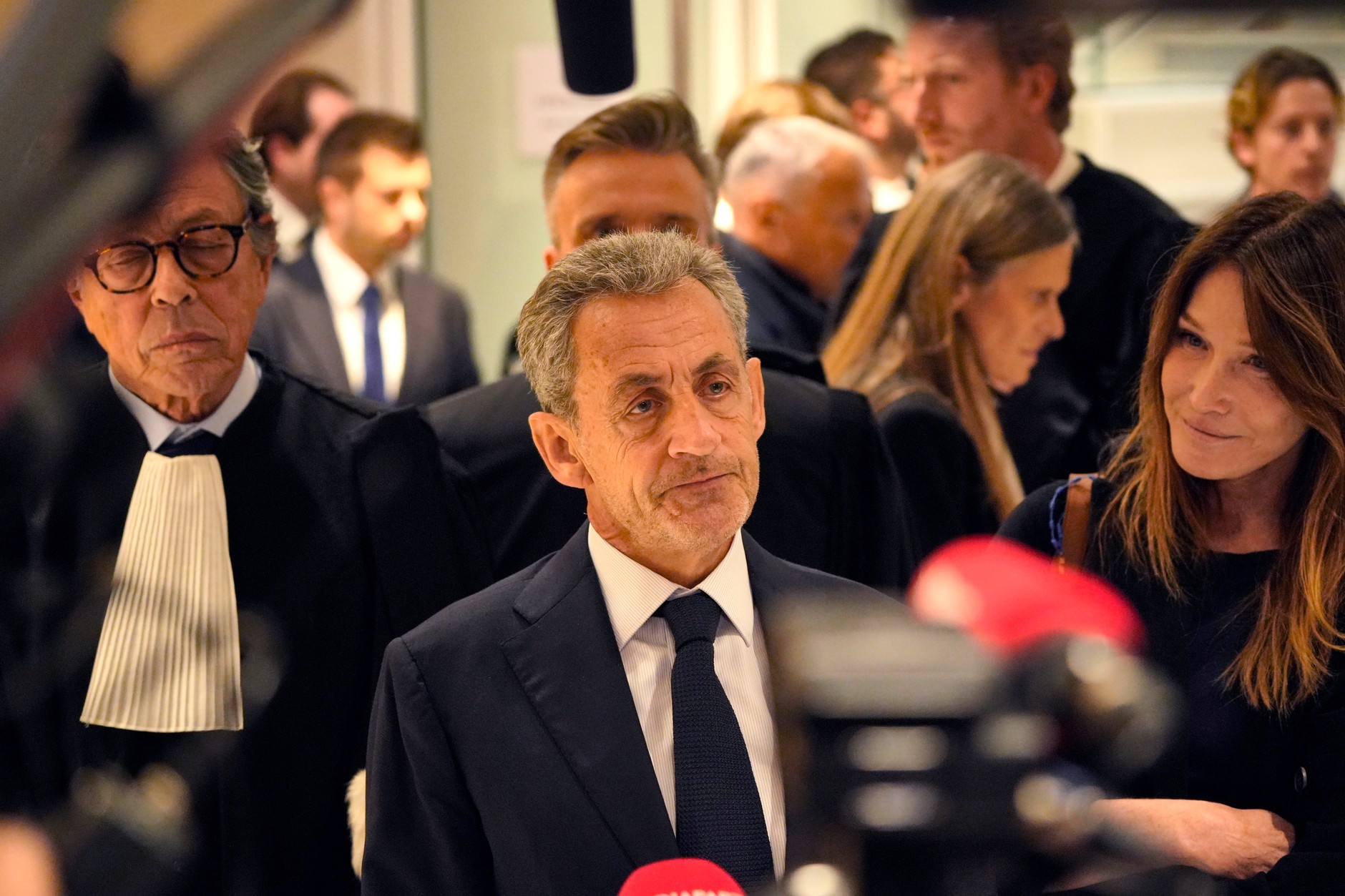
Former French president Nicolas SarkozyRemon Haazen / Contributor / Getty Images
However, the sex offender managed to reach Paris. Epstein often traveled to the French capital. He had an apartment there on Avenue Foch, right next to the Arc de Triomphe.
In March 2019, Epstein sent Steve Bannon, former chief strategist to US President Donald Trump, a photo of himself in front of the Louvre with former French Culture Minister Jack Lang.
“Now at the pyramid,” he wrote. “With the entire government.”
“Amazing photo,” Bannon replied. “Powerful move.”
“Billionaires and very wealthy people like to stick together”
This episode perfectly illustrates Epstein's method: using existing contacts and often exaggerating their importance in order to strengthen his position among the world's wealthy and influential people. This practice continued until his arrest in July 2019 on charges of sex trafficking and conspiracy to traffic minors.
By the time Epstein posed with the former culture minister at the Louvre, Lang's political career was long behind him. The photo was probably taken on the occasion of the celebration of the 30th anniversary of the museum's iconic glass pyramid, to which Lang was invited as the Minister of Culture who initiated the construction of this monument in the 1980s.
In the latest batch of files, released last week at the behest of the United States Congress, we see a pattern of ongoing efforts to curry favor with the world of the powerful and influential elite. Over the years, Epstein's conversations routinely combined personal and professional matters, with offers of material favors and support interwoven with business relationships that blossomed into friendships.
Whether he was offering tea in Paris, meeting in Davos or inviting him to his private island in the Caribbean — where prosecutors say he trafficked and sexually exploited underage girls — Epstein presented himself as a caring, compassionate friend to his fellow 1 percenters. the richest. They shared intimate details of their private lives with him, seeking his advice on business or personal matters.
Often working with his longtime collaborator Ghislaine Maxwell, later convicted of involvement in Epstein's sex trafficking racket, the financier insinuated himself into the highest echelons of global wealth and power.
“Billionaires and very wealthy people really like to stick together,” says William Cash, founder and former owner of Spear's Magazine, a bimonthly British magazine for wealthy people. “They are in their own club and they like to stick together.”
“You can see it in Davos,” he added. “They are a community unto themselves. Epstein and Maxwell understood this and took advantage of it, becoming leaders of this community.”
This dynamic helps us understand how people like Colom — a senior French diplomat who had no obvious reason to approach Epstein — came to be in his orbit.
Colom, a graduate of the Ecole nationale d'administration (ENA), an elite French school for public officials, coordinated global summits for Sarkozy such as the G20 and the UN climate talks. After the loss of the French president in the 2012 elections, he moved to the private sector. Three French officials who worked with him at the time described Colom as a talented diplomat and trusted colleague.
He appears in Epstein's correspondence in an email from a Norwegian diplomat who, in 2011, suggested the financier introduce him to Sarkozy's then-advisor.
This contact continued after Colom left public service and took up employment with the private banking group Edmond de Rothschild. In the emails, the former diplomat appears eager to return favors to Epstein, offering him contacts with ambassadors, a member of the European Parliament, a “rising star in Indian politics” and a “Russian deputy economy minister.” He also suggested that he could provide a “good French butler”.
“I am interested in meeting anyone you think I might like,” Epstein wrote to him in June 2013.
“When you are in Paris, what kind of people do you want to meet?” Colom asked him a few weeks later, in September.
That same month, Colom invited Bruno Le Maire, a famous French politician who later became finance minister, to Epstein's New York home.
A person close to Le Maire, who agreed to speak honestly about the case on condition of anonymity, said that Colom invited Le Maire to meet people from the business world, but he did not know whose house he was going to and quickly left the house after seeing Epstein.
Trustee
Help flowed both ways. In 2014, Colom thanked his “great friend” for his support during marital problems and asked Epstein for advice on his personal finances.
“I want to make a lot of money,” he wrote the following year before one of Epstein's many trips to Paris. “I don't make enough money now. I'd love to visit you.”
Both men also joked and made comments about the women.
“Where are you now?” Colom asked Epstein in a conversation that began with a discussion of a potential business opportunity.
“On my island in the Caribbean, with a fishbowl full of girls,” Epstein replied.
“Of course I would like this view,” Colom wrote.
Colom did not respond to POLITICO's questions about his relationship with Epstein or the content of the emails. The exchange of correspondence analyzed for this article does not indicate criminal behavior by Colom.
During the same period, the billionaire was in regular contact with Coloma's boss, Ariane de Rothschild, to whom he also offered professional and personal assistance. In an email to Rothschild, Epstein gave her safety advice ahead of a planned trip to Nicaragua.
“I have dealt with children of wealthy parents who, for many reasons, want to lead, experience and enjoy what they consider a 'normal' life. The problem is that we live in a different world with different views,” he wrote.
After Epstein urged her not to drive alone in Nicaragua, Rothschild assured him that she would fly in by private plane and hire a driver.
In another exchange in December 2018 — as Yellow Vest demonstrations were rocking France — Rothschild complained about protesters who tried to “rob” her family's sailboat in Brittany and, a few weeks later, one of her banks.
When she referenced the anti-Semitic attacks that have long targeted the Rothschild family, Epstein was empathetic — and offered practical safety advice.
“I suggest boarding up the windows,” he wrote. “And doors. There are crowd-repelling devices using microwaves or very loud sound projectors.”
Rothschild's representative said she had “no knowledge of Mr. Epstein's conduct and personal conduct.” “It is deeply shocked by the actions revealed in recent years and would like to reiterate that it unequivocally condemns the behavior and crimes he has committed,” the representative added.
Influence among members of the royal family
Lang, a former culture minister, described Epstein as a sophisticated “Dr. Jekyll and Mr. Hyde.”
“I met him through Woody Allen,” who is “a friend of mine,” Lang said in an interview with BFM TV. “He came regularly to Paris for art exhibitions… The Jeffrey I knew was a man passionate about art, charming.”
Lang told POLITICO he “knew nothing about Epstein's crimes.”
Despite the fact that Epstein pleaded guilty in 2008 to soliciting a minor for prostitution, the financier was able to gain the favor of famous executives, influential politicians and members of the royal family who entrusted him with the details of their everyday lives.
“Come save us. I'm dying of boredom,” wrote Princess Mette-Marit of Norway in a 2012 email.
“I'm looking for a wife. Paris turns out to be interesting, but I prefer Scandinavian women,” Epstein wrote to her a few weeks later.
“Paris is good for betrayal,” replied the duchess. “Scandinavian women are better candidates for wives. But then again, who am I to say that?”
In a statement released to the press by the Norwegian Royal Court, Mette-Marit of Norway said she regretted “any contact with Epstein.” “I must take responsibility for not investigating Epstein's background more thoroughly and realizing what kind of person he was sooner.”
Epstein didn't just hang around the rich and powerful. He blended into their environment, including the World Economic Forum (WEF) in Davos, Switzerland.
He was close to the event management. In the emails, colleagues ask him to provide invite-only access to the meeting, organize meetings and help interested people get into WEF-affiliated mentoring programs.
When former US Treasury Secretary Larry Summers complained to Epstein in 2018 that he had been slighted, Epstein offered to “ask” his “good friend”, Borge Brende, who is the president and CEO of the WEF.
The following month, Summers asked Epstein: “If you can, please try to get me invited to next year's meeting in Davos.”
A spokesman for Summers did not respond to a request for comment.
Brende, Norway's former foreign minister, met with Epstein at least three times in 2018 and 2019. They exchanged text messages and emails.
Back in November, Brende denied having any contact with Epstein, but changed his story after their relationship came to light in the latest batch of emails.
The WEF confirmed to POLITICO that Brende attended “three business dinners with Jeffrey Epstein and subsequently engaged in email and text message correspondence with him.”
The first dinner, held in 2018 at Epstein's New York residence, took place on Brende's birthday.
“Candles,” Epstein wrote in an email before the dinner. The two also exchanged views on the future of Davos.
“We need a new global architecture,” wrote Brende. “The World Economic Forum (Davos) is of unique importance – public and private.”
“Davos really can replace the UN,” Epstein replied.
“:-) Trust me,” replied Brende.
“I trust you, 100 percent :),” Epstein replied.
Brende stated that he had “no idea about Epstein's past and criminal activities” and if he had known about it, he would have declined all invitations and stopped communicating.
“I realize I could have conducted a more thorough investigation into Epstein's history and I regret not having done so,” he said.
Before another dinner in June 2019, Brende emailed Epstein's assistant.
“Can't wait – sushi would be amazing,” he wrote.
Three weeks later, Epstein was arrested. A month later he died in prison.