February 4, the day George Washington was elected the first president of the USA. He laid the foundation for the US military and the Constitution


On February 4, 1789, George Washington becomes the first president of the USA. Also on February 4, the Romanians win the world bobsled title in 1934, and the construction of the Bucharest-Pitesti highway begins in 1967.

White House PHOTO: Shutterstock
1789: George Washington, first president of the United States
On February 4, 1789, George Washington is unanimously elected the first president of the United States by the Electoral College. This date marks the end of the first American presidential election, with Washington receiving the votes of all 69 electors from states that had ratified the Constitution. John Adams becomes Vice President.
Washington (born February 22, 1732, Virginia – died December 14, 1799, Virginia) was an American general and statesman, with an essential role in obtaining the independence of the American colonies from the Kingdom of Great Britain. In 1775, he was appointed commander-in-chief of all the military forces of the British North American colonies in revolt against England, and he organized the American army that won decisive victories at Saratoga (1777) and Yorktown (1781), pivotal to the independence of the United States.
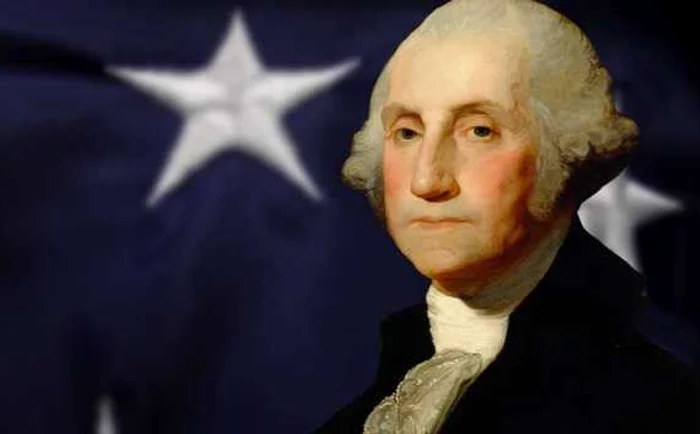
George Washington PHOTO: britanica.com
In 1787, Washington presided over the Constitutional Convention that adopted the US Constitution, signing the founding document, still in effect today. As president from 1789 to 1797, he pursued a conservative domestic policy and advocated isolationism in foreign policy, recommending in his farewell address that the US intervene as little as possible in world political affairs and not ally with any European power.
1934: The Romanian two-man bobsled team wins the world title
The sport of bobsleigh appeared in Romania around 1909, according to the Encyclopedia of Physical Education and Sport in Romania. At first, the activity was seasonal, limited to a few days a year around the winter holidays. From 1910, official competitions began to be organized under the name of “competitions for winter sports”.
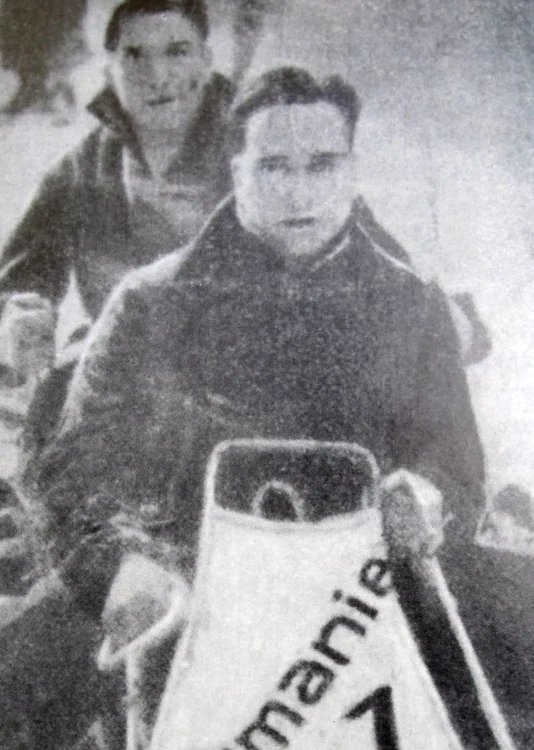
Alexandru Frim and Vasile Dumitrescu Photo: urbology.ro/prosport.ro
On February 4, 1934, the Romanian bobsled crew consisting of Alexandru Frim and Vasile Dumitrescu wins the world title in Engelberg, Switzerland. They were rewarded with “National Award for Sports”, official recognition of exceptional performance. This victory remains a landmark in the history of Romanian sports, marking the beginning of the international affirmation of Romanian bobsleigh.
1967: Construction of the first highway in Romania begins: Bucharest-Pitesti (A1)
On February 4, 1967, the construction of the Bucharest-Pitesti Freeway began, the first freeway in Romania, designed by specialists from the Institute of Road, Naval and Air Transport Design (IPTANA), on the orders of Nicolae Ceaușescu.
The decision came after, in 1964, Ceaușescu requested to find a solution to streamline traffic and increase speed on DN7, between Pitesti and Bucharest. The technical-economic study from 1966 showed that a new direct road between Bucharest and Pitesti would reduce the journey by 25 km.
The highway was designed for speeds of up to 140 km/h, although cars in the 1970s did not reach these speeds. The work was completed in 1972, with the highway having a length of 96 km and four traffic lanes, being made with 445,000 tons of asphalt.
1988: Death of the poet and publicist Alexandru Căprariu
Alexandru Căprariu (b. December 20, 1929, Cluj-Napoca) was a poet, essayist and publicist, a graduate of the Faculty of Philosophy of the University of Cluj (1952). He also attended the courses of the “Mihai Eminescu” School of Literature, being expelled for prohibited readings, including Arghezi.
He debuted in “Almanah literar” in 1949 and collaborated in publications such as Tribuna, Contemporanul, România literară, Luceafărul. He was director of “Dacia” Publishing House (1969-1986) and editor of “Tribuna”.
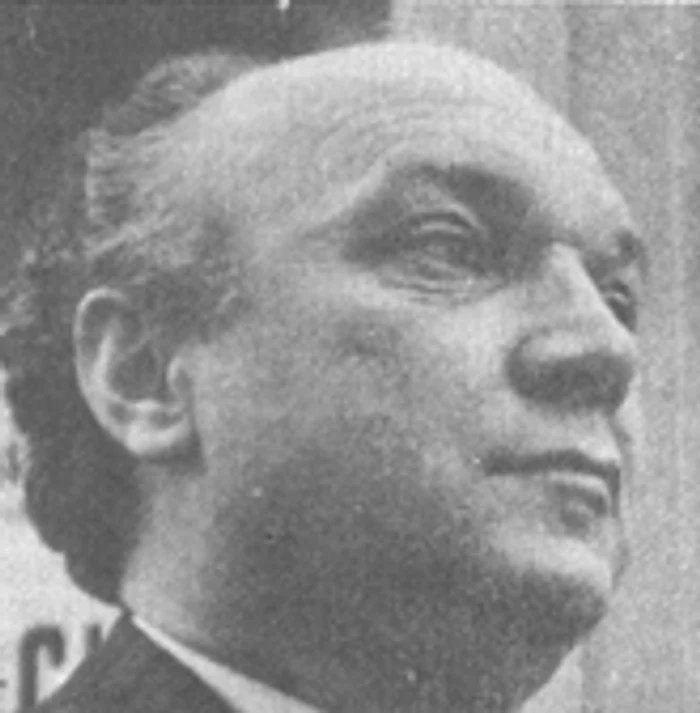
Alexandru Căprariu PHOTO: archive
His volumes of poetry include: Horizons (1963), Circles of Love (1966), Little Autobiography (1975), Great Autobiography (1979), Eyes Everywhere (1981), The Herb with Memories (1984) and Daily Sunsets (1985). He received the Writers' Union Award (1975) and the Cluj-Napoca Writers' Association Award (1979). Alexandru Căprariu died on February 4, 1988 in Cluj-Napoca.
1993: The actress Marietta Rareş died
Marietta Rareş (b. March 31, 1896, Bucharest) graduated from the Conservatory of Dramatic Art in Bucharest in 1918 and had a long career on the stages of the Odeon Theater and the “Lucia Sturdza Bulandra” Theater.
Among the plays in which he played are: Little Red Riding Hood by Evgheni Ciornîi, The Seagull by Chekhov and Twelfth Night by Shakespeare. She was also cast in films such as Ecaterina Teodoroiu (1921), In sat la noi (1951) and La moara cu noroc (1956). He also acted in television productions, including the series Cireșarii (1972).
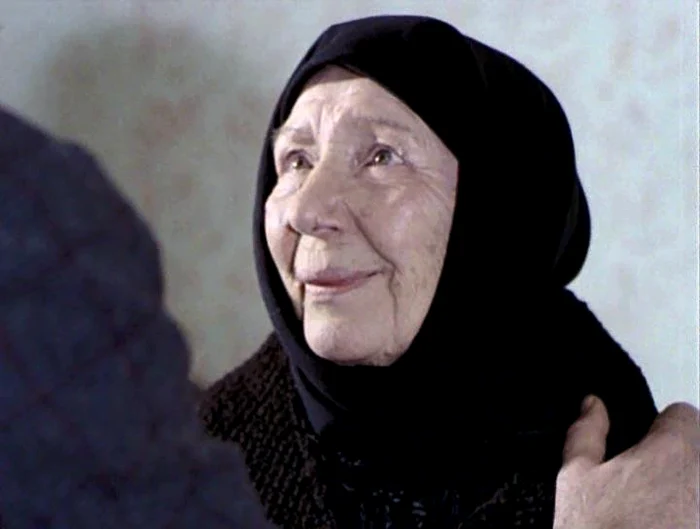
Marietta Rareş PHOTO: Uniter
At the 2nd edition of the UNITER Awards Gala, Marietta Rareş received the “Award for the entire activity”. The actress died on February 4, 1993, in Bucharest.
2001: Composer Iannis Xenakis passed away
Iannis Xenakis (b. 29 May 1922, Brăila) was a French architect, mathematician and composer of Romanian origin. At the age of ten he emigrated with his family to Greece, and during the Nazi occupation he participated in the Greek resistance movement.
In 1947 he obtained his engineering degree at the Athens Polytechnic, and for political reasons he emigrated to France. He collaborated with Le Corbusier and, in 1967, taught at Indiana University in Bloomington.
In 1972, he founded the Center d'Etudes de Mathématiques et Automatiques Musicale and was a professor at the Sorbonne for 17 years. Xenakis became famous for his contributions to stochastic music, composed based on probabilistic systems. He died on February 4, 2001, in Paris.
2004: Mark Zuckerberg launches Facebook
Mark Zuckerberg launches the Facebook social network on February 4, 2004. Initially available only to Harvard students, the network later expanded to other universities and then worldwide.

Mark Zuckerberg PHOTO: FB
The platform was designed to create a comfortable environment for users to share information about themselves, providing a human dimension that other sites did not offer.
Facebook is one of the most widespread social networks in the world. Users can enter this network from any place where there is access to the Internet based on a password, initially established by filling in the registration form containing a whole series of personal questions.
2008: World Cancer Day
February 4 is World Cancer Day, an initiative of the International Union for Cancer Control (UICC) to raise awareness of the disease and promote prevention, detection and effective treatment.
2019: The writer and journalist George Stanca passed away
George Stanca (b. May 7, 1947, Buftea) graduated from the Construction Institute in Bucharest and was, in his youth, the soloist of the rock band Odeon. His debut as a publicist took place in 1971 in the magazine Săptămâna a lui Barbu.
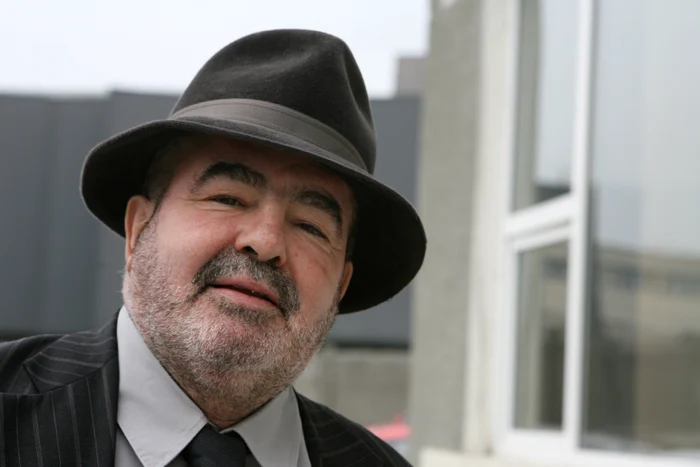
George Stanca PHOTO: archive, the truth
Throughout his career, Stanca worked as an editor at Flacăra, was the founder and musical secretary of Cenaclului Flacăra and published volumes of poetry such as Tandrețe maxima (1981), Poeme pricinoase (1983) and Excursie cu liftul (1988). As the musical secretary of the cenacle, he was the one who discovered/brought Mircea Vintilă, Dan Chebac, Adriana Aush, Radu Gheorghe, Mihai Diaconescu alias Anghel Mora and others.
Since 2007, he has been a columnist for the Click! newspaper. George Stanca died on February 4, 2019.