However, as early as September, Russia came up with its first proposal to renew the agreement, according to two people familiar with the backstage of the negotiations Donald Trump's administration has not yet provided a formal response. The New START treaty, which expires on Thursday, February 5, was signed in 2010 and limited the number of deployed missiles, bombers and nuclear warheads that both the US and Russia could have at their disposal.
The breakdown of this agreement comes at an extremely tense moment. Russia and China are expanding their strategic arsenals, and the Kremlin has threatened to use nuclear weapons against Ukraine.
The U.S. Department of Defense held a series of internal meetings preparing for a “post-New START” world, according to three people who were granted anonymity due to the confidential nature of the talks. However, it is not known what specific scenarios were discussed.
The world is on the threshold of an era without nuclear rules of the game, and the last fuse is now disappearing. At stake is not only the US-Russia relationship, but the global balance of power, in which China and, increasingly loudly, Europe are getting involved.
“We face a very uncertain future,” said Daryl Kimball, executive director of the Arms Control Association.
If Trump and Putin don't reach some sort of agreement soon, it's quite possible that Russia and the United States will start increasing the number of warheads on their missiles again.
– he added.
Moscow and Beijing continue to arm themselves
Over the past decade, Russia has significantly expanded its intermediate-range nuclear forces, including systems such as the Oreshnik, a ballistic missile it has already used in combat against Ukraine. China, on the other hand, more than doubled the size of its nuclear arsenal at a time when the US was limiting some of the platforms capable of carrying nuclear weapons.
President Donald Trump signaled that he was interested in the new agreement, but emphasized that would also like to include China in it. In turn, Vladimir Putin's proposal from September assumed the extension of the New START limits for another year, but without the possibility of conducting inspections.
Putin also demanded that Britain and France participate in the new treaty. Both countries have nuclear weapons – they can launch missiles from submarines or drop nuclear bombs from planes – although they do not have land-based intercontinental ballistic missiles.
It is now that communication channels and transparency mechanisms would be particularly valuable. Russia has suspended such activities, and China consistently refuses to participate in arms control
– said Heather Williams, director of the Project on Nuclear Issues at the Center for Strategic and International Studies.
The Pentagon referred questions to the White House. The statement said that Trump “will decide on his own the further direction of nuclear arms control policy and will present it at a time of his choosing.”
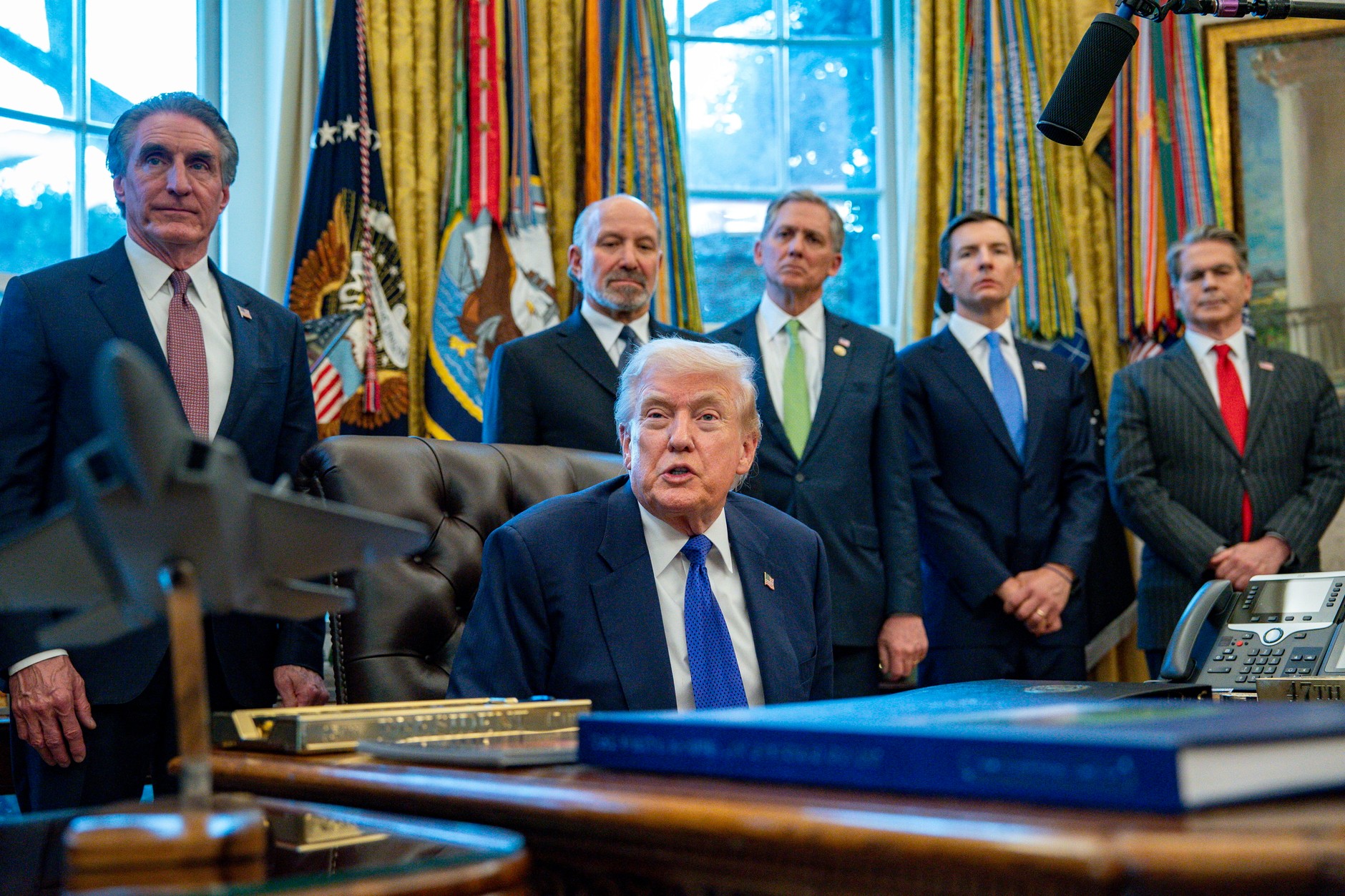
President Donald Trump in the Oval Office at the White House in Washington, D.C., U.S., February 2, 2026.PAP/EPA/BONNIE CASH / POOL / PAP
“If it expires, it expires”
However, when considering next steps, the president downplayed the risk associated with the absence of an arms control agreement in the foreseeable future. In a January interview with The New York Times, he said he would be able to negotiate a better agreement.
“If it expires, it expires,” he said. “We'll just make a better deal.
Some former officials, however, have expressed frustration with the administration's willingness to abandon the treaty simply because it does not cover China.
“It has never been clear to me why we would throw out all restrictions on Russian strategic forces just because New START was not a panacea covering all nuclear weapons, and that was never its goal,” wrote Kingston Reif, a former senior Pentagon nuclear official, in a post on Linkedin.
“A Terrifying New World”
The expiration of New START would mark the first time in nearly 40 years — since Ronald Reagan's administration — that The US remains without any nuclear weapons control treaty with Russia.
Some Democratic members of Congress also raised the alarm in the final days before the agreement expired. Several of them have introduced a bill that would make it official U.S. policy to pursue negotiated reductions in the number and importance of nuclear weapons. The bill also includes a ban on nuclear tests – a step that Trump has previously threatened – which will most likely end its chances in the Republican-controlled Congress.
If we allow New START to expire without a replacement or extension, we will enter a terrifying new world we haven't seen in decades: a world without any limits on the arsenals of the two largest nuclear powers.
— Rep. John Garamendi of California, one of the bill's co-sponsors, said in a statement.
The arms race is coming back through the back door
However, experts do not expect any immediate changes in the global balance of nuclear forces. So far, inspectors have monitored compliance with the limits by both countries. However, in 2023, the Kremlin blocked the possibility of observing its arsenals, which significantly limited the enforcement of the treaty provisions.
Moreover, Russia's original proposal to resume talks did not include verification mechanisms such as inspections or data exchange, meaning that the road to rebuilding real control may be very long.
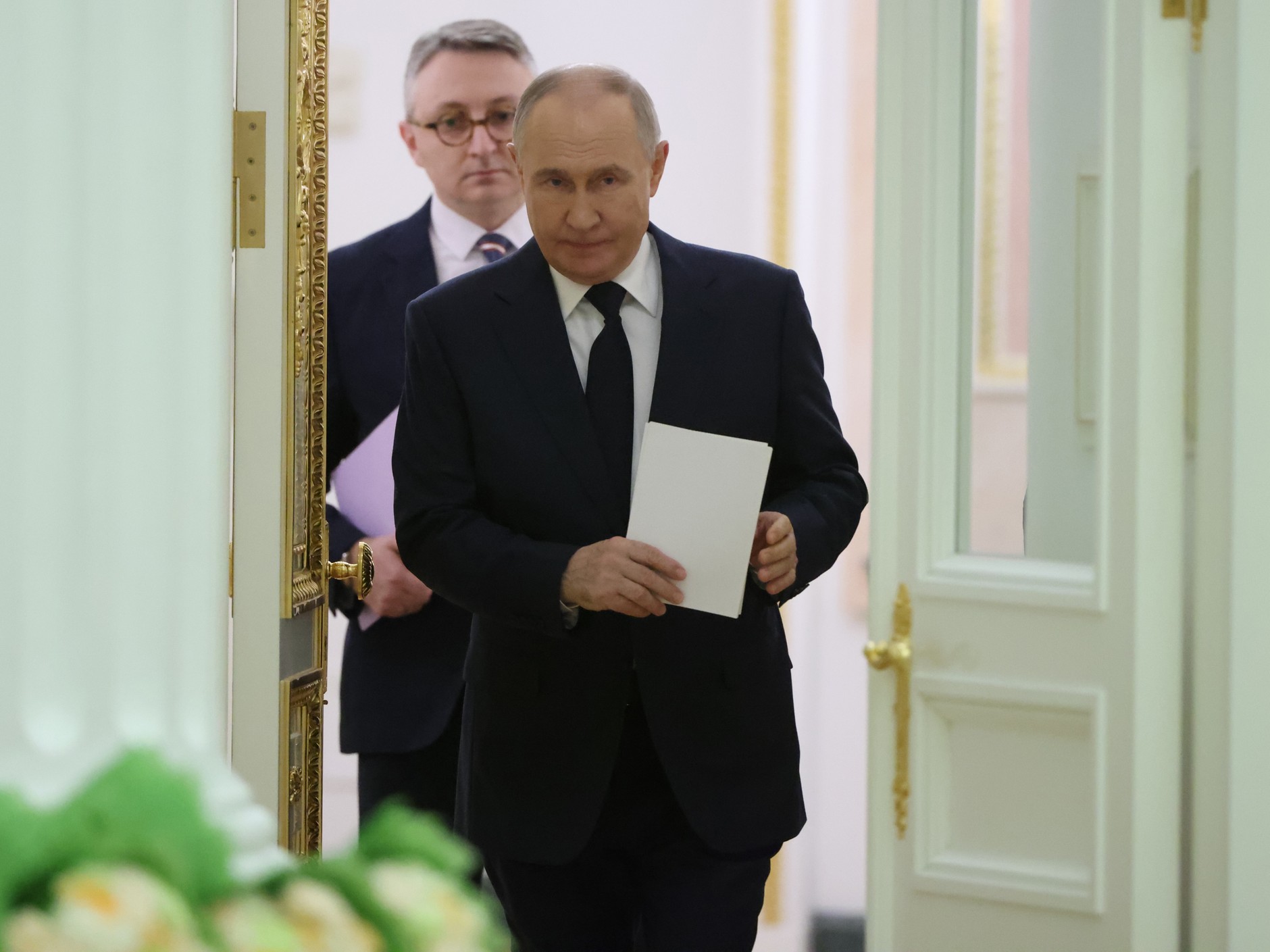
Russian President Vladimir Putin in the Kremlin, December 24, 2025 (stock photo)Contributor / Contributor / Getty Images
Meanwhile, the US nuclear arsenal is rapidly aging – some systems are over 50 years old. Russia, on the other hand, has already started modernization, developing new types of weapons, such as the Poseidon underwater drone or hypersonic weapons, which were not subject to New START restrictions at all.
“If new types of strategic weapons are being developed, they should be discussed, but the Russians are not willing to agree to that,” said Steven Pifer, a former State Department official who worked on former Soviet, European and arms control issues.
In practice, the Russians say: “we can extend the limits, but we will not allow any verification.”
– he added.
All this means that the Pentagon may have to frantically search for new ways to counter the rearmament of Russia and China. U.S. allies may also take their own actions — not necessarily in close cooperation with Washington.
Nuclear Europe?
For the first time in decades, Europe may also join the arms race and begin the expansion or proliferation of nuclear weapons. German Chancellor Friedrich Merz said last week that allies had begun discussions on creating a common “nuclear umbrella” on the continent.
Swedish Prime Minister Ulf Kristersson announced that he had started diplomatic talks with France and Great Britain – the only European states with nuclear weapons – on the development of additional nuclear capabilities for Europe.
Experts expect that China's leader, Xi Jinping, will also react to these events.
“This will only encourage China to accelerate the already alarming expansion of its strategic arsenal,” Kimball concluded.
I’m Ashley Davis as an editor, I’m committed to upholding the highest standards of integrity and accuracy in every piece we publish. My work is driven by curiosity, a passion for truth, and a belief that journalism plays a crucial role in shaping public discourse. I strive to tell stories that not only inform but also inspire action and conversation.