
Romania is preparing the security shield for Neptun Deep and the infrastructure in the Black Sea, announces Nicușor's economic advisor Dan

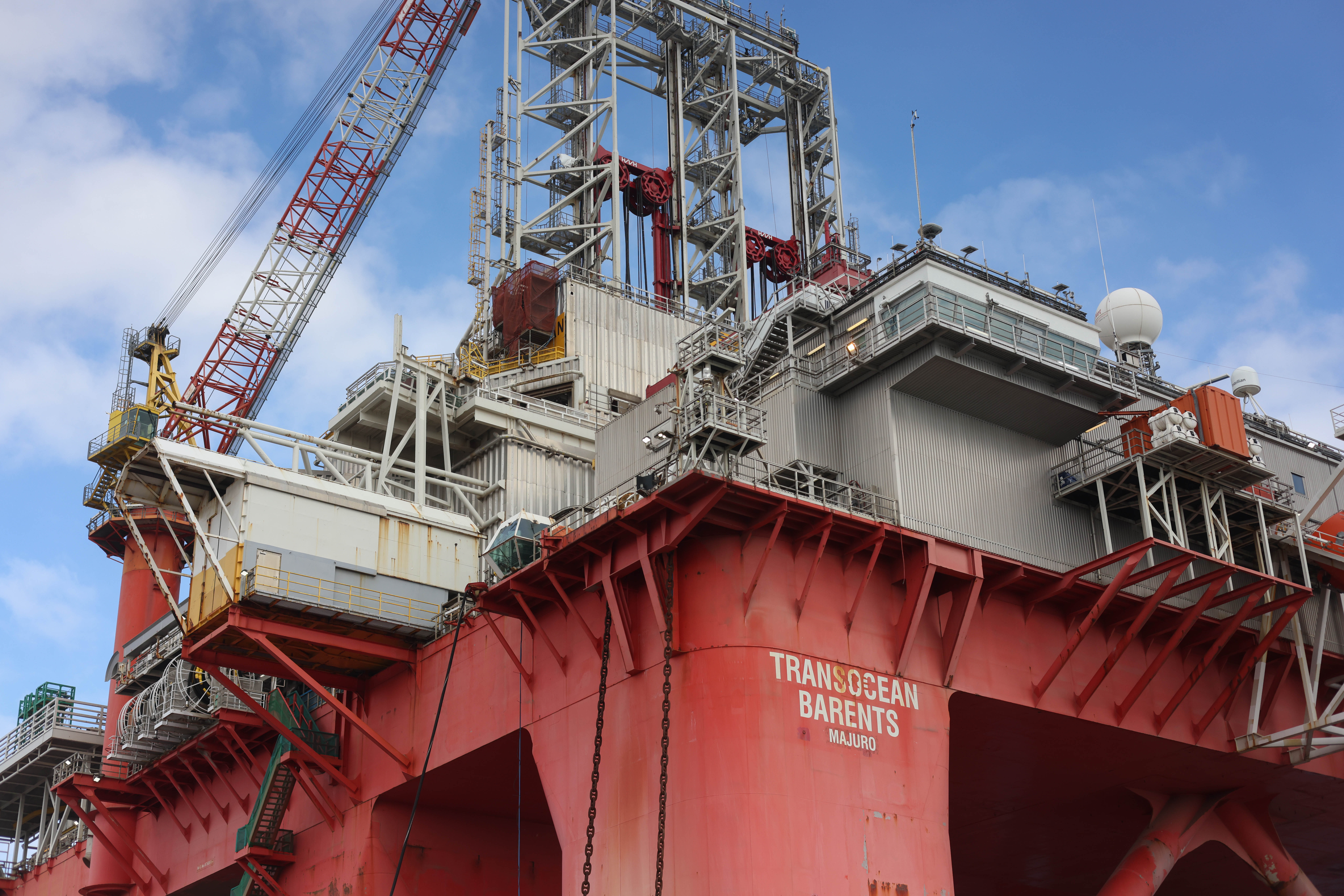
The Neptun Deep drilling platform. Inquam Photos / George Calin
Romania will have advanced detection capabilities in the Black Sea by 2027 to protect its offshore gas project that will turn it into a net exporter of gas, as well as other infrastructure, the president's economic adviser Nicușor Dan told Reuters.
The news agency notes that Romania, a member state of the European Union and NATO, has a 650-kilometer (400-mile) land border with Ukraine and has detected repeated violations of its airspace by Russian drones over the past two years, as well as the appearance of floating mines in the Black Sea on key trade and energy routes.
The Neptun Deep offshore gas project, jointly owned by OMV Petrom and the state company Romgaz, will provide the first gas deliveries in 2027, making Romania the largest gas producer in the EU.
“What is certain is that Romania must invest in advanced detection capabilities,” Radu Burnete, economic adviser to President Nicușor Dan, told Reuters.
“These include (…) radars, drones, sensors, the idea being that we need to be much more aware of what is happening at sea and this is a priority. It must be implemented (by 2027),” the presidential adviser added.
Part of these capacities will be financed through the SAFE rearmament program of the EU, within which Romania will be able to access 16.6 billion euros in the period 2026-2030.
According to the conditions for these funds from the SAFE initiative, some elements of what each member state buys will be manufactured in that country, and Burnete specified that the Bucharest Executive will ensure that Romania will be able to export part of what it produces.
According to Burnete, the SAFE spending will help revitalize the country's struggling defense industry and boost the economy, including by redirecting some production to struggling automakers while also addressing some of the security issues stemming from Russia's war in Ukraine.
He said economic growth is expected to accelerate from 2027 onwards, supported in part by defense spending, offshore gas and the government's efforts to reduce the budget deficit.
The Black Sea and the Danube River, which connects Romania to Ukraine and Western Europe, are part of the country's attractiveness for investors, Burnete noted, along with the state's investments in highway infrastructure.
The Danube and additional investments in the port of Constanța on the Black Sea could make Romania a logistics hub for the reconstruction of Ukraine.
“We will finance many of these interconnections with (the Republic of) Moldova and Ukraine from SAFE funds,” Burnete said.


