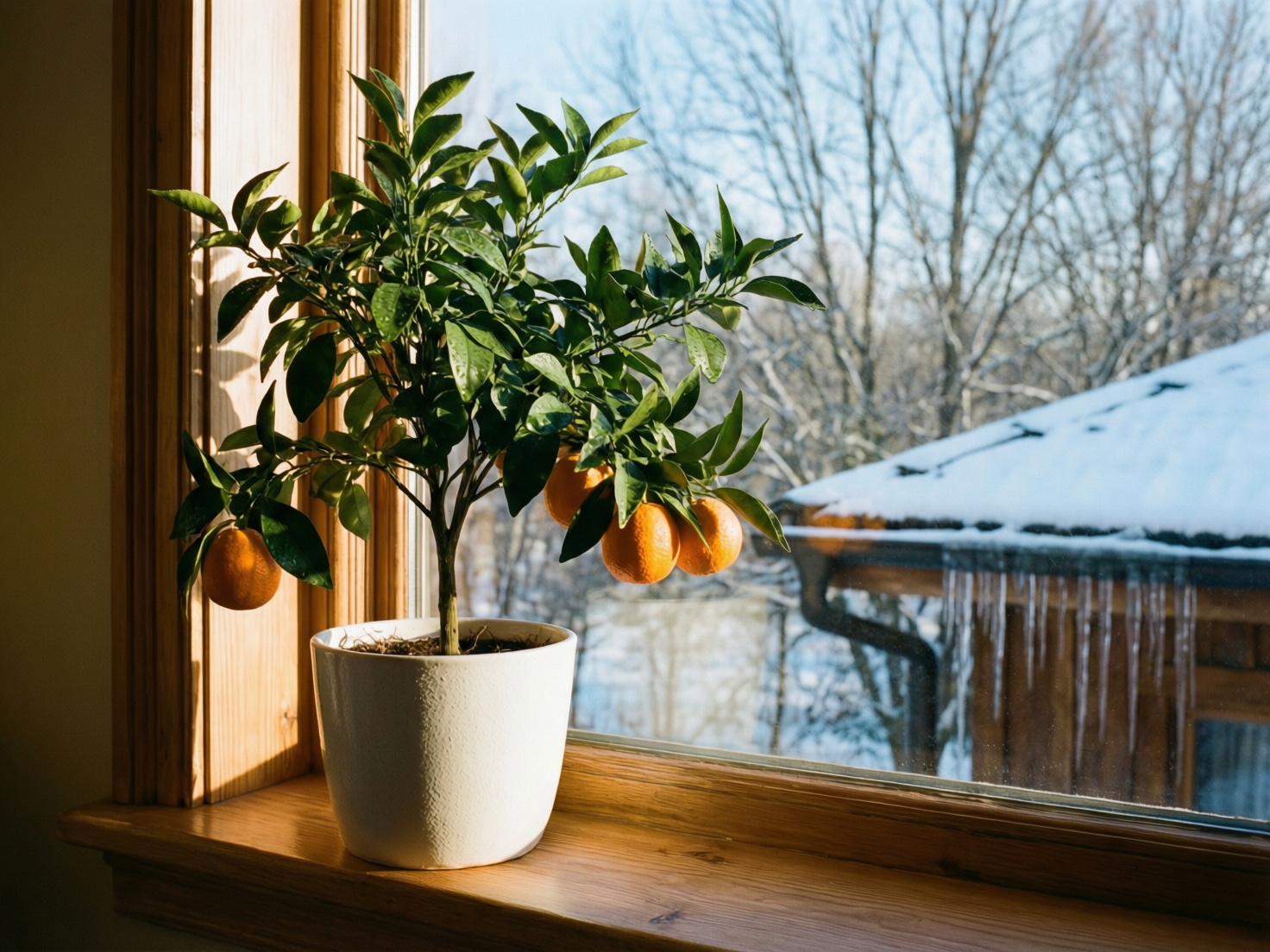
Many people grow citrus trees in hopes of fragrant flowers and fruits. But already in January the plant may begin to drop buds, turn yellow or dry out at the edges. The point is not about “bad energy”, but about the fact that citrus is a very sensitive plant that reacts to dry air, lack of light and even moving the pot.
There is a way that helps stop stress and restore strength to the plant, even if it has already begun to lose leaves. The method is used in professional greenhouses, but is accessible to everyone.
3 main reasons for the deterioration of citrus fruit in January:
1. Dry air
- The tips of the leaves dry out
- The buds fall without opening,
- A sticky coating appears on the leaves.
2. Lack of light
- The leaves turn pale, become smaller,
- The shoots stretch out
- New leaves grow rarely and weakly.
3. Overfeeding or improper watering
- The leaves turn yellow at the edges,
- Roots can rot if there is excess moisture,
- The plant “switches off” as a defensive reaction.
How to restore citrus in 10 days
When a plant loses leaves or buds, it is important not to “feed more,” but to relieve stress. To do this, prepare a soft restoring solution:
Add to 1 liter of warm, settled water:
- 1 tsp. Sahara,
- 1 tsp. honey or 1/2 tsp. succinic acid, if available,
- stir until completely dissolved.
Water the citrus with this solution instead of regular watering. Repeat after 7-10 days.
Sugar and honey provide light nutrition to the roots without overloading the plant. They stimulate the soil microflora and help the root system recover from stress. Within a week you will notice:
- the leaves will stop turning yellow,
- the buds hold on tighter,
- New buds will appear at the tips of the shoots.
Additionally:
- Remove the citrus from the battery,
- Spray with warm water once a day,
- Do not replant or fertilize for at least 3 weeks.
With the right approach, citrus will thank you with fragrant flowers and juicy fruits even in the grayest January week.