A rocket highway runs over Greenland. Trump wants to block it


Donald Trump assures that he has great relations with the leaders of Russia and China. Even if this is true, it does not change the fact that these countries still potentially pose the greatest threat to the United States. Both of these countries have one thing in common – the Arctic and Greenland regions constitute a kind of rocket highway for them, at the end of which there are American cities.
The first line of US defense
It is no coincidence that Americans, to a greater or lesser extent, have been present in Greenland for years. It is over it, together with the adjacent Arctic, that the shortest flight path for Russian ballistic missiles aimed at the US is located. Greenland thus enables early detection of their launch from the European part of Russia, tracking their flight and distinguishing a full-scale attack from a smaller-scale attack.
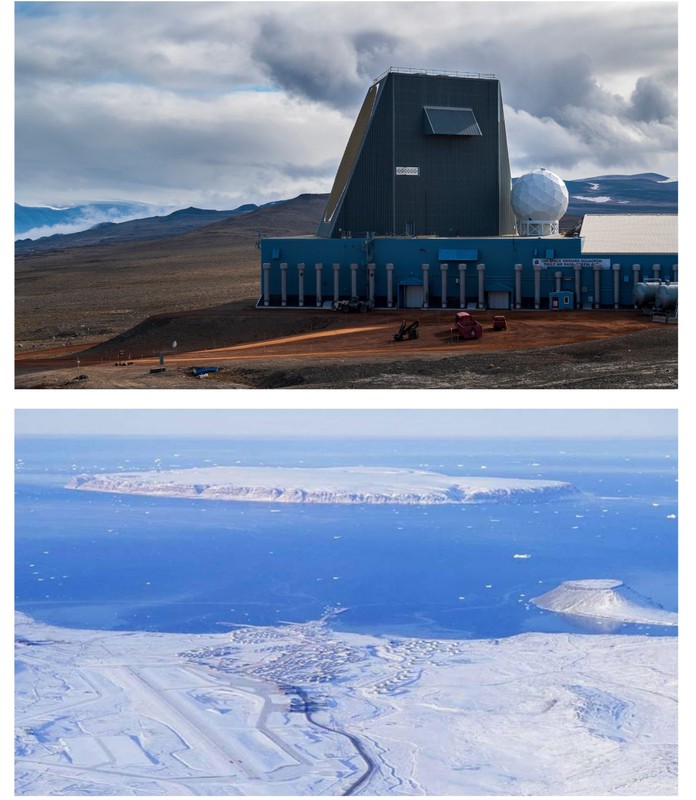
Pituffik Base is the northernmost base of the American armed forcesUS Space Force
To a slightly lesser extent, this also applies to Chinese and North Korean ballistic missiles. For them, the Arctic, along with Greenland, is also the shortest flight path in the scenario of hitting the US East Coast and cities such as New York, Boston or Philadelphia. Trump's determination to take control of Greenland is, to some extent, justifiedalthough we will probably all agree that The White House chose the methods to carry out this operation terribly.
One bullet crucial
At this point, the greatest Russian threat to the United States appears to be an intercontinental, heavy one RS-28 Sarmat ballistic missilea three-stage solid-fuel missile fired from underground silos. Its range is as much as 18,000. km, the missile can therefore attack the United States from both the North and South Poles. Moreover, it can carry up to 15 independent thermonuclear warheads, each of which can strike a different target. The Sarmat can also carry the Awangarda hypersonic glide charge, which accelerates to speeds of over 20,000. km per hour
Test launch of the Sarmat missile:
The intercontinental route is slightly less dangerous RS-23 Jars ballistic missile currently constituting the backbone of the Kremlin's land-based nuclear forces. In the context of the attack on the United States, its flight path runs directly over the Arctic, so in the context of Greenland it seems to be the main potential threat to the United States.
Jars has a range of 11,000. km, it can be launched from silos and mobile launchers and, like the Sarmat missile, it can carry a larger number of independent MIRV warheads – three to five of this type of carriers.
It is also worth mentioning the Avangard, a hypersonic gliding vehicle (hypersonic glide vehicle) with speeds above Mach 20. It is currently the newest and most dangerous weapon in Moscow's nuclear arsenal. The vanguard can maneuver in flight, which only makes it more difficult to intercept it, which is already difficult due to its enormous speed. Radars located in Greenland can significantly help Americans detect this and other similar types of weapons.
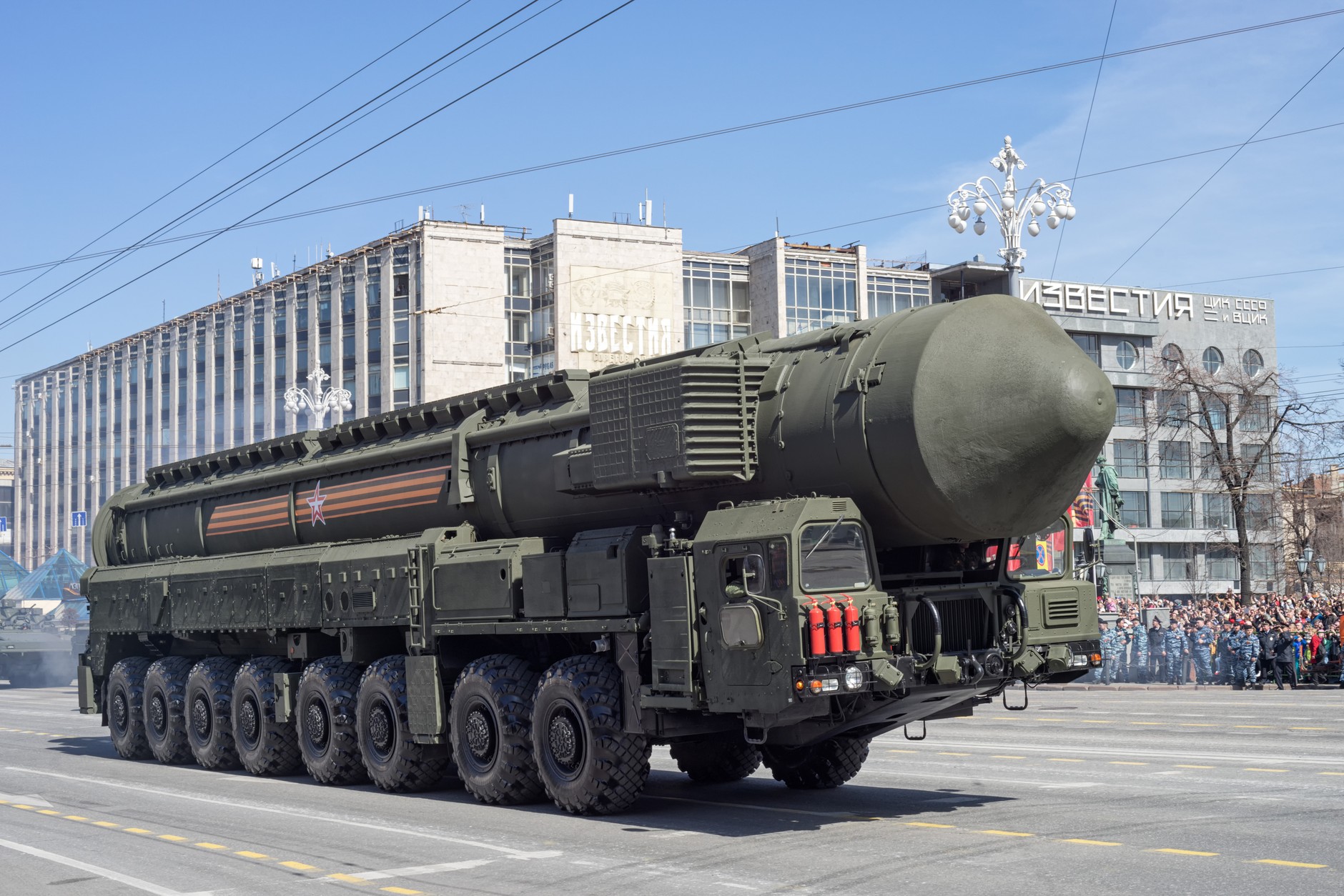
RS-24 Jars rocket launcherShujaa_777 / Shutterstock
It is also worth mentioning the Russian Bulava ballistic missiles with a range of approximately 9,000 km. km moved by Borej-class submarines. These units can also operate from the Arctic region. If they were fired from there towards the USA, the flight trajectory would pass over Greenland. It is also a dangerous weapon because detecting the moment of firing a missile from a submarine is extremely difficult, which makes its quick identification and detection all the more important, which, once again, can be helped by the radar located in Greenland.
The Arctic is also important for China
The Middle Kingdom does not directly border the Arctic, but it does not hide its “frozen ambitions” related to this region of the globe. For China, the Arctic is important because, similarly to Russia, is the shortest route for Chinese missiles potentially aimed at Washington, New York and other cities on the US East Coast.
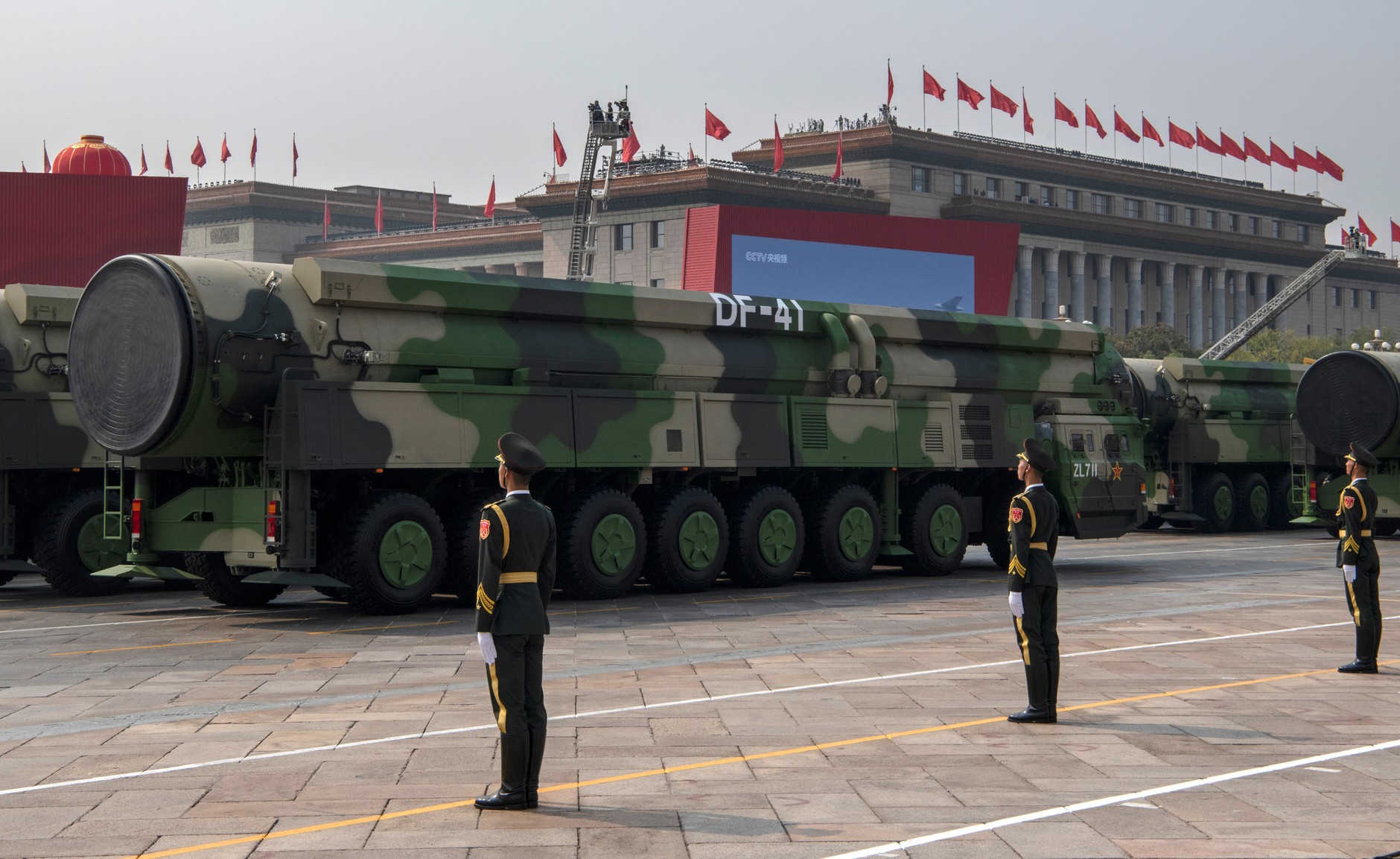
Military vehicles carrying DF-41 ballistic missiles during a military parade marking the 70th anniversary of the founding of the People's Republic of China in Beijing, China, October 1, 2019.Kevin Frayer/Stringer/Getty Images
The missile is the leader among them DF-41 (Dong Feng-41) introduced into service in 2017. It is currently Beijing's most modern intercontinental ballistic missile with a range of up to 15,000. km, speed 31 thousand km per hour and a payload of three to eight warheads. According to experts, these are most likely three warheads, and the remaining part of the payload consists of means to help them reach their target (e.g. special decoys or radio wave jammers).
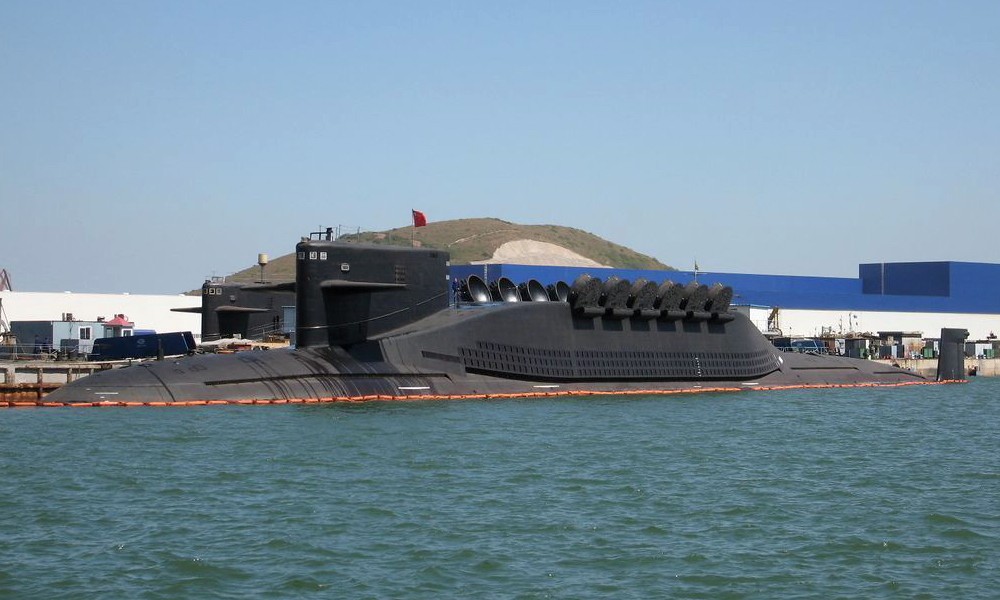
The photo shows a Chinese submarine carrying ballistic missilesPublic domain
Beijing's arsenal also includes an older missile of this type, i.e DF-31 with a range of approx. 11 thousand km and from one to three warheads and the ability to carry a hypersonic gliding vehicle. This is a weapon that, while flying through the Arctic, can easily reach Alaska, as well as the eastern and central US states.
China also has very dangerous ballistic missiles launched from submarinesincluding JL-3 missiles, which entered service only in 2022 but were officially shown only during last year's military parade in Beijing. Details about its payload are unknown, but we are obviously talking about thermonuclear weapons here, so even one warhead can cause catastrophic destruction.
The “Arctic” threat from China and Russia looks like this:
| Direct | Indirect |
| Full | In development |
| Operational | Operational |
| Critical | Very important |
As you can see, the interceptor missiles and additional radar systems that the United States will probably want to place in Greenland in the future could, in theory, have a lot of work to do someday. Fortunately, for now it is a scenario that fits more into a Hollywood movie than the reality around us.