The head of NATO became famous as Donald Trump's “enchanter”. But its charm is starting to lose its power

Americans and the rest of the world have already become accustomed to the president's emotional statements and his increasingly harsh criticism of the North Atlantic Alliance, which has recently turned into repeated threats to leave the United States.
Still, the all-caps complaint caused more anxiety than usual among non-American members of the alliance.
Trump published it just a few hours after a meeting at the White House with the head of NATO, Mark Rutte, who until now was considered a man able to calm the hot-tempered and vain president thanks to skillful flattery and convincing him of the benefits of the alliance.
This time, however, two hours of talks behind the closed doors of the Oval Office seem to have had no effect. Even Rutte's characteristic smile, when he later described the meeting to journalists as “a very open conversation between two friends”, could not hide his embarrassment and growing tension.
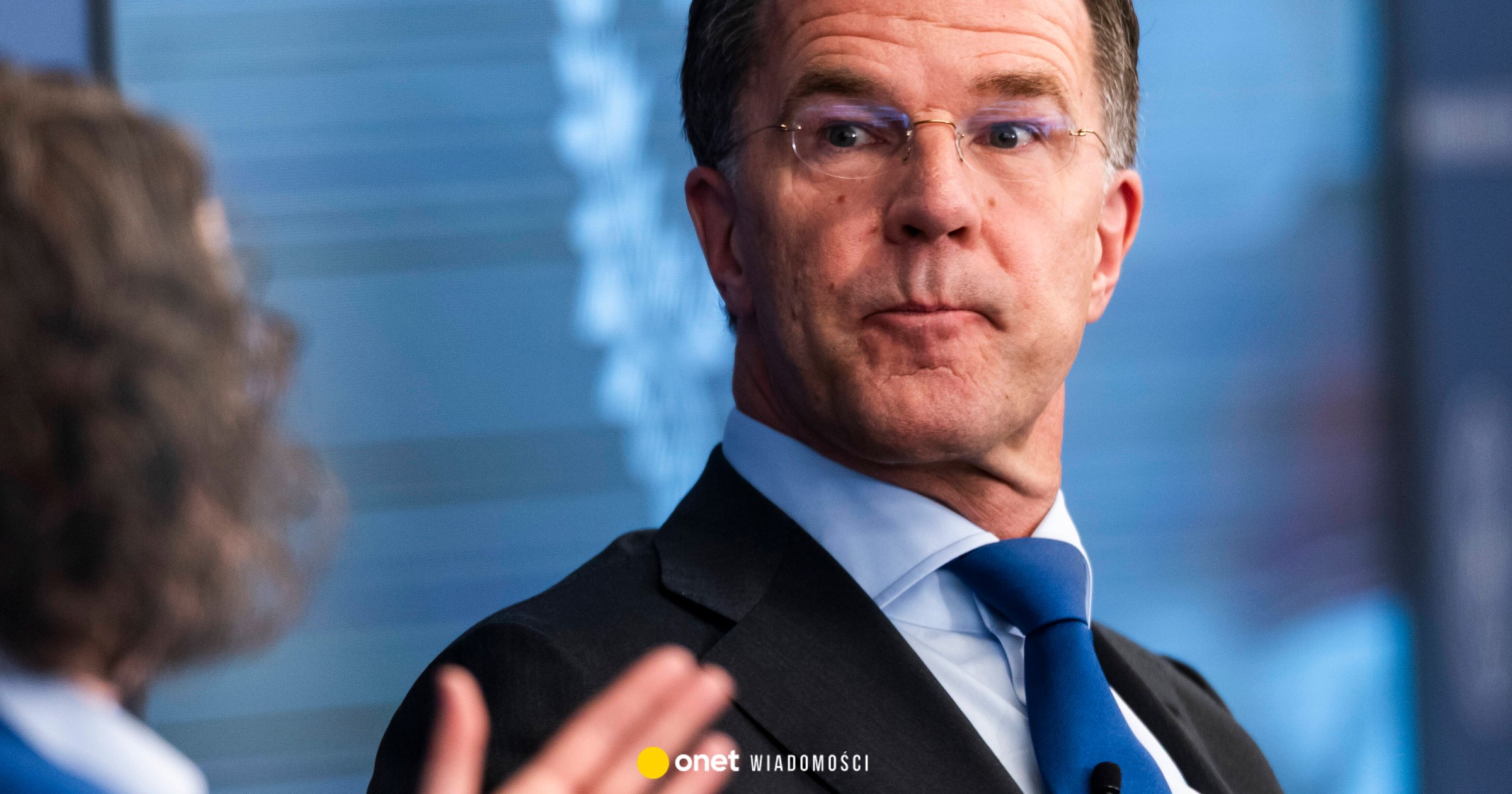
NATO Secretary General Mark RuttePAP
He accuses them of taking advantage of the US, imposes tariffs and even – as in the case of Denmark – threatens to seize part of the territory by force. Talks with Trump are a real puzzle for politicians: how not to anger him and at the same time not lose face in front of their own electorate. Rutte doesn't have to worry about this – his only goal is to hold NATO together, at all costs.
Who is he exactly?
According to the Financial Times, which spoke to dozens of Rutte's former colleagues, this is where his strength lies. As prime minister, he led the Netherlands for 14 years in a broad coalition, where compromises were an everyday occurrence – even with far-right parties.
As Secretary General of NATO, he tries to keep everyone in the same boat, which is not easy
says Robert de Groot.
If he has to flatter to achieve a result that will make everyone say, “Thank God, it worked,” then that's what he'll do.
– he adds.
However, Rutte is not trying to charm only the American president. According to his colleagues, he responds to politicians' messages within five minutes and regularly analyzes their suggestions. As a long-time bachelor, he works almost non-stop, and often invites European leaders to dinner at his home in The Hague to discuss current affairs in a less formal atmosphere.
The 58-year-old, the youngest of seven siblings, entered politics in 2002 – previously working as an HR manager at Unilever. His friends emphasize that his image is authentic: even as prime minister (since 2010), he rode a bicycle to work and taught social studies once a week at a high school in The Hague.

Mark Rutte in The HagueBSR Agency / Contributor / Getty Images
Two people who worked with him as prime minister described his style as “applied charm on an industrial scale.”
Flattery, absolute loyalty and behind the scenes trying to convince everyone
– said one of them.
While flattery and personal charm usually help in negotiations, in dealing with Trump – a politician who demands attention and praise like a child, freely accepting absurd awards and exaggerated compliments – they are a crucial tool.
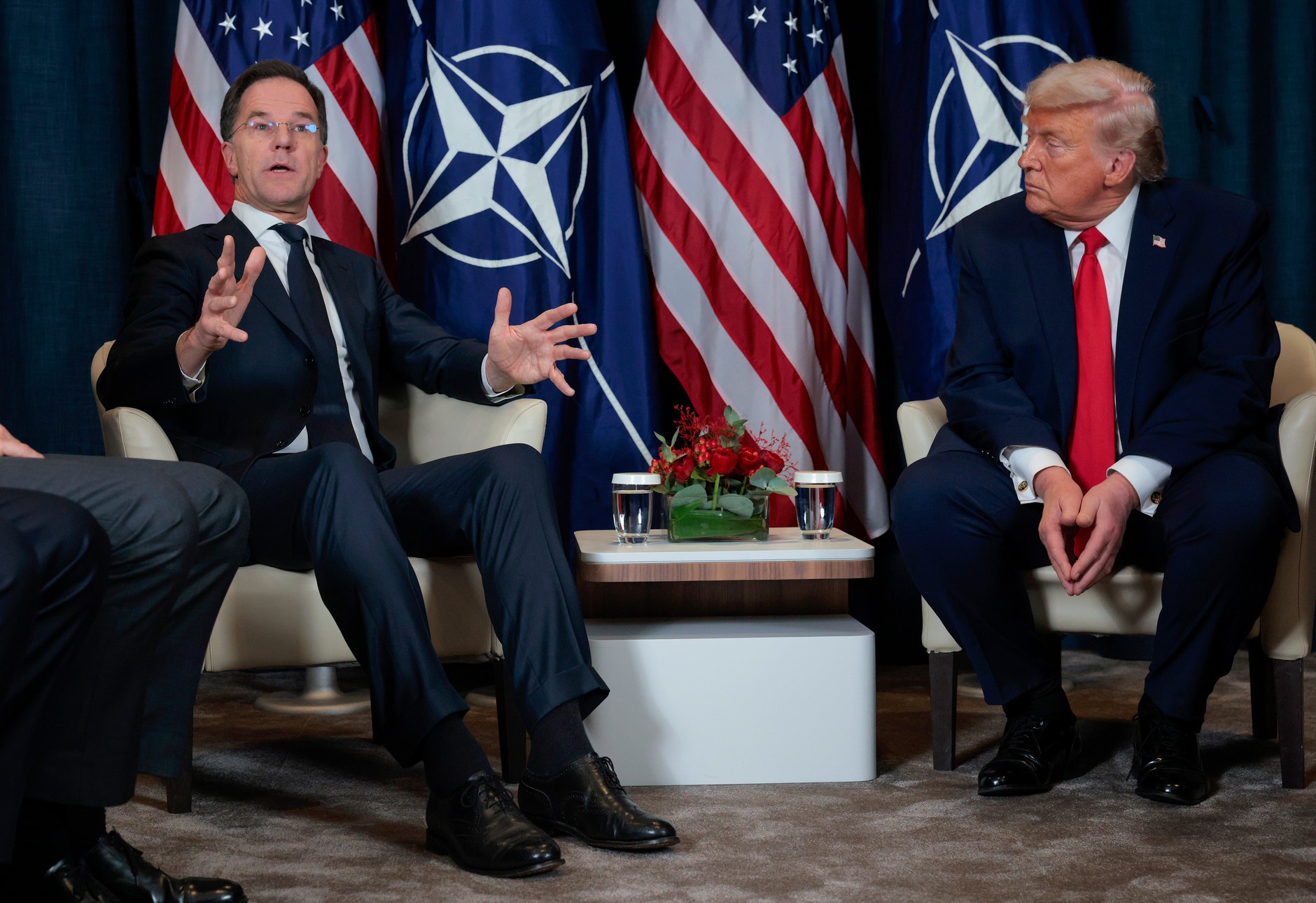
Mark Rutte and Donald Trump, Davos, January 21, 2025.Chip Somodevilla / Getty Images
Rutte took office in October 2024, just before Trump returned to the White House. His main mission was to convince the US president not to abandon the alliance. Trump has previously referred to NATO as outdated and unnecessary. That's why the Joe Biden administration passed a law that makes it impossible to leave NATO without the consent of two-thirds of the Senate.
Stand on your own feet
Over the past month, Trump has become increasingly irritated that NATO allies are not supporting his war with Iran — a conflict he started without consulting anyone. Moreover, the US has not formally asked NATO for help.
It is worth recalling that in NATO's 77-year history, Article 5 was triggered only once – after the September 11 attacks. Then the allies supported the US in Afghanistan, where hundreds of soldiers died. (Trump later said the aid was “useless”.)
NATO is a defensive alliance, not an offensive one
– emphasizes Matthew Savill. There is also no clarity about the goals of Trump's current war, and his chaotic decisions only deepen the uncertainty.
Rutte proposed that the Europeans send naval forces to the Strait of Hormuz. This calmed Trump down, but irritated Europe.
This puts us in a very awkward situation
– admitted one of the EU diplomats.
European allies continue to refuse to participate in the conflict.
We will not allow ourselves to be drawn into this war
British Prime Minister Keir Starmer said clearly.
Europe rather relies on diplomacy. Britain and France are preparing a joint plan to secure shipping after the conflict. Although they do not engage militarily, they try to show good will towards the US.
Everyone realizes that Trump may weaken NATO — although he cannot formally leave it. The US could, for example, withdraw some of its troops from Europe, which would weaken both NATO and the United States itself.
For now, however, the common defense still works.
European leaders hope that tensions will ease. At the same time, it is becoming increasingly clear that Europe must build its own defense capabilities faster. Times have changed – and you can no longer count on an alliance with America, at least in the Trump version, as unconditionally as before.