From Kyiv to Swalki's corridor, Europe resuscites an infallible defensive shield against Russia


In February 2022, the images of the Moscow tanks stuck in the mud made the world around. The inspired idea of Oleksandr Dmitriev, a defense consultant, blows a dam to flood the Irpin Basin and stop the advancement of Russian troops, worked.
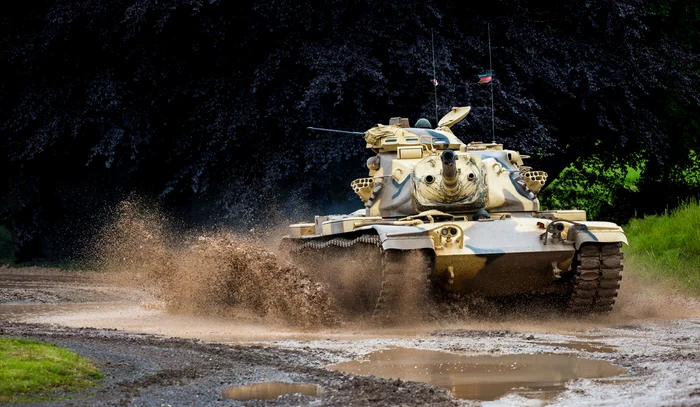
“In principle, it stopped the Russian attack from the north,” he said.
Three years later, this act of despair inspires the countries on the eastern flank of NATO to consider the restoration of their own marshes -responding simultaneously to priorities that compete for attention and financing: defense and climate.
Peat -rich marshes capture carbon dioxide, which heats the planet, as efficient as sinking enemy tanks.
However, half of the marshes in the EU countries are drained by water to create cultivable land.
Some European governments now wonder if the revitalization of marshes are the response of several pressing problems. Finland and Poland have told Politico that they actively explore the idea as a multifunctional measure to defend their borders and combat climate change.
The massive project of fortification of the border nicknamed the “eastern shield of Poland”, worth 10 billion zlots (2.3 billion euros), launched last year, “ensures environmental protection, including … the formation of peat and forest areas,” the Ministry of Defense said in a statement.
In their original state, marshes are covered with delicate muscles that cannot be completely decomposed into their wet habitats and gradually turns into a soft, carbon-rich soil, known as peat.
Although it covers only 3% of the planet, peatings absorb one third of the carbon of the world – double the quantity stored by forests.
However, once drained, the marshes begin to release the stored carbon, supplying global warming.
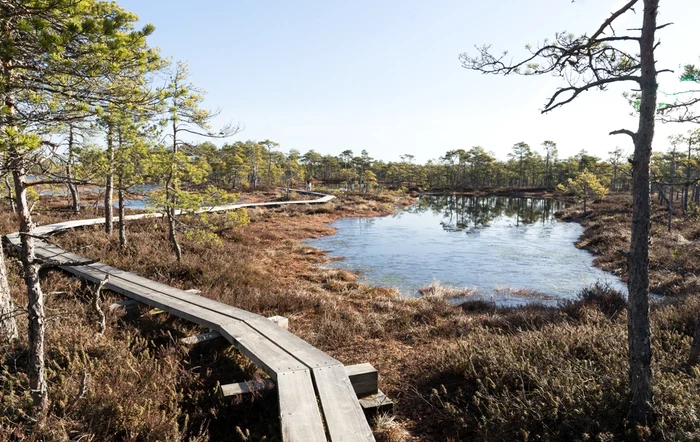
Swamp in Estonia Photo Shutterstock
About 12% of peaties around the world are degraded, producing 4% of the pollution that leads to heating the planet.
In Europe, where marshes have long been considered unproductive land, the situation is dramatic: half of the EU peatings are degraded, largely due to drainage for agricultural purposes.
Various projects to restore the peatings are underway, repairing marshes gaining under the new EU law on the restoration of nature, which requires countries to revitalize 30% of degraded peatings up to 2030 and 50% by 2050.
The 27 governments of the Community Bloc now have a term until September 2026 to develop plans on how they intend to meet these objectives.
On the eastern flank of NATO, the restoration of marshes would be a relatively cheap and simple measure to reach the EU goals on protecting nature and defense goals, say scientists.
“It is definitely achievable,” said Avelina Helm, an ecology professor of restoration at the University of Tartu, who until recently counseled Estonia's government on the EU strategy for restoring nature.
NATO
Most of the EU peaties are concentrated on the NATO border with Russia and Belarus, an ally of the Kremlin, stretching from the Finnish Arctic through the Baltic states, passing the Swałki corridor of Lithuania, hard to defend, and to the east of Poland.
When filled with water, this land represents a dangerous trap for military trucks and tanks
In a tragic example from the beginning of this year, four American soldiers stationed in Lithuania died after entering their 63-ton M88 Hercules in a marsh.
And when the armies cannot cross open and uninvited lands, they are forced to move in areas easier to defend, as Russia learned when Dmitriev and Ukrainian soldiers threw the northern Dam in February 2022.
The dangerous marshes from the north of Kiev represented a formidable challenge for the armies of both world wars.
The strategic refill of the drained peatings to prevent an enemy attack would be a novelty. And it is an idea that begins to gain ground – among environmentalists, defense strategies and politicians.
Pauli Aalto-Setälä, a parliamentarian from the National Coalition Party, in government in Finland, filed a motion last year asking the government to restore peatings to secure its borders and fight climate change.
“In Finland, throughout history we used nature from a defensive angle,” said Aalto-set, who holds the rank of major and was trained as a tank officer during the military service. “I realized that, especially on the east border, there are a lot of excellent areas – for the climate, but also to make the passage as difficult as possible.”
The Finnish ministries of defense and environment will start discussions in the fall about the launch of a pilot project to restore marshes, according to Haaranen, who will lead the working group. “Personally, I am very excited about this.”
Poland, in front
Discussions on defensive restoration of nature advance the fastest in Poland – even if Warsaw is usually reluctant to intensify climatic actions.
“Once you talk about security, everyone is listening to Poland now,” said Wiktoria Jędroszkowiak, a Polish activist who has contributed to the initiation of “Friday for Future” climatic protests. “And our secular disturbances and forests are places that will be very important for our defense once the war will reach Poland.”
After years of campaigns, the problem has now reached the governmental level in Warsaw, there were discussions between scientists and defense and environmental ministries.
“What the Ministry of Defense wants is to recover as many wetlands along the Eastern Border,” says Wiktor Kotowski, ecologist and member of the Polish Government Council for Nature Conservation. â
Cezary Tomczyk, Secretary of State within the Ministry of Defense of Poland, is of the same opinion. “Our goals are aligned,” he said. “For us, nature is an ally and we want to use it.”
Less enthusiasm in the Baltic countries
The Ministry of Defense of Estonia and the armed forces in Latvia have stated that the new plans of the Baltic Defense line, for the fortification of the borders of the three countries, will use natural obstacles, including marshes, but will not involve the restoration of peaties.
However, scientists see a huge potential, given that peatings cover 10% of the Baltic area.
Healthy peatings serve as shelters for wildlife: frogs, snails, dragonflies and specialized plant species in the austere conditions of marshes. They also act as barriers against drought and vegetation fires, increasing Europe's resistance to climate change.
As long as the land is not completely drained, “it lasts one or two years and the wet area is full of water,” said Kotowski, the Polish environmental. “Restoration is a difficult process from an ecological point of view, but for water retention, to stop emissions and for the difficulty of crossing – so for defensive purposes – it is quite simple and fast.”
“Currently, it takes five years to obtain approval for the rehumidification of peaties, and sometimes it can take 10 years,” said Franziska Tanneberger, director of the Greifswald Peat Peat Center, a European peat research institute. “As for military activities, there is a certain prioritization. You cannot wait 10 years if we need them for defense.”
It's not a good idea for all countries
The argument of “peat for defense purposes” does not work for all countries. In Germany, where over 90% of the peatings are drained, the Bundeswehr seemed reluctant when asked about this idea.
“The rehumidification of wetlands can be both advantageous and disadvantageous for their own operations [NATO]”, Depending on each country, a Bundeswehr infrastructure and environmental spokesman said.
NATO troops should pass through Germany in the case of a Russian attack in the East, and the marshes restrict military movements. However, “the idea of increasing the value of the obstacles of the land by provoking floods and mud … has been used in the war for a very long period and is still a viable option today,” said the spokesman.
A natural barrier against Russia
Scientists quickly recognize that a marsh -based approach cannot solve everything.
“Of course, we still need traditional defense. It is not meant to replace it,” said Tanneberger, the department of the Greifswald Peat Peat Center, a European peat research institute, which also advises a company that has recently developed a detailed proposal for restoring turns for defense purposes.
The marshes cannot stop the drones or lower the rockets, and the war harm both nature and conservation efforts.
And in Ukraine, the floods of the IRPIN basin were economically and environmentally friendly.
Among the external observers there was initially enthusiasm about the perspective of a new natural paradise. But the villagers in the region lost their land and houses, and the influx of water had a negative effect on the local species, which did not have time to adapt to the sudden change.
“Yes, he stopped the invasion of Kiev, and this was extremely necessary, so there is no criticism here. But he has taken over the environment,” said Helm, Estonian ecologist.
Unlike Ukraine, EU governments have the chance to restore peaties carefully, taking into account the needs of nature, farmers and armies.
“Maybe it's best to think about the future instead of being forced to act in a hurry,” she said. “We have this opportunity. Ukraine did not have it.”