The cities of Banat, weighed down by the historical legacy. The buildings that gave them color for centuries, difficult to reanimate

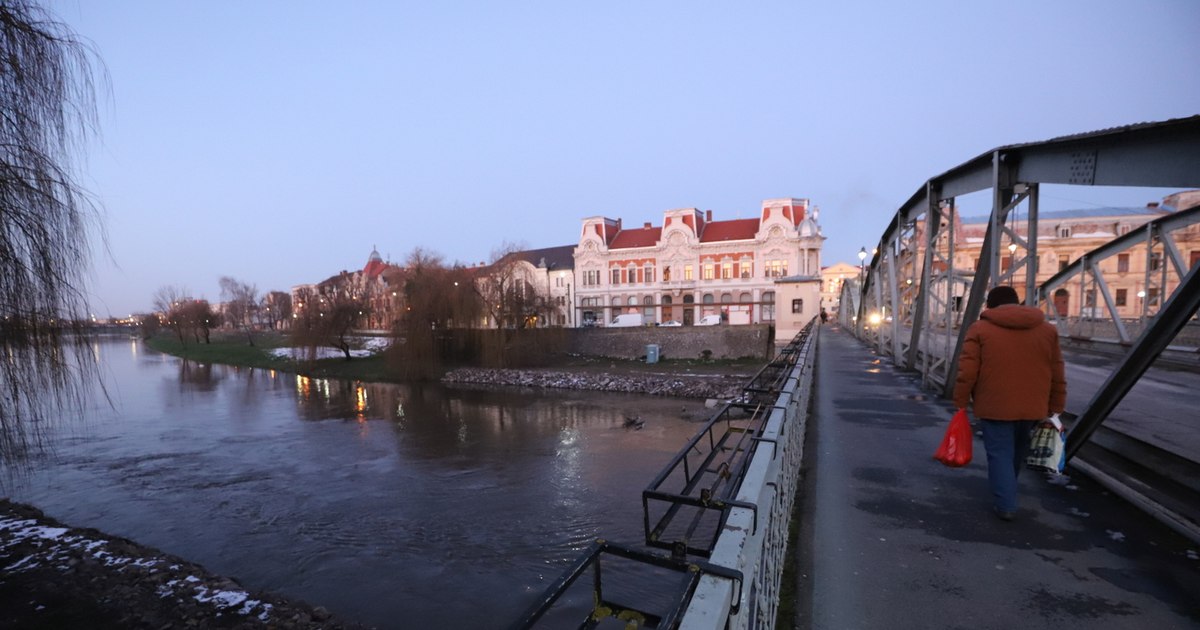
Small towns in southwestern Romania have had a difficult mission in preserving their architectural heritage, and the passage of time has turned more and more of their historic buildings, old from the 18th – 19th centuries, into deserted and forgotten places.
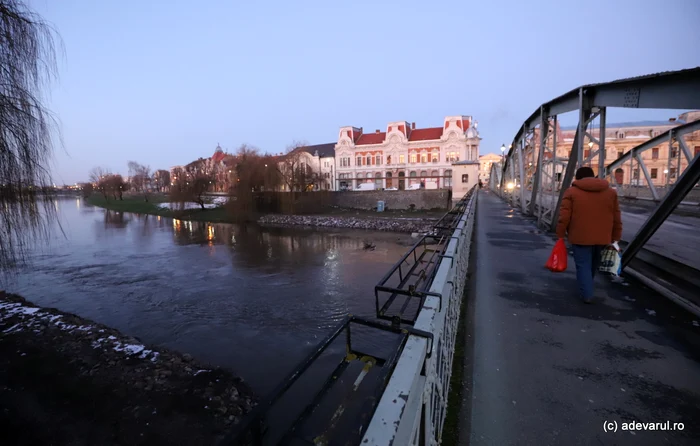
The bridge over Timiș, from Lugoj, old from 1902. Photo: Daniel Guță. TRUTH
Located in the southwest and west of Romania, the cities of the historical region of Banat gradually developed starting from the 18th century, when this land located on the border of the Austrian and Ottoman empires, but also in contact with Transylvania and Wallachia, became a destination for tens of thousands of German (Swabian) settlers.
The newcomers settled both in the marshy lands of the Western Plains and in the wild mountain region, covered with centuries-old forests but extremely rich in natural resources, living alongside Romanians, Serbs and other Balkan populations, Hungarians and Jews.
The prosperous cities of Banat's past
The highly productive lands in the lowlands and plains, the extensive forests and the rich mineral resources of the Banat Mountains and the Ruscă Glade made the region develop rapidly, supported by well-organized and hardworking communities. Timisoara, the most important city of Banat, has expanded its historical districts around its old citadel, built in the Middle Ages, on the ford of the marshes between the Timiș and Bega rivers.
Located dozens of kilometers from Timișoara and linked to it, since the 19th century, by railways and accessible roads, the localities of Lugoj, Caransebeș, Oravița, Anina, Reșita and Băile Herculane have gradually turned into cosmopolitan cities, with populations dominated by Romanian or Swabian inhabitants and with numerous minorities.
At the end of the 19th century, the Banat was one of the most modern regions of the Austrian Empire, and the central squares of its cities, dominated by imposing buildings, illustrated the prosperity of the land. The situation of the region would change in the 19th century, and in the last decades many of its cities went into decline. Timișoara still remained one of the most developed cities in Romania, but the small cosmopolitan towns of Banat did not keep up with the “capital of Banat”.
The centers of the cities of Lugoj, Oravița and Caransebeș, old fairs and communication hubs in the region, have lost their past animation, becoming quieter, dominated by centuries-old buildings, now uninhabited or unused, on which time has left its mark. Băile Herculane, the most sought-after spa resort in southwestern Romania, has preserved, in turn, a set of valuable historical buildings, but many of them have remained abandoned and endangered.
The emblematic bridge in Lugoj, over 120 years old
More than 35,000 people live in Lugoj (Timiș county), one of the old cities of Banat, an important medieval fair, but also a cultural and religious center in the past.
At the end of the 18th century, the Romanian Lugoj and the German Lugoj, two distinct localities separated by the Timiș River, united in a single city, inhabited by Romanians, Swabians, Balkans, Jews and Hungarians. An iron bridge, 35 meters long, whose components were built in the StEG factories in Reșita, has been connecting them since 1902.
Time and intense traffic have left traces in the appearance of the bridge over Timiș, and the need for rehabilitation has been frequently complained about in recent years.
“Since the last thorough inspection of the bridge (the only one!), carried out in 1962, when the existing rivets were strengthened and completed, superficial maintenance works were also carried out periodically, which, however, concerned the superstructure of the bridge: sandblasting and the repair of the roadway. Under these conditions, referring to the architectural value of the objective, we consider it necessary to classify it as a historical monument, respectively to expedite the consolidation process (metal structure, concrete footing and masonry) and conservation of the old iron bridge”, informs Ilie Sârbu, from the “Save the Heritage of Timisoara” Cultural Association.
In 2025, the bridge entered restoration through the “Anghel Saligny” National Investment Program, but later the works were stopped, along with their funding.
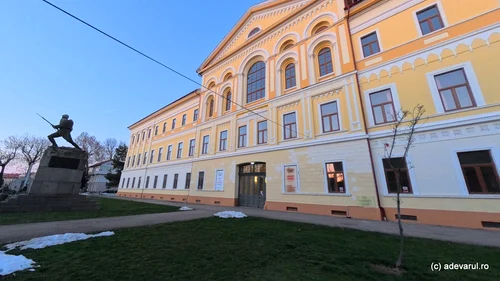
Image 1/11:
City of Lugoj Photo Daniel Guță THE TRUTH (10) jpg
In the neighborhoods on the banks of the Timiş, several administrative and residential buildings, former palaces, churches or hotels, some from the 19th century, are also degraded. Most of them are around the Square Iosif Constantin Drăgan (1917–2008), the Romanian billionaire born in Lugoj, who founded a university here.
Caransebeș and Oravița, surrounded by silence
The historic center of Caransebeș offers a view similar to that of Lugoj, at least in terms of parks with old trees, around which the most imposing buildings were built.
Caransebeș, a city with 22,000 inhabitants, located less than 50 kilometers from Lugoj, developed on the site of ancient settlements located at the confluence of the Timiș, Bistra and Sebeș valleys, being an important communication node of the region.
The historic center includes numerous buildings from the 19th century, but also older churches, valuable to the community. Some constructions have suffered in recent decades, reaching the verge of collapse.
The small historic town of Banat Montan
The town of Oravița, an old center of trade and mining, with less than 10,000 inhabitants, also contains almost 50 monumental buildings, many of which have been left to decay.
The most famous of them is the “Mihai Eminescu” Theater, an elegant building with an architecture inspired by that of a Viennese theater, built at the beginning of the 19th century. The renovation works of recent years, not completed, have reduced the risks of ruining the edifice.
Almost as old, the buildings of the railway station of Oraviţa suffered more. Most of the station buildings, dating back to the 19th century, are in an advanced state of disrepair, and some have been ruined forever. Oravița is connected to the mining town of Anina by one of the oldest mountain railways in Romania, established in the middle of the 19th century and currently used for tourist purposes.
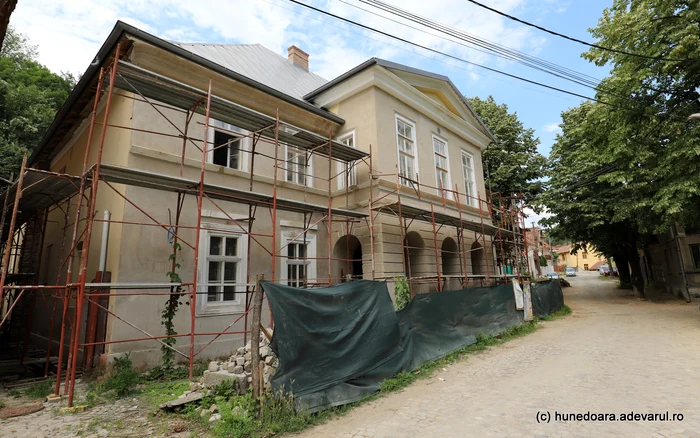
The theater from Oravița. Photo by Daniel Guță
In the vicinity of the CFR Oravița station, a neighborhood of worker's blocks recalls the time when the city was one of commuters to the metal and coal mines of Banatul Montan.
“In the past, more than a hundred people worked at the CFR station. A lot of trains with coal, wood, grain, materials and people passed through the station in Oravița, coming from Anina or from Iam and Baziaș. Now, there are a few of us.” recounted an employee of the station in Oravița.
The historic center of Băile Herculane awaits restoration
Baile Herculane occupies an important place among the spa resorts in Romania. The baths here were set up by the Romans in the early years of the 2nd century. Baile was on the route of the first imperial road, near Orșova (ancient Dierna), the place through which the armies led by Trajan crossed the Danube to invade Dacia.
The ruins of the Roman resort were unearthed in the 18th century, after centuries of earth and forest hiding them from human view. The ancient Ad Aquas Herculi Sacras was transformed in the 19th century by the Habsburgs into an attractive resort favored by members of the imperial family. Several period buildings, baths and bridges, which have become historical monuments, have been preserved from that period, but only a few could be renovated.
Built in the Baroque style, supported on imposing columns and adorned with paintings inspired by Greco-Roman mythology, the railway station of the Banatul Montan resort was established in the middle of the 19th century. In recent years, its deterioration has intensified, but the fate of the building could change in the next period, with the expected restoration.
Equally old, but currently inaccessible, the Neptun Baths in the center of the resort had a more dramatic fate. The place where Emperor Franz Joseph of Austria and his wife, Elisabeth (Sisi) were accommodated, was engulfed in severe degradation, and the emergency interventions of recent years were not enough to remove the danger of the collapse of some components of the historical ensemble. In front of the emblematic building of the resort, an old iron bridge over the Cerna River also remained closed, due to the disastrous state it reached. And yet, the resort town continues to fascinate tourists.
“Besides the relaxing walks through the Băile Herculane resort – the first documented resort in Romania, at the height of its development in the 19th century – you can also discover other interesting places, such as the Neptun Baths, today in ruins, but real architectural monuments from the 19th century, the statue of Hercules, the old train station built in 1886, the Casino or a museum that exhibits Roman artifacts”recommends a foreign tourist on a travel platform.
Another visitor notes that some historic buildings have been renovated, among them the old stone bridge over the Cerna.
“Although Romanians are melancholic, thinking about the former glory of the Herculaneum Baths, it can be seen that steps are being taken to restore the old center“, says the visitor.