2026-02-05 12:01
publication
2026-02-05 12:01
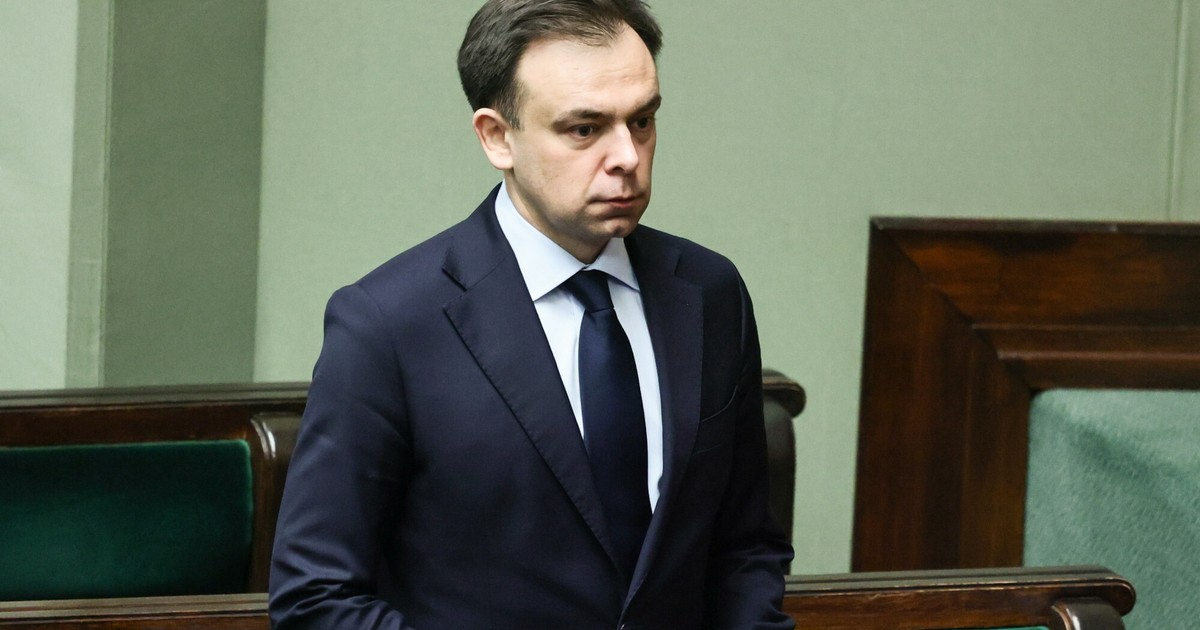
Minister of Energy Miłosz Motyka announced on Wednesday that next week parliamentary committees will consider a draft law that changes the principle of obtaining conditions for connection to the grid. This is a revolution in terms of transparency, clarity and deregulation for the benefit of Polish entrepreneurs – said Motyka.
Motyka emphasized on Wednesday at a press conference in the Sejm that further impulses are needed related to investments in the Polish energy sector and further actions to simplify the conditions for applying for the rules for connection to the grid.
– Therefore, at the next session of the Sejm, next week at the meeting of the energy committee and the economy committee, a draft bill will be considered, which completely changes the principle of obtaining conditions for connection to the network – said the minister.
As he said, “the request that has been submitted by Polish entrepreneurs in recent months to end the spectrum connection conditions that blocked the energy transformation in Poland finally has its place in a specific draft law.”
– This is a revolution in terms of transparency, clarity and deregulation for the good of Polish entrepreneurs – said Motyka.
At the end of January, parliamentary committees postponed work on the draft amendment to the Energy Law, including: reforming the processes of connecting energy sources to power grids.
Consideration of the project by the Energy, Climate and Assets and Deregulation Committees is to be resumed during the Sejm session, which begins on February 10.
The reason for the delay in the work was numerous doubts raised about the proposed regulations by representatives of the renewable energy and energy storage industries. According to them, the very direction of the project – clearing the market of unrealized projects that block connection capacities – is right. However, they argued that, for example, the so-called deadlines contained in the proposals milestones are too short, which threatens investors with losing connection conditions, or that the proposed regulations favor large developers of renewable energy projects at the expense of small ones. Given these and other doubts, the committees decided to postpone their work and give time to agree on the controversial issues between the government and the industry.
The project obliges distribution system operators (DSO) and transmission system operators (TSO) to create publicly available platforms with information, among others: about available connection capacities, submitted applications for determining connection conditions, application processing status, rejected applications with justification, or criteria used to calculate the network capacity available for new connections. As emphasized in the justification, this will ensure greater transparency and efficiency of the connection process, because currently entities applying for connection do not have access to information on other applications submitted to the same power stations.
The project also envisages extending the concept and formula of cable pooling, i.e. sharing one connection by several different sources. Currently, only renewable energy sources can share a connection; the proposal provides that these could be various sources, including electricity storage.
The project also includes provisions regarding the so-called power guardian, i.e. securing technical capabilities not to exceed the connection capacity; in the event of incorrect operation of the power guard or exceeding the connection capacity, the DSO or TSO will be able to suspend the introduction of energy to the network or its consumption by the connected entity. (PAP)
ero/ drag/