The European version of the peace plan is better for Ukraine, but still bad for Poland


However, the “European” plan, as reported by Reuters, includes proposals from three countries – Germany, France and Great Britain. This plan looks better in terms of the security of Ukraine and broadly understood Europe compared to the American plan, which drastically favors Moscow. However, the 9th point, which is crucial for Poland, still relegates our country to the second category of NATO countries.
Ukraine's path to NATO remains open, although with problems. Three European countries propose removing point 3 of the American plan, according to which “Russia is not to interfere in the affairs of its neighbors, and NATO will not expand further.” This is a favorable point because Russia has historically and regardless of any treaties interfered in the affairs of its neighbors. The second part of this provision is more important, which, if removed, opens the door to NATO for Ukraine.
Additionally, according to point 7 of the American plan, Ukraine was to write in its constitution that it would not join NATO, and NATO was to agree that Ukraine would not join this alliance in the future. According to the European proposal, “Ukraine's accession to NATO depends on the consensus of NATO members.” Although in the same sentence the Europeans admit that no such consensus currently exists, in the long term Ukraine may still seek a path to the North Atlantic Alliance.
The size of the Ukrainian army without limits during the war. In point 6, the American proposal provided that “the size of the Ukrainian Armed Forces will be limited to 600,000.” It was a ready-made plan for the collapse of the Ukrainian state at the moment when Russia, after rebuilding its own forces, decided to attack Ukraine again.
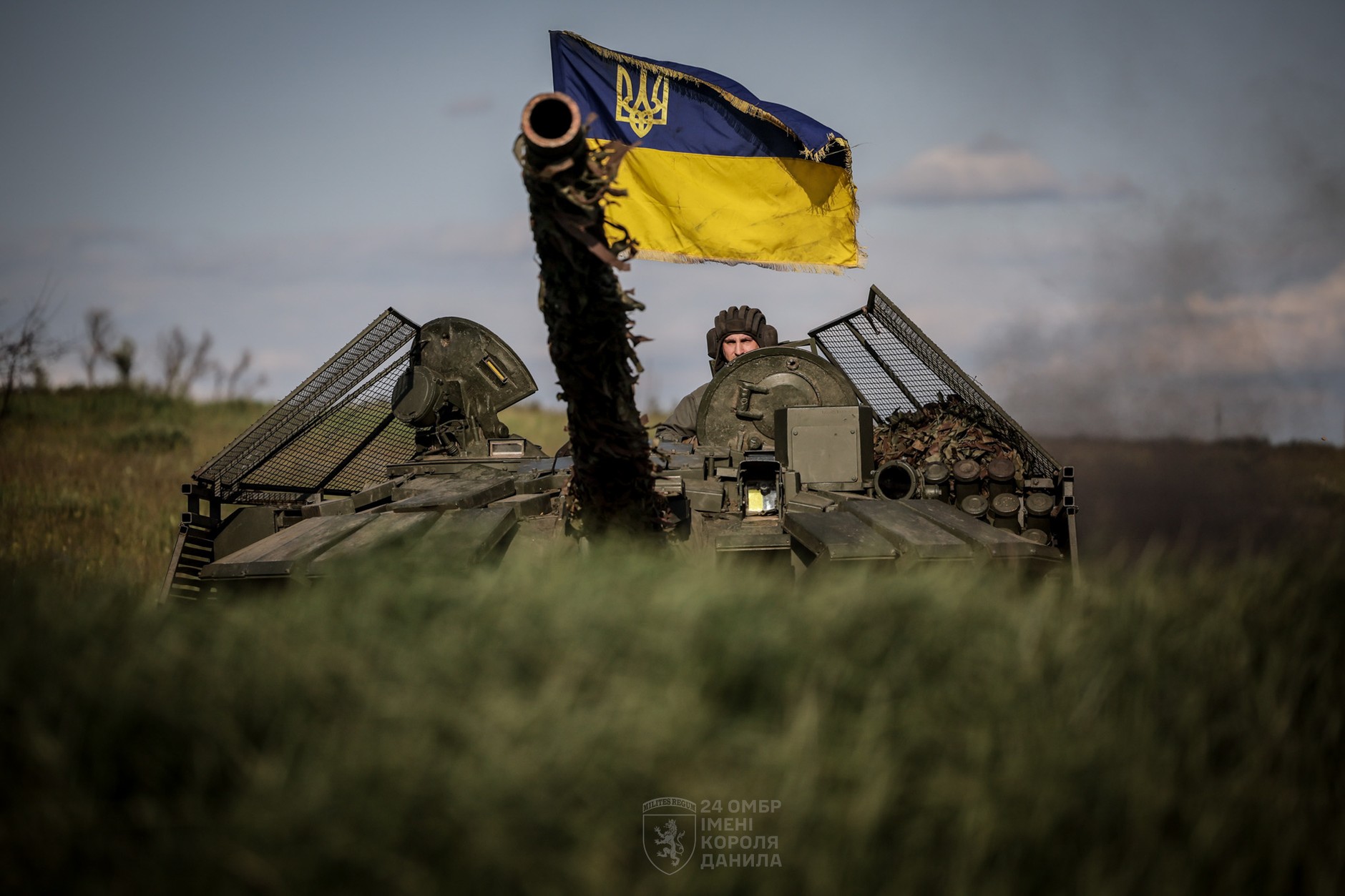
Ukrainian tankX/@ZelenskyyUa
The European version of this point states: “The size of the Ukrainian army in peacetime will be limited to 800,000 soldiers.” What is important in this version is not only the increase in the number of soldiers, but also the addition of three words: “in peacetime”. This means that in peacetime the number of soldiers will be 800,000. soldiers, but in the event of war it will be possible to increase it without any restrictions.
Russia and the USA will not benefit financially from peace so drastically and quickly, but Ukraine will benefit. The Americans' 13th point, de facto rewarding Russia for its aggression against Ukraine, stated that “Russia will be reintegrated into the world economy.” The modified version of this point assumes that integration will take place gradually. This slight change means that, although scandalous from our point of view, the process of Russia's integration with the world economy may be significantly prolonged through vetoes by individual countries, including Poland. Much in this matter depends on the attitude of economically strong European countries, such as Germany, Italy and France.
The three European countries also made sure that the Americans did not earn outrageously large amounts of money from the deal with the Russians. Point 14 of the US plan assumed that EUR 100 billion from frozen Russian assets would be invested by the Americans for the reconstruction of Ukraine, with the provision that the Americans would receive 50 percent. from this investment. The European proposal removes this provision, instead stating that Ukraine will be fully rebuilt and will receive financial compensation, including from Russian state assets, which will remain frozen until Russia compensates Ukraine for the country's losses.
Ukraine does not have to officially relinquish lost territories (though their actual recovery is unclear). The provisions contained in point 21 of the American plan were dramatically bad for Ukraine, and in the long run also for security in Europe. Crimea and the Luhansk and Donetsk oblasts, as well as parts of the Kherson and Zaporozhian oblasts along the contact line were to be recognized as Russian.
An extremely important element of this provision was the Donetsk Oblast, which is largely controlled by Ukrainians. It is in this region that the extremely fortified cities of Kramatorsk and Sloviansk are located. At this point, I would like to share my direct experience with my readers. I was in the two mentioned cities many times during this war. Having compared with fortified cities in various parts of the war world, I can confidently say that these two cities are exceptionally secured. Comprehensive fortifications are built not only around them, but also at most of the intersections within each of these cities. Obtaining them would cost the Russians tens of thousands of people, huge amounts of equipment and long months, if not years, of fighting. In a word, Kramatorsk and Sloviansk would cost the Russians many times more than Bakhmut, shrouded in war legend. Withdrawing from these cities would be a truly suicidal step for Ukrainians.
The European record says only that Ukraine undertakes not to restore the occupied sovereign territory by military means, and negotiations on the exchange of territories will start from the line of contact. This provision means that Ukraine will most likely not regain the lost areas in the foreseeable future. However, he does not close the door to further negotiations, counting on Russia's weaker position in the future.
The peace plan and the Polish issue
The 9th point, which was crucial for Poland, according to the American-Russian plan, was extremely unfavorable for us. It assumed that “European combat aircraft will be stationed in Poland.” At first glance, such a point may seem downright advantageous. However, in the language of diplomacy, it excludes everything from Poland except European planes. This means that American planes will no longer be able to be stationed here. Neither do American soldiers. Or any other American equipment operated by Americans.
Many experts – very justifiably – wonder whether we can count on the Americans at all in the event of a possible conflict, since historically Americans and Russians have avoided direct clashes with each other. However, that point also assumed the absence of European soldiers and their equipment on our territory. Only European combat aircraft would be allowed to be stationed at our airports.
The new version is not much better. It reads literally: “NATO combat aircraft will be stationed in Poland.” So, possibly a larger fleet of planes expanded to include the American one. But what about American soldiers? What about European soldiers? This provision, more or less, only relegates us to the category of second-speed NATO countries.
At this point, a question should be asked: why did Poland not participate in the work on the new draft peace plan and therefore not take care of our interests? For now, all we know from Prime Minister Tusk's entry on the X website is that our authorities “have declared their readiness to work on the American plan.” In the case of an absolutely key plan for Poland's security, a declaration of readiness is definitely not enough! The Polish government must participate in this work, and we as citizens must hold it accountable for its insufficient initiative in this area.
Ungrateful Ukrainians
What phase of developing a peace plan are we actually in?
The facts are as follows:
- The American or American-Russian version of the peace plan was absolutely unacceptable to Ukraine and Europe
- The European version of the peace plan is absolutely unacceptable to Russia.
This means that we may once again be at the very beginning of a rather long road to peace.
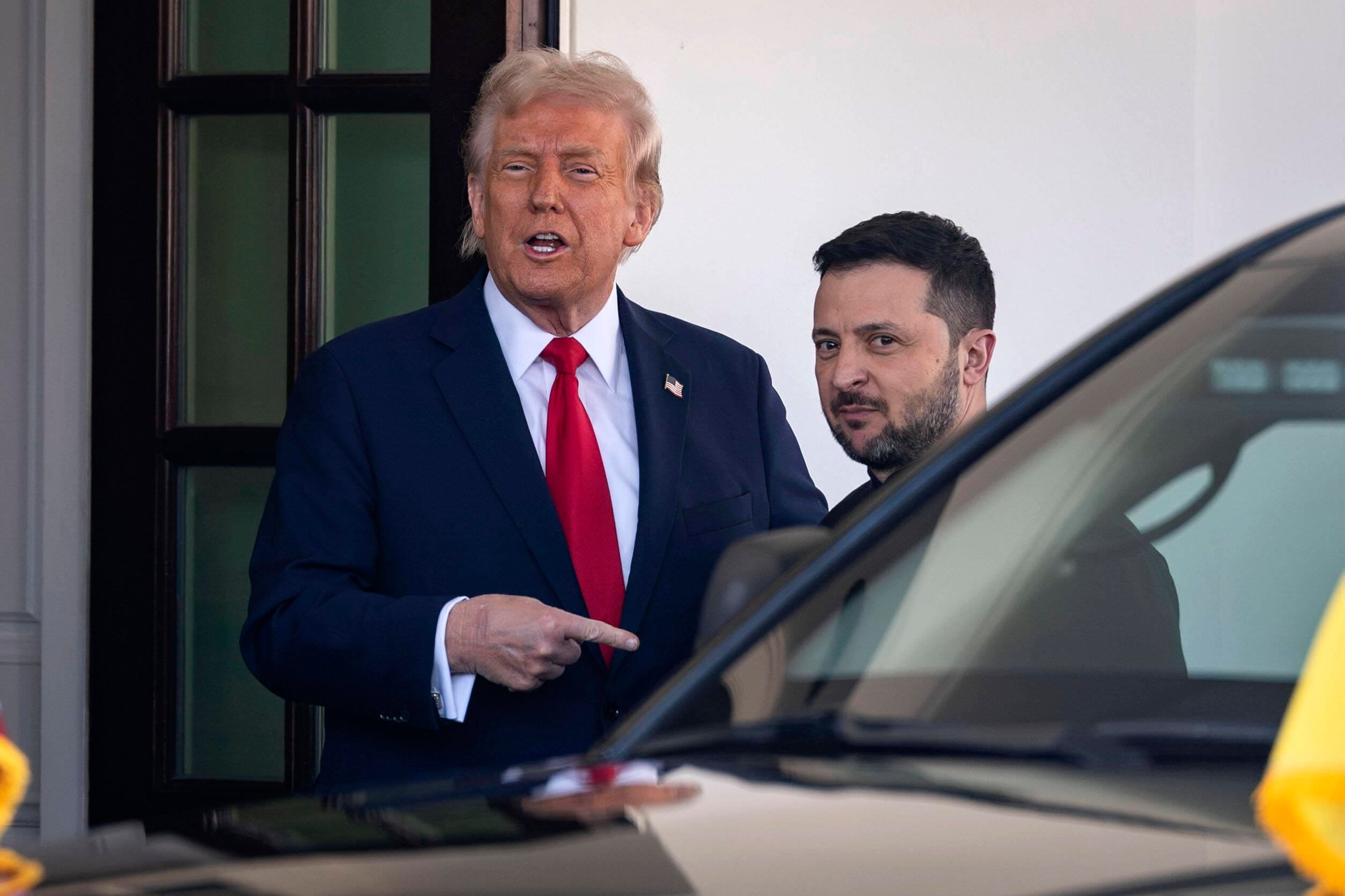
Donald Trump and Volodymyr ZelenskyBONNIE CASH / PAP
What about the Americans? They seem a bit lost in the chaos again. On Sunday in Geneva, where European and Ukrainian officials met with American ones to discuss the peace plan, Donald Trump returned to his traditional hoots. This time, Ukraine was hit, as Trump accused it of lack of gratitude for American efforts to end the war. The problem is that the only people who can be grateful for the American plan in its first version are the Russians.