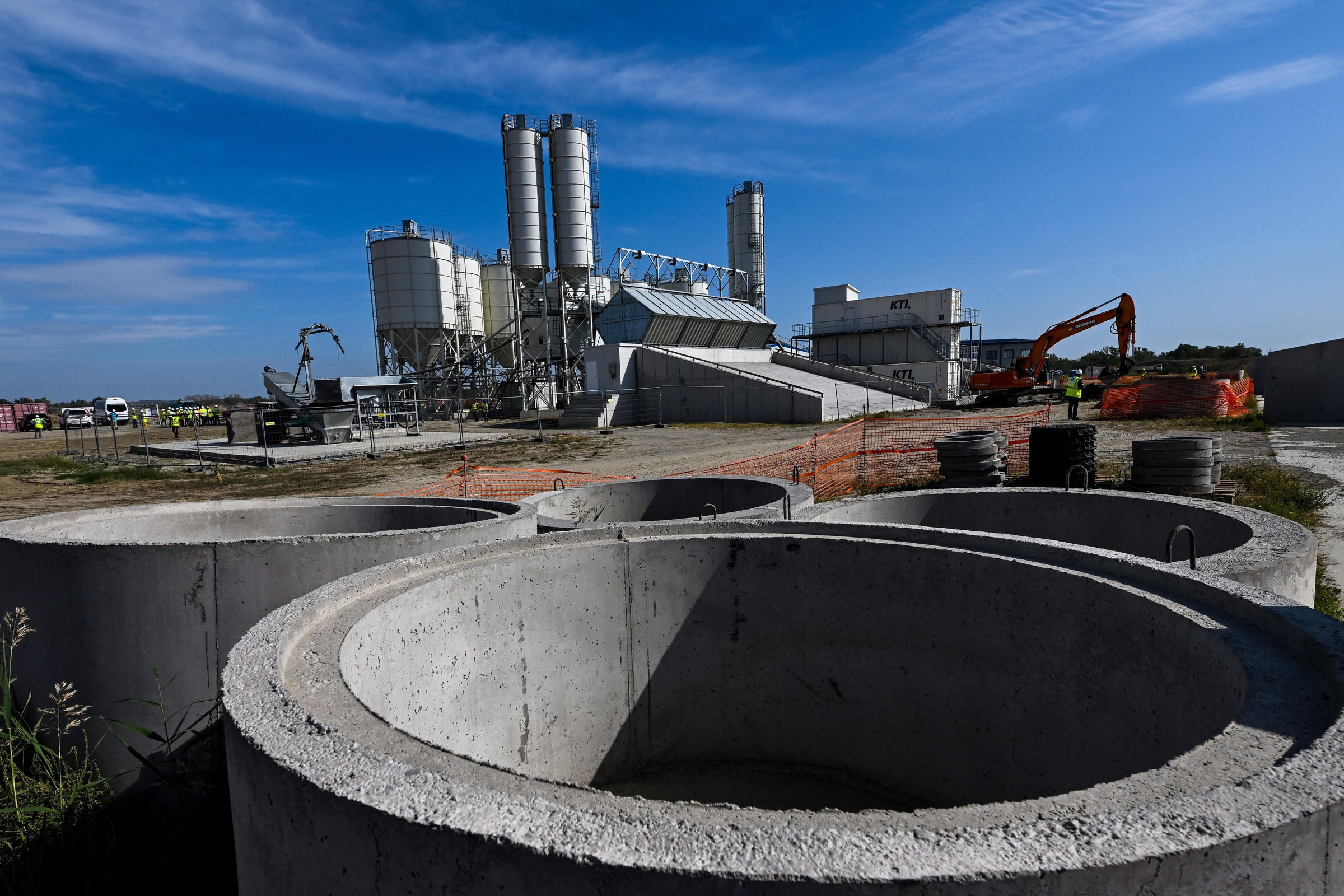
Published by the US Office of Foreign Assets Control (OFAC), the document states that transactions relating to the Hungarian Paks II power plant will be excluded from the sanctions imposed on Russia so far. This concerns transactions with a number of Russian entities, such as the largest state-owned Russian banks that are co-financing the construction of the second unit of the power plant – including Gazprombank, Vneshekonombank (WEB), as well as the Central Bank of Russia.
This is the second license granted by the Donald Trump administration for Paks II. The first one was issued in June but expired in December. The new document exempts power plants from sanctions indefinitely.
The article continues below the video
What are the principles of cooperation between Hungary and Russia in the construction of the Paks II power plant?
What institutions have been sanctioned by the US?
What does the new license mean for Hungary in the context of Paks II?
What other sanctions apply to Russian oil companies?
US sanctions on Russia. Some entities have obtained a license
This is the implementation of decisions announced after the visit of Hungarian Prime Minister Viktor Orban to the White House. According to the company conducting the construction of Paks II, sanctions on Gazprombank, imposed by the Joe Biden administration in 2024, caused difficulties in settlements.
Victor Orban announced that as a result of the arrangements with Donald Trump, “there will be no American objections to the construction of Paks II and no actions will be taken in the future.” During a meeting at the White House, Hungary agreed to purchase nuclear fuel for the plant from the American company Westinghouse.
However, the license does not apply to the exclusion of Hungary from the sanctions imposed on the Russian oil companies Lukoil and Rosneft, announced by the Hungarian authorities. These sanctions entered into force on Friday, but Hungarian Foreign Minister Peter Szijjarto said he had received assurances from Washington that they would not apply to Hungary, which imports Russian crude oil via the Druzhba pipeline.
Before the sanctions entered into force on Friday, the ministry had in recent days published a number of licenses not directly related to Hungary. They gave Lukoil until December 13 to sell foreign assets and gas stations, and the entry into force of sanctions against Lukoil's subsidiaries in Bulgaria was suspended until April 2026 to allow, among others, refinery for sale in Burgas.
Additionally, the sanctions against Rosneft completely excluded its shares in the Kazakh oil deposits in Tengiz and the consortium that owns the pipeline transporting oil from there to the Russian port in Novorossiysk. The consortium has shares in both Russian and Kazakh companies, as well as American companies – Chevron and ExxonMobil.