According to data from the Russian Ministry of Finance, in 2025 the largest beneficiaries of funds from the National Prosperity Fund (FNB) turned out to be Russian state banks. During the year, approximately 1 trillion rubles (approx. PLN 48 billion) was pumped into banks from FNB, i.e. over 90 percent. all investment expenses of the fund, which in total amounted to approximately 1 trillion rubles (approx. PLN 52 billion).
Of this amount, 407 billion rubles (approx. PLN 19,250 million) went to [objętego sankcjami] Vneshekonombank (WEB) – the main “cash office” of Kremlin megaprojects. The money was transferred to the bank headed by former Deputy Prime Minister Igor Shuvalov almost every month.
In January, February, March, May and December, WEB received subordinated deposits from FNB [czyli pożyczki dla banku, które w razie jego upadłości są spłacane dopiero na końcu, po innych wierzycielach] for a total amount of 214 billion rubles (over PLN 10 billion).
However, from April to December, another 193 billion rubles (over PLN 9 billion) were added in the form of ordinary deposits.
Down WTB 293 billion rubles (approx. PLN 14 billion) were pumped in in two tranches:
93 billion rubles (approx. PLN 4,400 million) in May
and 200 billion rubles (approx. PLN 9.46 billion) in July.
Gazprombank received three transfers with a total value of 196 billion rubles (approx. PLN 9,270 million):
two of them were subordinated deposits – a total of 166 billion rubles (approx. PLN 7,850 million),
and the third one took the form of an investment in the bank's preferred shares – 30 billion rubles (approx. PLN 1,420 million).
Another 94 billion rubles (approx. PLN 4,450 million) went to Sberbankand 30 billion rubles (approx. PLN 1,420 million) – to Sowkombankthe only private bank to receive any injection from the fund.
The war fuels enormous debts
Compared to 2024, when banks received 350 billion rubles (approx. PLN 16,560 million), this year's transfers from FNB have almost tripled. This happened after problems with loan repayment began to increase in the banking system.
According to Bloomberg's sources, bankers – including state-owned banks – began sounding the alarm behind the scenes in the summer as repayment delays began to rise among large companies. The wave of unpaid liabilities also affected arms plants, which could have taken out over 20 trillion rubles of loans (approx. PLN 946 billion) for war production. For this reason, he encountered problems, among others: WTB bank – said Bloomberg's interlocutors.
Military exercises conducted by an engineering unit of the Russian Southern Military District in Rostov-on-Don, Russia, January 19, 2026.Arkadia Budnitskii/Anadolu via Getty Images / Getty Images
10 trillion problems
In October, economists from CMAPK, an analytical center close to the government, warned about the risk of a banking crisis. In their opinion, this possibility appears in the second half of 2026. In December, a Russian government official confirmed that the cabinet of ministers treats this risk as real – just like the threat of an insolvency crisis in the economy.
One of the warning signals is the growing share of “bad” loans in banks' portfolios. CMAPK indicated that in November their value reached over 2 trillion rubles (approx. PLN 108 billion), and in the period January–September it almost doubled.
The broader problem debt ratio reached 10 trillion rubles (approx. PLN 492 billion) at the end of the third quarter. However, data from the Central Bank of Russia show that since the beginning of the year, the debt that companies and sole proprietorships have not managed to repay on time has increased by almost 2 trillion rubles (approx. PLN 90 billion).
Debts are growing, repayments are falling apart
Debt restructuring also turned out to be necessary for Russian Railways (RŻD), which has loans and credits worth 4 trillion rubles (approx. PLN 189 billion). Earlier, metallurgists and companies from the oil and gas sector also asked banks to defer repayments, the Russian central bank reported.
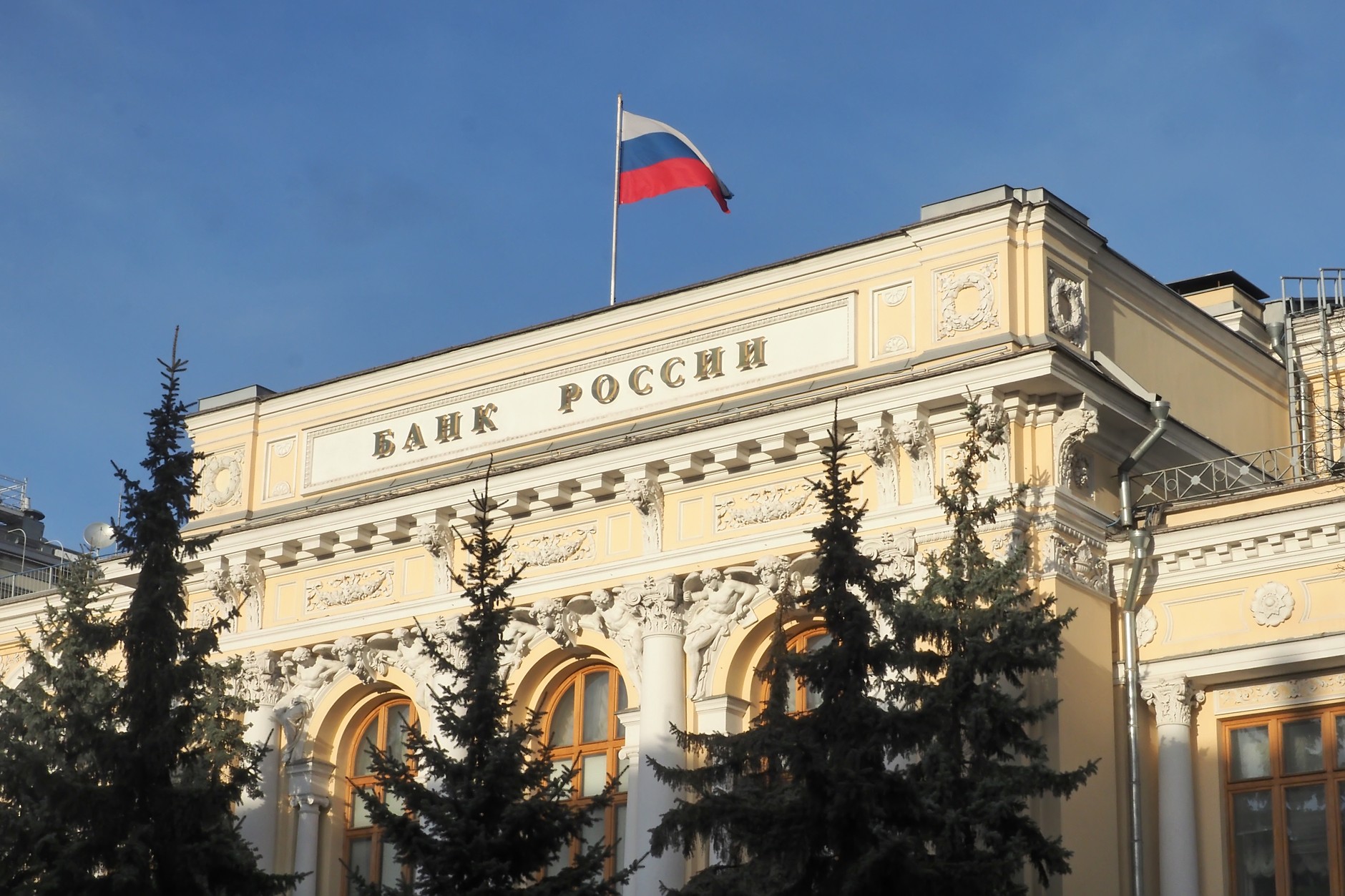
Central Bank of the Russian Federation (illustrative photo)alexeyart1 / Shutterstock
According to calculations by analysts of the oldest rating agency in Russia, Expert RA, at the end of September every fourth companywho had loans had delays in repayments — this is the highest level in the last six years since comparable data has been available. In total, there were 165,000 arrears. legal persons – by 41 thousand more than at the beginning of the year and by as much as 100 thousand. more than before the war.
The real scale is larger
The financial situation of some enterprises is clearly deteriorating, and companies operating in export industries are increasingly suffering from a decline in revenues. As CMAPK chief expert Renat Akhmetov points out, the main culprit is weakening foreign demand and falling prices on external markets. In practice, this means that exporters sell less and at the same time earn less on each unit sold, which quickly affects their financial liquidity.
The article continues below the video
According to Akhmetov, official bank data however, they do not reflect the true scale of the problem. Some “bad” loans are not visible in the statistics because they are often hidden under the guise of restructuring [czyli formalnych zmian harmonogramu spłat, wydłużania terminów czy czasowego odraczania rat]. Thanks to this, debt that would normally be classified as problematic is still presented as “serviceable”, even though in reality the company is unable to settle its liabilities on the original terms.
Consequently the risk is increasing: if the economic deterioration continues and restructurings are no longer sufficient to mask the tensions, the bad debt crisis in the corporate segment may explode rapidly. Akhmetov estimates that the most likely moment of escalation is the third-fourth quarter of next year, when the accumulation of problems may become impossible to “cover” with accounting procedures and further deferrals of repayments.
I’m Ashley Davis as an editor, I’m committed to upholding the highest standards of integrity and accuracy in every piece we publish. My work is driven by curiosity, a passion for truth, and a belief that journalism plays a crucial role in shaping public discourse. I strive to tell stories that not only inform but also inspire action and conversation.