The EU-Mercosur Treaty, mummy or plague for Romania? Radu Burnete: “Europe cannot afford commercial isolation”


The EU member states gave their consent to sign the trade treaty with the Latin American Mercosur states, after 25 years of negotiations and controversies. Presidential adviser Radu Burnete explains to what extent this agreement can be beneficial or harmful for Romania's economy.
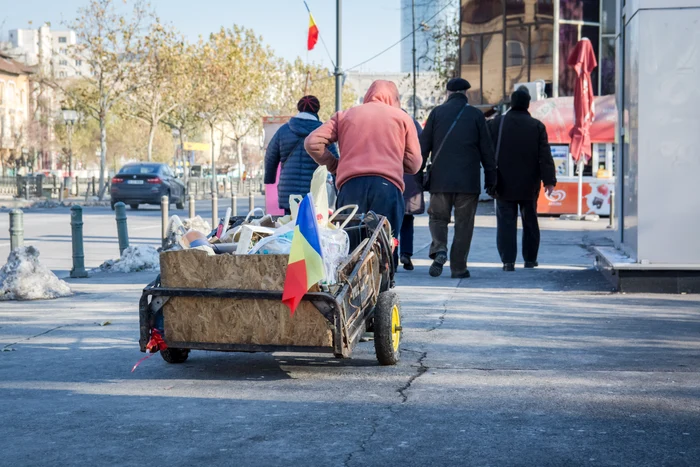
Romania's economy crawls suffocated by deficit and inflation. PHOTO: Shutterstock
The European Union and Latin American countries have been negotiating for almost three decades for the trade agreement that will be signed in the coming days. Negotiations and controversies dominated the headlines for years, and one after another major states opposed the treaty on the grounds that it would ruin European farmers and small businessmen. The big scare is the cheap goods that would be imported into Europe from South America at low prices, agricultural products, meat and vegetables and grains.
Presidential Advisor at the Department of Economic and Social Policies, Radu Burnete addressed the issue for the first time on his personal blog, before the European Parliament took a decision that, most likely, will officially validate that of the European Commission. In Burnete's opinion, the treaty with Latin American countries will bring benefits to the European Union, in general. At a time when the member states of the European Union are facing great challenges, and the “locomotives” Germany and France have huge problems of an economic nature, the new agreement is beneficial.
How can Romania benefit?
“Europe must remain a commercial player of global scale and become as quickly as possible a military player commensurate with this scale. A world in which everyone raises customs barriers, in which trade falls into the background and is vilified on all sides will be a poorer world. Romania would also have been a much poorer country if we had not had access to the European and global market, to attract investments and to be able to export“, is Burnete's opinion.
He explained how Romania could benefit from the new market that is opening up for European states. Given that Romania's trade with these countries is rather modest, things could change for the better.
“At first glance, Mercosur seems like a distant market for Romania. Romanian trade with the four South American countries amounted to several hundred million euros in 2024. We are talking about quite small amounts and volumes, but here is also the opportunity to increase them and go to new markets. We are starting to have domestic industries and companies developing this muscle of expansion”Burnete noted.
He also mentioned that, in another vein of ideas, Romania is not only a direct exporter, it is an integrated supplier in European chains.
“Car components produced in Pitesti or Craiova end up in vehicles assembled in Germany, which are then exported to Brazil. Electrical equipment manufactured in Romania is incorporated into Italian or Spanish machines intended for the South American market”Burnete claimed.
Industries that can benefit
This means that there are industries, some in distress, that could be beneficiaries of the treaty, given that the new market opening up can bring significant gains.
“We have enough industries that can find new markets in Latin America for their products, from the automotive industry which is very competitive (but had 35% tariffs with Mercosur) to the service or IT industry and many others. European Commission analysts estimate that EU car exports to Mercosur could triple by 2040. For Romania, this means not only direct vehicle exports, but also an increase in demand for auto components manufactured by hundreds of suppliers locals“, Burnete added.
Radu Burnete admitted that farmers in the European Union, including those in Romania, have fears that the European market will open up to cheaper products from South America. However, he also wanted to emphasize that there are solutions to prevent any imbalances in the agricultural market.
However, farmers took to the streets in Brussels, Paris, Warsaw and other capitals to denounce the deal. And there is no shortage of controversies.
“If the auto industry and services are looking at the agreement with optimism, the agricultural sector is looking at it with concern across Europe. Romania still has too fragmented, often subsistence agriculture, vulnerable to external competition although this has started to change significantly for the better. Romanian farmers are much more competitive than a decade ago. Mercosur is an agricultural giant. Production costs are also different. South American farmers benefit from vast land, favorable climate and more regulations permissive”he says.
Problems for farmers
That is precisely why Romania, along with other European states, insisted on more protection mechanisms that are contained in this agreement, Radu Burnete emphasized. Next, he explained what it was all about
“First of all, for many agricultural products the quantities that can be important in the EU have been limited at reduced customs tariffs. For example, for beef the limit is 1.5% of the total quantity produced in the EU, for poultry 1.3%. However, we are talking about relatively small quantities on the EU scale. Beyond these limits, customs tariffs remain high as before. Similar limits have been imposed on sugar, corn or ethanol”. Burnete also stated.
At the same time, there are other mechanisms, including a safeguard system through which Brussels ensures that the member states' market will not be destabilized by imports coming from South America.
“Secondly, the European Union negotiated an unprecedented safeguard system in its trade agreements, i.e. a kind of emergency brake when certain imports are seen to rise sharply or destabilize certain markets. For example, an investigation can be initiated if imports rise by only 5% compared to the average of the last 3 years, or if import prices fall by 5%, provided that the import price is at least 5% below the domestic price. These thresholds have been lowered from 10% (the Commission's initial proposal) and 8% (the December 2025 compromise), at the insistence of France and other states with strong agricultural sectors“, Burnete pointed out.
what to do
On the other hand, even a single member state can intervene decisively and demand investigations, if imports from the American continent are found to be causing problems. Romania, for example, can cause the European Commission to investigate and block certain imports, if there is evidence that the goods have invaded and created an imbalance in the market.
“A single member state or even the representatives of a sector can request the initiation of the investigation. Romania can act unilaterally if it observes disturbances on the internal market. In emergency cases, safeguard measures can be imposed within a maximum of 21 days from the initiation of the investigation. The measures can be maintained for up to 4 years, with the possibility of extension if the situation requires it. The Union negotiated a balanced agreement that will benefit all parties“, developed Burnete.
He also spoke about the geopolitical dimension of the EU-Mercosur agreement. At a time when the European Union has lost its geopolitical relevance and has become a shadow of what it once meant economically, this treaty can bring fresh blood to the bloated economies of the member states. Radu Burnete also mentioned the fact that the European Union has been negotiating this treaty since 2000, and a new failure would send a negative signal externally.
“Beyond the trade figures, the EU-Mercosur agreement has a geopolitical dimension. In a world where the rivalry between the great powers is intensifying, Europe cannot afford trade isolation. If the EU refuses to conclude the agreement negotiated for 25 years, what signal does this send to partners around the world? And I would like to point out this temporal dimension of the negotiation, it is not something that was decided quickly before and in a few weeks. It is one of the longest negotiations in the history of the EU”Burnete recalled.
The EU will have access to critical raw materials
At a time when the European Union is suffering due to the precariousness of reserves of critical raw materials, the treaty comes as an oxygen balloon and ensures preferential access to the reserves of South American states.
“Furthermore, the agreement provides preferential access to critical raw materials for Europe. Argentina has some of the world's largest reserves of lithium – a metal essential for batteries. Brazil is a major supplier of graphite and nickel. Of course agriculture and farmers are an important sector in Romania and Europe. Food is essential for life and for our security, but a modern economy means much more than that. We want Europe to be a global industrial power or we want to give up completely this place to China and America?”,
Burnete also said.
If some experts believe that the agreement is disadvantageous for the European Union, Radu Burnete is of a completely different opinion.
“The EU-Mercosur agreement is, in essence, a brave assumption by the Union. One that says that the benefits of economic integration will outweigh the costs of adjustment. That Europe can promote its economic interests without sacrificing its standards. Europe cannot remain relevant if it only behaves like a fortress under siege. Some see dangers everywhere, but what if we also see the opportunities? The agreement opens up a market of more than 270 million consumers including for Romanian products, and agriculture is protected by the most restrictive safeguard clauses of all the agreements ever signed by the European Union. The Union proves that it can be a global actor that must be taken into account and that it is not destined to an eternal paralysis due to the divergent interests of the member states. It must be clear to us that in this game of giants that will be the 21st century, Romania can only be well if Europe is well and Romania can only be protected if Europe can play on an equal footing with China U.S. This agreement is a step in the right direction.”concluded Radu Burnete.