When the White House allows the Kremlin to change the borders of other states, invoking the “historical rights” on the respective territories, it is essential to remember that some of the current territories of the United States was once Russian.
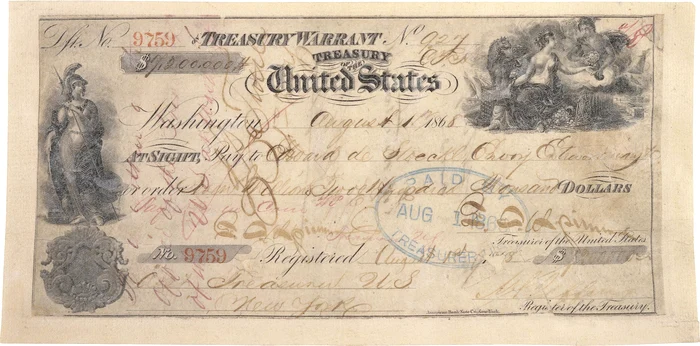
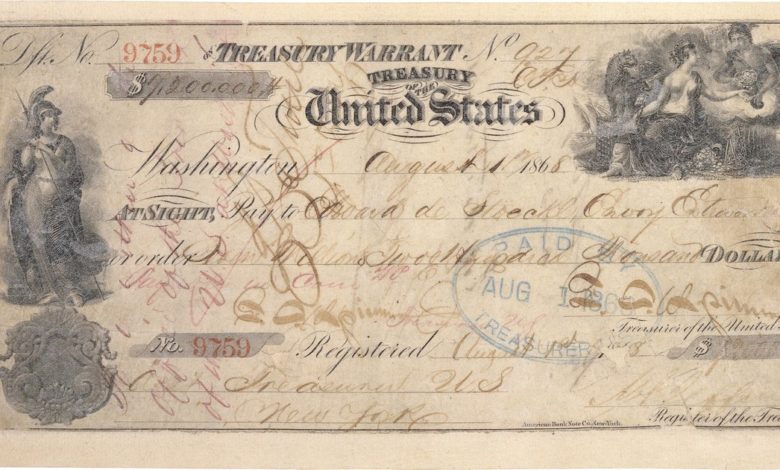
March 30, 186, Alaska was bought by Americans from Russia for $ 7.2 million/Photo: X
And not just Alaska. The history of the Russian colonization of North America is much less known than would be believed, and the attempts to control had a rather steep end.
From Siberian Hanat to Bering Strait
Few know that in 1867, the United States bought Alaska from Russia. But fewer are the ones who have heard of Fort Ross, the first Russian colony on the territory of the current California. Around the end of the eighteenth century and the beginning of the 19th century, these territories were seen as part of a single area: the Pacific Coast of North America, which Russia's fur and precious resources hunters were trying to colonize.
The Russian expansion to the east began from the end of the sixteenth century, not with the Ukrainian Cossacks, but with the Siberian Cossacks, probably originating in the Donul area. Under the leadership of Ataman Ermak, they destroyed the Siberian Hanat, a remains of the Mongol Empire, thus opening the path of Russian traders to the East. Looking for Zibelina fur, extremely valuable at that time, Russia sent expeditions to Asia, and traders set up outposts on their roads.
Thus, in less than a century, Moscow managed to conquer large territories, much larger than its surface, but what was in the north, beyond these borders, was a mystery.
Finally, Russia signed an agreement with the Chinese Empire, a state considered the “master of the East” for a long time, and Moscow began to think seriously about exploring and colonizing the frozen regions from the north.
Alaska: The separation of the old “house”
In the beginning, it was believed that between America and Eurasia there was a terrestrial connection, and the Danish explorer Vitus Bering was the first to show that the two continents are only separated from a strip of water. In a short time, the Russians began to set up colonies beyond the Bering Strait, on the American continent.
Beyond the Bering Strait are the Diomede Islands, a fascinating place, on the border between the Arctic and Pacific Ocean, which, on its own, unites two different worlds: the Great Island Diomede, part of Russia, and the small island of Diomede, part of the United States, distanced by only 3.7 kilometers.
From “mythological creatures” to “gold opportunities”
The period 1740-1800 was one marked by Russian incursions in Alaska, a distant area, but of great value due to the zibeline fur. During this period, the fur trade brought about 10% of the revenues of the Russian Empire, and the enthusiasm of the Russians to colonize these territories was obvious. Russian commander Grigori Selihov was the one who, in 1784, set up the first permanent settlement on the island of Kodiak, but his ambitions were not supported by the Imperial Court.
More successful, his son-in-law, Nicolae Rezanov, who obtained permission to set up the Russian-American commercial company, an entity similar to those in the West. However, interactions with indigenous populations – Inuit, Atabascani and others – have been marked by cruel conflicts and explorations, and the Russians were unable to establish a firm presence.
The decline of a lost colony
Throughout decades, logistical challenges and lack of resources have eroded Russian colonization. In addition, the competition from Great Britain and a series of diplomatic failures, including a test negotiation with Spain, undermined the ambitions of the Russian Empire.
The settlement of the Fort Ross in California, south of Alaska, was Russia's last expanding attempt, but due to economic and internal instability, this outpost could not survive long. After the death of Bâranov, one of the main leaders of the Russian-American company, the future of the colonization of North America by Russia seemed more and more dark.
Selling
It began to become obvious that Alaska was an expensive territory to maintain and that Russia could not defend it, especially in the face of a possible threat from Great Britain, which already controls almost the entire western coast of North America. In 1841, Russia sold Fort Ross to an Swiss emigrant John Sutter, and in 1867 the official sale of Alaska to the United States took place for $ 7.2 million, a business that was initially viewed by many Americans.
Russia thus lost a distant province, but for the United States, the acquisition of Alaska was an opportunity to expand its territory and control much of the Pacific shore, essential for their expansion strategy in the 19th century.
What did Russia lose?
If we looked back, Russia could regret the loss of Alaska. Even at the end of the 19th century, when valuable gold and other mineral resources were discovered, Alaska became a place of strategic importance during the Cold War, being used by the United States to counteract Soviet expansion.
Alaska also became a “showcase” for Siberia, a vast region of Russia, but which remained longer in terms of economic development and standard of living. Of course, at present, the Siberian regions have failed to reach the standards of Alaska, where natural resources and tourism generate prosperity.
Finally, it can be said that if Russia had kept Alaska, history would have been very different. Not only in economic level, but also in terms of the geopolitical balance between East and West. The answer to the question “Who would have won?” If Alaska remained Russian remains one of speculation. But no doubt, the loss of Alaska had a significant impact on Moscow's power and influence in North America.