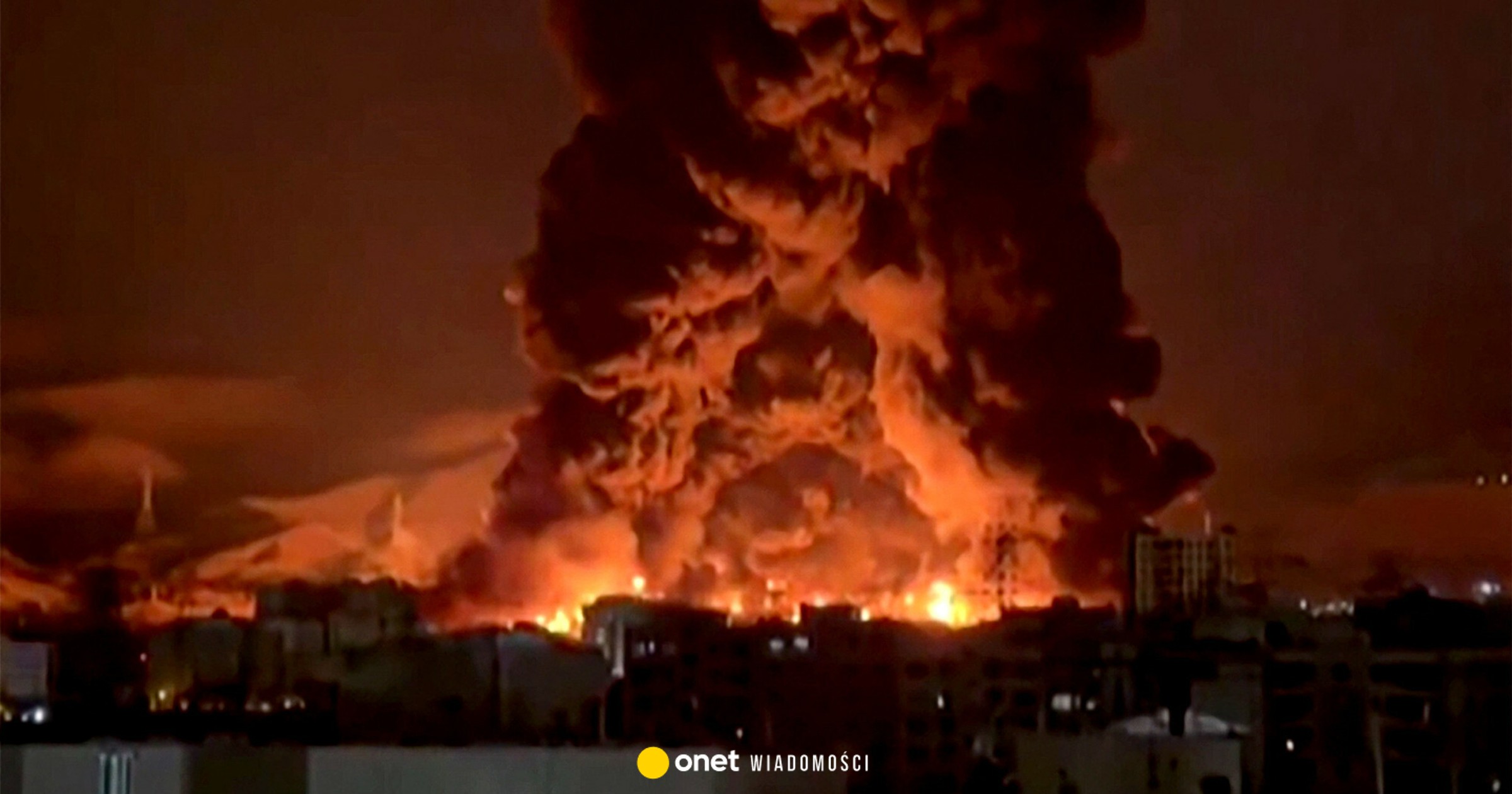
The strange voices that respond instead of the relatives in Iran. “I am terrified. It's like someone was playing with our minds”

Last days, Ellie, a British-Iranian established in the UK, formed his mother in Tehran. Instead of the known voice, the answer came cold and strange, with a mechanical accent: “Hello (“Hello? Hello? Who are you? I don't know who are you.”)
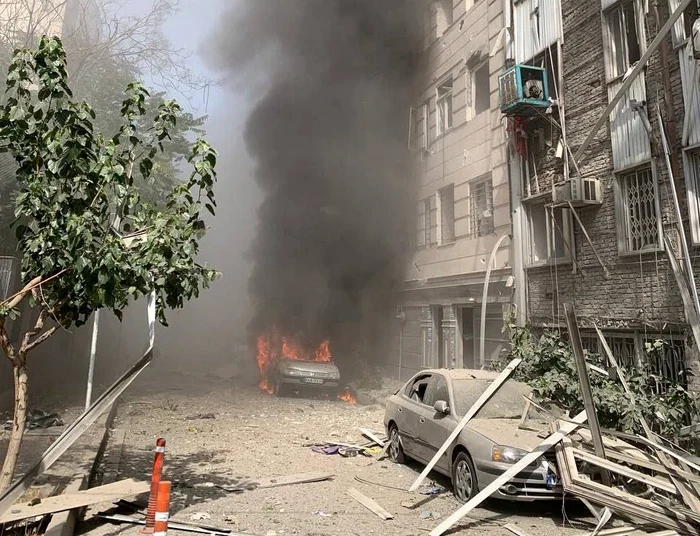
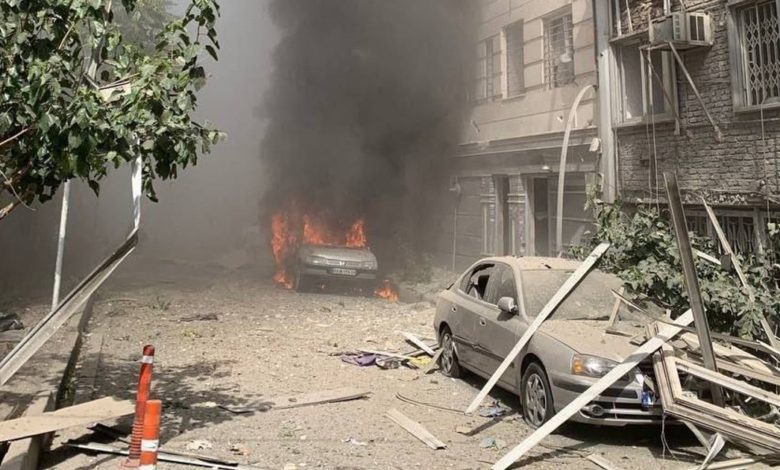
Damage to Tehran after Israeli blows.Foto: x
He closed the phone trembling. His mother, diabetic and insulin dependent, lives alone in the peripheral area of the Iranian capital. Since then, he couldn't get in touch with her.
Ellie is not alone. At least nine Iranians in the Diaspora – in the United Kingdom and in the United States – told the Associated Press that, starting with Israel's air attacks on Iran a week ago, they were greeted at the end of the robotic voices, sometimes bizarre, sometimes vaguely familiar, but never human.
The experts consulted are talking about a possible chatbot technology, primitive artificial intelligence or pre -recorded messages to which international calls are diverted.
The question that persists: Who does this and why?
Four of the five specialists consulted believe that behind the phenomenon could be the Iranian regime, which is thus trying to block communication with the outside and control the flow of information. The fifth indicates the possibility of a psychological attack by Israel – a strategy already tested in previous conflicts in Gaza or Lebanon.
It is certain that the effect on the Iranian diaspora is devastating. In the context of a conflict that brought Iran to a new tension-with intense bombing, reprisals through drones and almost total digital censorship-any communication attempt becomes a lottery.
“He is a type of psychological terror”
“He is a type of psychological terror,” “ says a 30 -year -old New York, who heard the same message as Ellie. “When you call to hear your mother's voice, and you are answered with an AI asking if you recognize yourself, something in you breaks.”
Other records are even more bizarre. A woman in the UK received, instead of her mother's response, a message that started with: “Thank you for listening to me. Life is full of surprises. Some bring joy, others put us to the test.“Another variant describes an idyllic scene, suggesting the listener to” imagine stepping through a quiet forest, listening to the rods. “
The messages are not just confusing – they are paralyzing
In many cases, phones simply sound empty. Others automatically redirect to these pre -recorded messages, with a female voice, sometimes in English, sometimes in Persian. Their structure suggests a centralized production, not a chaotic external attack.
Colin Crowell, former vice -president of global policies, says Iranian operators could automatically deviate outside calls to an automatic response platform. Amir Rashidi, a cyber security expert, goes on and connects the tactics to the current government strategy for crisis management-similar to panic and misinformation campaigns during the Iran-Irak war.
Suffering doubled by powerlessness
M., an Iranian established in the United Kingdom, says that her mother-in-law, immobilized in bed in an intense bombarded neighborhood in northeastern Tehran, can no longer be contacted. The last news received – in an indirect path – is that it would be admitted to intensive care, with respiratory problems. At each call, the same voice is addressed: “Close your eyes and imagine a quiet place …”.
“I do not feel tranquility. I only feel powerless,She says.
Illegal networks, a solution of damage
Some Iranians succeed, with difficulty, to contact their relatives through bypass connections. Ellie, for example, uses a family friend on the border with Turkey, who sounds locally with an Iranian card, then redirects the call to a Turkish connection. Thus, the mother's voice eventually reaches her. But for few there are such solutions.
Iran has blocked access to Starlink networks – despite Elon Musk's efforts to activate the system in the area. Those who hold illegal antennas risk investigations and denunciations from the neighbors, in the context of a hunting of “spies” triggered by the authorities.
The war that moves to the voice of the phone
Marwa Fatafta, an analyst of the Access now organization, specialized in digital rights, states that the phenomenon is part of a “psychological war” already tested in other conflict theaters. “The messages are designed to torment emotionally. To look absurd, unclear, impersonal-exactly what you do not want when you are desperate to hear your mother.”
To date, neither the Iranian nor the Israeli authorities have officially commented on these intercepted calls. Meanwhile, millions of Iranians live in forced isolation, in which the peace of the phone becomes a silent cry.
“I told my mother about that voice, when we managed to talk. She was shocked,” says Ellie. “He said the phone didn't even call it.”