Will the president be bypassed? Standerski: The veto does not mean the end of work on the act

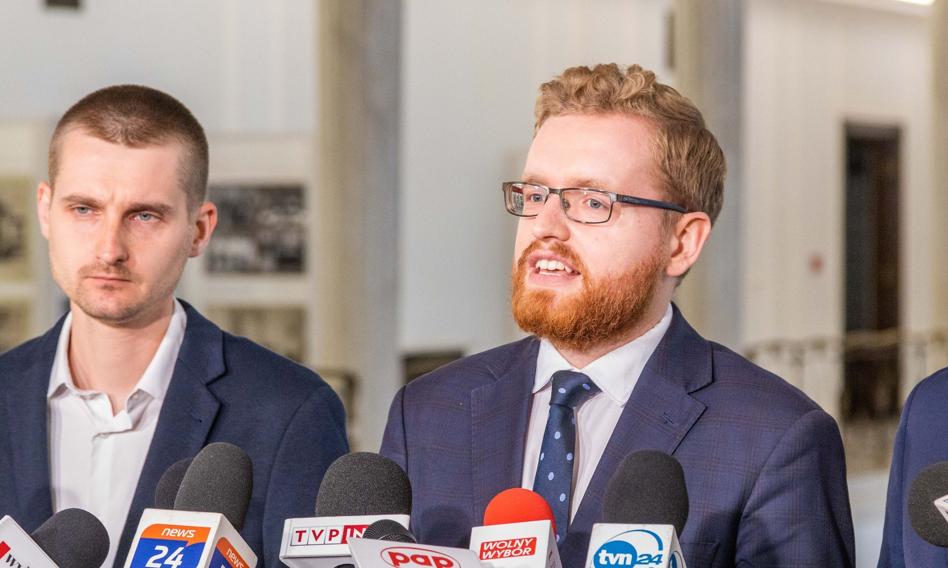
The veto does not mean the end of work on the act implementing the Digital Services Act, said Deputy Minister of Digital Affairs Dariusz Standerski. He informed that consultations on this matter were held on Monday with representatives of public trust professions.
“The veto does not mean the end of work on the act implementing the Digital Services Act; we have started a new process with consultations – today with representatives of public trust professions,” wrote Standerski on the X platform.
Earlier on Monday, he assured that the ministry was open to many scenarios regarding the so-called Digital Act. The decision on the ministry's further actions after the veto will be made within a dozen or so days, he added.
This concerns an amendment to the Act on the provision of electronic services, which President Karol Nawrocki vetoed last Friday. The amendment was intended to ensure the effective application in Poland of the provisions of the EU Digital Services Act (DSA) regarding, among others, blocking illegal content on the Internet. According to the president, the vetoed bill would introduce “administrative censorship” in Poland.
Deputy Minister of Digitization Dariusz Standerski, asked on TVP Info whether the ministry would present a new bill or several bills, including one “without sensitive issues”, said that the final decision on this matter would be made within a dozen or so days.
He recalled that public consultations on the vetoed bill would start on Monday. – Consultations will start by showing what this act really looks like and what tools it could give Internet users for safe and free discussions – said Standerski.
When asked when the meeting between Deputy Prime Minister and head of MC Krzysztof Gawkowski and President Nawrocki, announced by the president's spokesman, Rafał Leśkiewicz, would take place, Standerski replied: “I don't know when. And what's worse, Prime Minister Gawkowski doesn't know anything about it.” He added that after Leśkiewicz's declaration, he called the deputy prime minister to ask about the announced meeting, and Gawkowski “denied any contact with the president's office.”
According to the deputy minister of digitization, Nawrocki's veto was a “nod to the extreme right” and the decision was made “without reading” the act.
Standerski said that for failure to implement the Digital Services Act, which came into force in EU countries about 2 years ago, Poland faces a fine of PLN 35 to 40 million from the CJEU.
– As I understand it, since the president decided to veto this bill, the president is also willing to charge these costs to the budget of the president's office – said Standerski.
When asked about the draft regulations on digital tax, Standerski said that – as announced – the ministry will publish it by the end of January this year. When asked whether MC is not afraid of US President Donald Trump's reaction in this matter, Standerski said that MC's analyzes show that the main subject of taxation will be Chinese platforms, not American ones.
On Friday, President Karol Nawrocki vetoed the amendment to the Act on the provision of electronic services. It was intended to enable the presidents of UKE and KRRiT to issue orders to online platforms to remove illegal content regarding 27 prohibited acts. Under the law, content could only be removed after a court decision, if the user challenged the officials' decision.
On Saturday, the president's spokesman, Rafał Leśkiewicz, announced on TVN24 that there would be a meeting between President Karol Nawrocki and the Minister of Digital Affairs, Krzysztof Gawkowski.
On Sunday, Deputy Minister of Digitization Dariusz Standerski announced that a series of public consultations on the vetoed bill would begin on Monday at the MC, to which he invited the president's office.
The Digital Services Act (DSA) is the world's first digital regulation to hold companies across the EU responsible for the content they post on their platforms. It is fully valid in EU countries from February 17, 2024.
At the beginning of May last year The European Commission took Poland to the Court of Justice of the EU (CJEU) for failure to implement the regulations. The EC accused Poland of failing to appoint a coordinator for digital services to supervise compliance with and enforcement of DSA regulations. In May 2025, the President of UKE was appointed as a temporary coordinator, but cannot fully perform his tasks due to the lack of implementation of DSA in Poland.
Gawkowski announced the introduction of a digital tax in Poland for the first time in March 2025. MC said that the tax would be paid by companies with global revenues above EUR 750 million and that it would present a project on this matter by the end of January this year. PAP Biznes reports that the ministry is in favor of a 3% tax, which would guarantee PLN 1.7 billion in budget revenues in 2027, and over PLN 3 billion in 2030. (PAP)
mbl/ mick/ malk/