— The Monroe Doctrine is a big deal, but we've far outdone it. Now we call it the Donroe doctrine, said the President of the United States on Saturday (January 3) after the operation to capture Nicolas Maduro. — We kind of forgot about it, but we don't forget about it anymore. Under our new National Security Strategy, American dominance in the Western Hemisphere will never again be questioned, he added.
The article continues below the video
What are the assumptions of the Donroe doctrine?
What does the abduction of Nicolas Maduro mean?
What are the consequences of the intervention in Venezuela?
Who criticized the Trump administration's strategy?
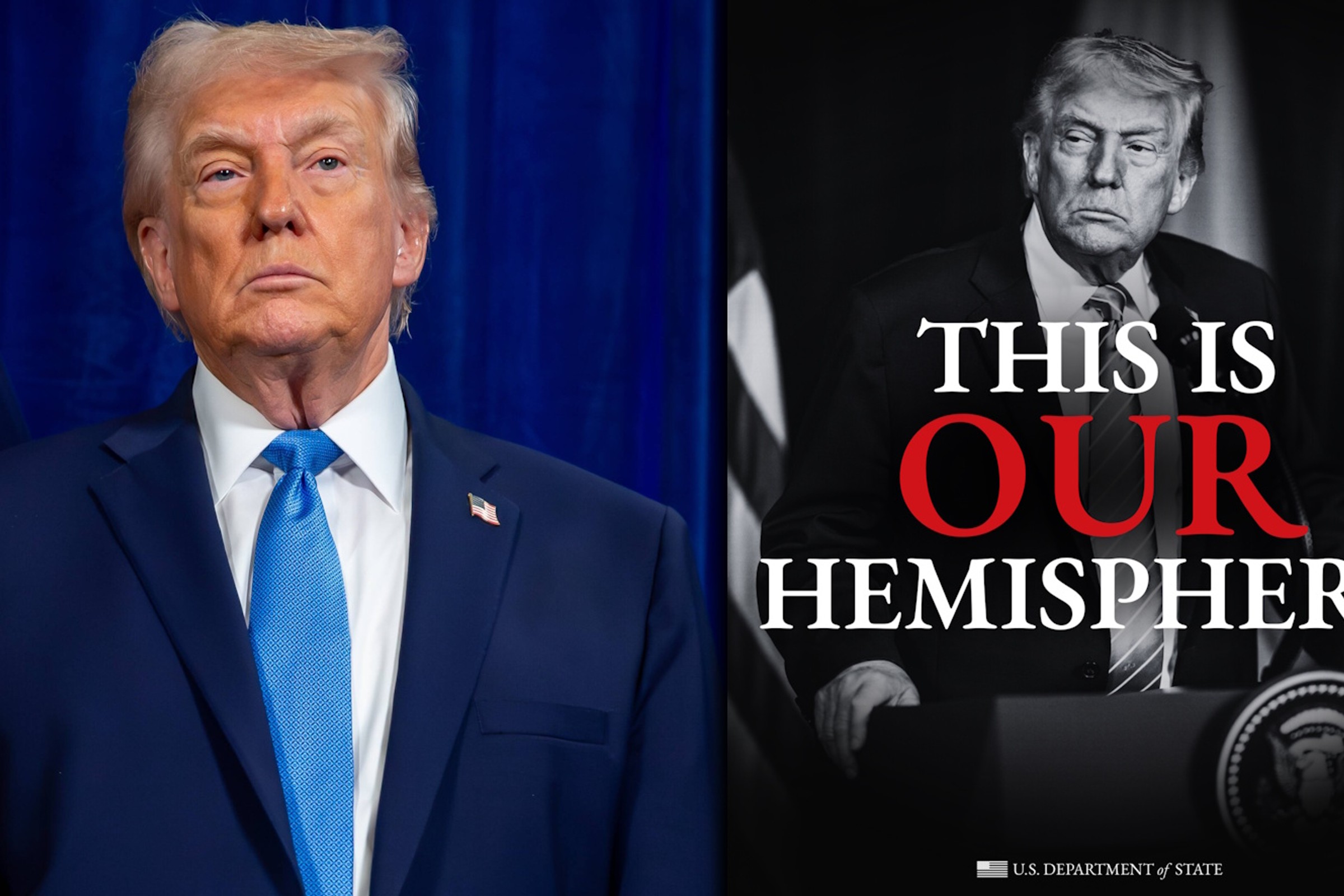
On the same day, the US Department of State posted a message on the X platform with the inscription in capital letters: “THIS IS OUR HEMISPHERE.”
Donald Trump's version of the Monroe Doctrine
Despite the rhetorical clarity of this message, it is still unclear what the “Donroe doctrine” will mean in practice. The Monroe Doctrine to which Trump refers is a concept expressed by President James Monroe in 1823. The fifth president of the United States then warned European countries against further colonization of the Western Hemisphere and at the same time declared that America would not interfere in European affairs. This idea guided American foreign policy for decades until the United States became a world power.
Now it returns in a slightly changed form. The National Security Strategy issued by the White House states that the “Trumpian addition” to the doctrine means “restoring American dominance in the Western Hemisphere and protecting the homeland and access to key geographic areas throughout the region.”
“We will prevent competitors from outside this hemisphere from deploying military forces or other threatening resources, as well as from possessing or controlling strategically important resources in our hemisphere,” the document emphasizes.
Theory is one thing, but practice?
According to Mieczysław Boduszyński, a former American diplomat and professor at Pomona College in California, it is still unknown how this policy will be implemented in practice and what it means for US policy towards other regions.
— Honestly, we don't know what that means yet. If China or Russia have specific investments or interests in Latin America, what will we do about it? I'm not sure whether this administration actually worked it out on its own, said the expert in an interview with PAP. He added that Washington's focus on the Western Hemisphere and open support for the idea of spheres of influence is potentially inconsistent with the policy of containing China in Asia, favored by some administration representatives.
— We had entire congressional committees, entire departments within ministries devoted to competition with China. But we have limited resources, including military resources. Meanwhile, China is a big player with more and more resources, Boduszyński noted. He also noted that a significant portion of US forces from other regions of the world were brought in for the operation against Venezuela and its naval blockade – which is to be maintained for a long time.
The expert added that the problem with predicting how the “Donroe doctrine” will be implemented also lies in the lack of cohesion in Trump's team.
— Here we see the influence of different factions on this policy – in this case it was Stephen Miller and Marco Rubio. But different factions have different influence on different policies, so it's all quite chaotic – noted the PAP interlocutor.
A new doctrine hits China?
J. Michael Waller, an analyst at the Center for Security Policy in Washington, disagrees with this view. According to him, the “Donroe Doctrine” is an adaptation of 19th-century policy to new realities in which the main rival of the US is now China, not European powers. In his opinion, the operation in Venezuela is part of the policy of rivalry with China, depriving Beijing of an important ally. Waller also believes that this does not mean a reduction in US ambitions in Asia and Europe, because this move complicates Beijing's situation, which improves the situation of America's European allies.
— A permanent naval force and a PRC base in the Caribbean Sea would be a disaster for all our allies around the world. So it's very frustrating to see so little support (for operations in Venezuela) from allies. Any supplies in the event of a major war in Europe would depend, to a large extent, on our shipping routes through the Panama Canal from Texas, as well as from New Orleans. It all flows through the Caribbean Sea, Waller noted. — This is a great victory for America's ability to help NATO allies. “I hope that Europeans will support (the intervention in Venezuela) rather than express criticism or skepticism about it,” he added.
A blow to international law
According to Boduszyński, what is certain about the American strategy is that the Trump administration has for good moved away from striving for democratization and emphasizing the importance of international law, even as a “fig leaf”. In this context, the expert referred to the international intervention in Libya and the overthrow of the Muammar Gaddafi regime in 2011.
— I was in the administration then and it was something completely different: we gathered an international coalition, we received a resolution of the UN Security Council. Libyan officials demanded intervention, Boduszyński recalled. However, as he admitted, it was a mistake to hold elections in Libya too quickly, before strengthening state institutions. — In Venezuela we see the opposite. The problem is that, ultimately, elections are the basis of the government's legitimacy. And Trump's strategy seems to be to force certain changes and decisions with threats of force, he added.
The PAP interlocutor noted that such a course of action in Latin America may, in practice, make it more difficult for the US to influence the policies of individual countries and strengthen the negative attitudes of their societies towards the US, because it will remind them of previous brutal American interventions in the region.
The capture of Nicolas Maduro
On January 3, US forces abducted the country's leader Nicolas Maduro and his wife from Venezuela and transported them to the United States. A federal court in New York formally charged them on Monday, including participating in a “narco-terrorist conspiracy” and importing cocaine into the US. The defendants pleaded not guilty.