The big draw: Trump and Iran's secret plan to avoid all-out war. “No one can afford this conflict anymore”

The truce between the US and Iran would have been extended on Tuesday evening, according to the announcement made by Trump. Middle East expert Flavius Caba explains, for “Adevărul”, which would be the main scenarios until the two sides reach a more consistent and definitive peace agreement.
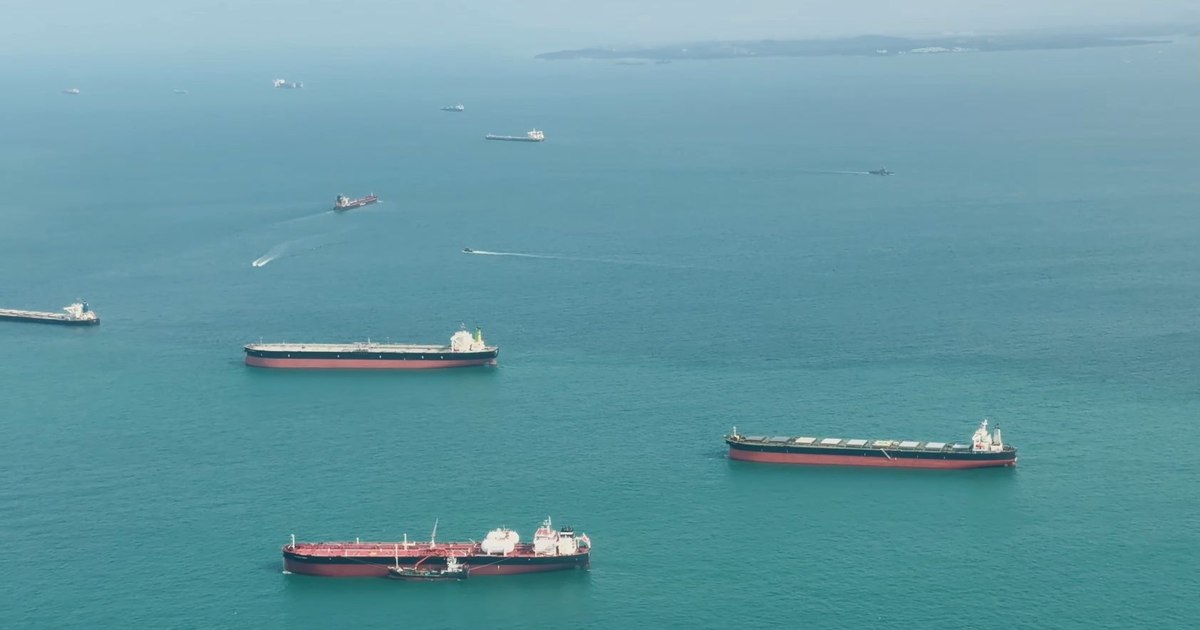
The blockades in the Strait of Hormuz and the Gulf of Oman would end. PHOTO: Video capture
Donald Trump announced, in a message published on Tuesday, April 21, in the evening on the Truth Social platform, that the United States will postpone further offensive actions against Iran. He cited the internal fragmentation of the Iranian government and the lack of a common position in the negotiations and specified that the naval blockade imposed on Iran would remain in force, the army would remain on alert, but also that the truce had been extended.
Under what conditions and when we could move, if not to a peace treaty, at least to a long or indefinite armistice, we will find out from Flavius Caba, an expert in the Middle East. He is president of the think-tank Middle East Political and Economic Institute and is a director in the company International Competitive Solution, offering consultancy on the relationship between Romania and the Middle East.
In his analysis for The Truth, Flavius Caba paints a picture of a conflict stuck in a strategic stalemate, where neither the US nor Iran can achieve total victory without unacceptable costs. From this perspective, the expert sees the situation not as a prelude to an escalation that would lead to a total war, but as an asymmetric negotiation of survival and image.
Everyone is tired of war and its effects
In fact, Flavius Caba starts from the idea that all parties involved, not only the US and Iran, but also the Gulf states want de-escalation. The reasons are mainly economic and relate to the price of oil and the stability of the markets, but also domestic politics. Donald Trump would need quick victories, but without high costs, which seems to tempt him to declare his victory for the American public even if it cannot be a total one.
Flavius Caba starts here from two basic ideas. A first option would be that the negotiations will continue and that in the short and medium term a solution will be found for a long-lasting and comprehensive truce.
“As we anticipated (no – Flavius Caba previously anticipated the course of things even in a previous interview with “Adevărul”, we reached this point of postponing the ceasefire agreement, and after that we again entered a period of groping and negotiations. Now, the first option could be that after a few days we have a new round of negotiations in Islamabad. And here an optimistic scenario would be for there to be a framework agreement, which would represent a opportunity to pave the way for a comprehensive agreement and to establish a mechanism, I say, sustainable for a continuous dialogue”, says Caba.
However, the scenario of a definitive peace agreement, concretized by a treaty, seems much more distant. The historical mistrust between the two camps matters here enormously, but also the fact that there are many problems that each considers unsolved.

Flavius Caba
“It is still too early to anticipate such an approach, and when I say this I am thinking of the complex issues and the multiple differences between the two sides. I think that rather there is a possibility of a framework agreement. And this is also because the way of approaching this problem by both sides is different”he says.
Enormous pressures for an agreement
Flavius Caba explains here the perspective of Donald Trump, who is facing enormous pressure from within, from the United States of America, but also from the allies in the Gulf. American domestic politics, energy geopolitics, and limiting the possibility of a massive ground invasion of Iran due to difficult geography and huge political costs are the main arguments.
Hungary's lesson for Romania. Communication expert: “Our politicians are playing an hourglass game for themselves and their bubble”
“I'm relying here on the fact that President Trump is a businessman, he wants to make a deal fairly quickly and broadly, of course, with the details to be discussed later. Trump is also under pressure both domestically and internationally to reach an agreement or a de-escalation of the situation in the Middle East. Domestically we know that American citizens, in principle, are unhappy with the increase in fuel prices. Also, part of the MAGA electorate noticed that President Trump is acting differently from what he promised in the election campaign and also through what he presented in the national security strategy. There is also this pressure of the majority of states on the economic and energy component to lead to a de-escalation of the situation in the energy field, in particular, but also economically. Here, economically, we are talking about fertilizers, helium, and other raw materials that are imported from the area the Middle East“, says Caba.
However, there are also some important obstacles. A first obstacle would be deep historical mistrust and national pride. “Each side needs the outcome to be presented to its public as a 'win' or a strategic success. That would mean Trump declaring victory over Iran and justifying it by changing power in Iran and destroying Iran's nuclear program. The Iranians would say they won by forcing the US military to desist from any action.” he claims.
The war may end as a frozen conflict
Another scenario would be that the United States and Iran will not find enough arguments to successfully conclude the negotiations and reach an agreement. Even then, the conflict can end. Flavius Caba argues how to get here.
“Another possible scenario would be to have a cold peace, a frozen conflict. That would mean that the current situation would be maintained, that is, have, similar uncertainty, a similar situation to last year, after the conflict in June. Then there was no agreement after the ceasefire, simply the Americans, Iranians and Israelis stopped military actions, but did not sign any agreement. It is possible that the same will happen now.”
Caba adds. In this last case, Iran would most likely give up the blockade of the Strait of Hormuz, and the Americans the blockade in the Gulf of Oman.
Finally, another scenario would be, according to the expert, the escalation of the war. However, this would also be the least likely, believes Flavius Caba.
“There is also the risk that this war will continue, that we will have a continuation of the armed conflict. The failure of diplomacy, Israel's pressure on Trump and the occurrence of unforeseen incidents in Hormuz would be the factors that would favor this scenario. But this option would be the least likely, in my opinion, because both camps need to end the conflict. It may matter less how, but neither the US nor Iran would be advantaged if the war continued”. consider Caba.
The stakes of the Bulgarian elections for Romania. “We are nowhere”
Future prospects and deadlines
Flavius Caba believes that the next two weeks will be decisive and will indicate the direction in which things will go. At this point, he also says, the course of events would indicate that both sides are preparing to end the war and declare victory for their own audience.
“However, I believe that there will have to be a situation of either frozen conflict or frozen peace, as we have seen in other areas, such as in the conflict between Armenia and Azerbaijan. Before the meeting with the Chinese president takes place, there must be some form of resolution of the position on Iran. It is unlikely that Trump and Xi Jinping will meet to discuss while the conflict is ongoing. And there has already been a delay. Furthermore, as far as Trump is concerned, domestically, at the level of the Congress, the 90-day exception is reached. And that will happen at the end of May. So it will be difficult for Trump to continue this conflict as it was at the beginning. If we go by the idea that there will be de-escalation, we should move in the next few days to new negotiations that will lead to the end military conflict. With or without a signed agreement”concludes Flavius Caba.