Why does Poland lead in NATO, and Romania does not? Three generals explain strategy for solving military 'ambition deficit'

Poland leads, in rotation with Germany, the NATO Command that oversees Polish territory and the Baltic countries, while security in the Black Sea is coordinated by Italy. Three generals with experience in NATO explain why Romania lacks ambition in a period of historical changes.
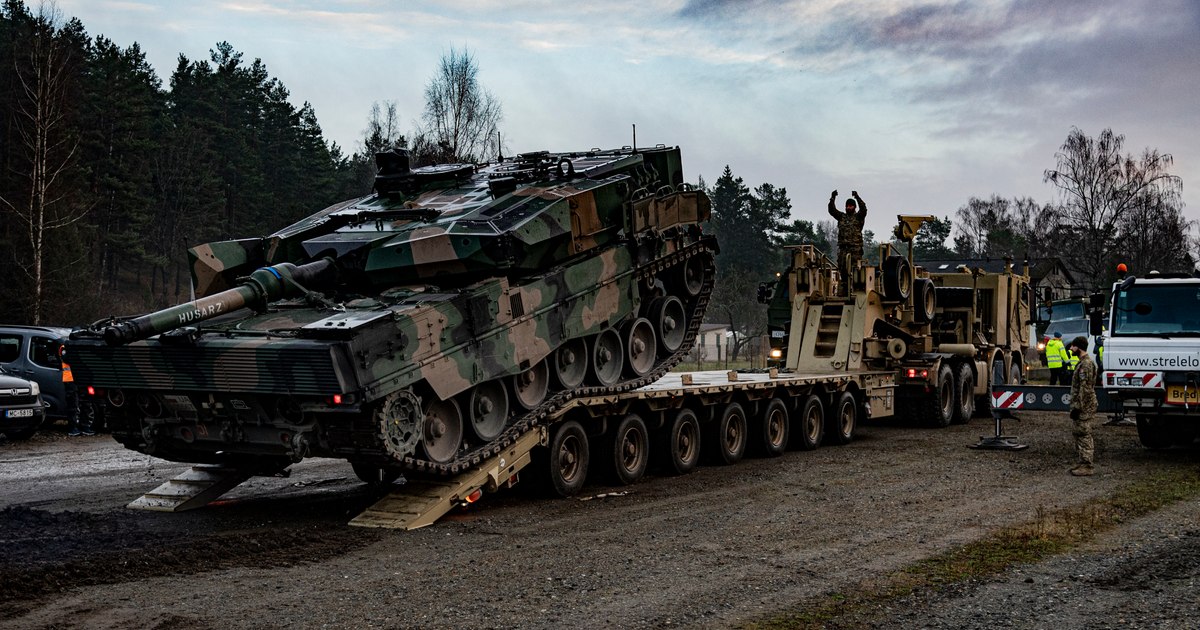
Poland is building a fleet of 1,000 tanks. PHOTO: Ministry of Defense Poland
The leadership of the Joint Forces Command (JFC) in Naples, a NATO structure strategically oriented towards the southern and southeastern flank of the Alliance and which ensures security in the Black Sea and the Mediterranean Sea, will be taken over by an Italian general, with the baton being handed over by an American general.
Former NATO general Dorin Toma is concerned that an Italian general will tend to focus more on the situation in the Mediterranean, compared to an American one, who would keep the focus on Russia in the Black Sea.
Toma makes a comparison with the Combined Forces Command in Brunssum, Holland, which oversees the territory of Poland and the Baltic states: “Following the negotiations, Poland and Germany will rotate the command of this command, an extremely important strategic position. The fact that Poland and Germany will rotate the leadership is a major diplomatic victory for Warsaw. It ensures that regional plans are developed, tested and updated by leaders who have a direct national interest in these plans working. The result is increased cohesion and a much faster response in the event of a crisis.”
Instead, Black Sea security will be coordinated by an Italian commander who, says General Toma, “probably will pay more attention to the southern flank (Mediterranean). Italy has vital strategic interests in the “Extended South”, which may dilute the attention given to the Black Sea region. Without occupying an important position at the level of this command, there may be risks regarding the viability of plans or the prioritization of resources for Romania. An Italian military leader could prioritize instability in North Africa and migration, while an American leader in Naples would maintain the focus on countering Russia in the Black Sea and Eastern Mediterranean.”
The fact that a four-star Polish general will command NATO's Joint Forces Command (JFC) in Brunssum, a historic first, “it is considered a major success in strengthening Poland's position within NATO and the beginning of deeper integration at the highest military decision-making level. The Polish Ministry of Defense emphasized that the position was actively negotiated, being the result of the country's credibility and its real contribution to the security of the Alliance”, says Thomas.
It is a new example of Romania's lack of ambition regarding the geopolitical situation in Europe, according to experts. Why can Poland assume such a leadership position at the top of NATO and not Romania? Why couldn't Romania join the rotation with Italy regarding the command in Naples? These are questions that we answer with the help of experienced NATO generals, Dorin Toma, Dan Grecu and Virgil Bălăceanu.
Toma: “We should aspire to occupy the position of chief of staff of this command”
General Toma explains why Poland insisted on occupying the post of head of the Brunssum Command: “Warsaw justified this approach by the fact that it guarantees that regional plans for Poland and the Baltic countries are developed, tested and updated by leaders who have a direct national interest in these mechanisms being functional. In multinational structures, although procedures are standardized, strategic vision, resource prioritization and “sense of urgency” are deeply influenced by military leadership.”
The general claims that Romania must balance the lack of representation at the level of the Command in Naples with the occupation of the position of chief of staff of this command.
“We can understand that the level of political and military ambition of Romania, at least at present, does not allow the negotiation of such a military position in NATO (commander of the Naples Joint Force Command). However, I believe that we should aspire to occupy the position of chief of staff of this command (3-star position), currently held by Italy. Thus, a balance would be created, at a decision-making level, between the south-eastern flank of NATO (including the territory of Romania) and the southern flank (Mediterranean Sea area). In the context in which Poland has already ensured its military relevance in Central Europe, Romania's absence from the military decision-making peak in South-Eastern Europe generates a lack of representation.”
Grecu explains why Poland obtained the leadership of the command in Brunssum. “They want to make 1,000 tanks. We're buying 54”
General (r) Dan Grecu, an officer who had missions in Afghanistan, Iraq, Eritrea and Ethiopia and was decorated in turn by the United States of America, the UN and NATO, current president of the Association of Reserve Officers in Romania, claims that leadership positions are awarded according to the weight of the respective state's contribution to the functioning of NATO: “A small state with few forces that participates proportionately less in the Alliance effort cannot obtain leadership positions. All the positions within NATO, these permanent positions, are negotiated from time to time, there is a kind of rotating calendar“.
Grecu believes that Romania “he has no chance of obtaining leadership positions in large NATO commands“. Why can Poles get such positions? “The Poles built an army that already exceeded 200,000 men. The Poles are active in a very, very sensitive area, the one with the exit to the Baltic Sea, respectively on the border with Russia and Belarus. They are in the process of building Korean model tanks, they want to make 1,000 tanks. We are buying 54. They took 120 helicopters, we are taking 12.“
Indeed, Romania ordered the purchase of 54 US-made Abrams M1A2 SEPv3 tanks. The transaction was approved in November 2023 by the US administration and has a value of almost 1 billion dollars. The tanks should be delivered starting in 2026. On the other hand, there is also a second stage of the tank supply program, which has a value of almost 6.5 billion euros, provides for the acquisition of 216 tanks and 76 derivatives for equipping the tank and infantry structures of the Land Forces, as well as the acquisition of logistical support and specific training and training equipment. It is not yet known which tanks we will buy and when they will arrive.
General Grecu argues that investments in the military must be complemented by active diplomacy. “Practically, the decision to appoint the commander is the result of sustained negotiations. It's not enough to just have the military side. We are discussing the famous security conference in Munich, where more than 60 heads of state or government were present, and we were also represented by the foreign minister.”
Bălăceanu: “We can very well join Italy in the rotating command of the Naples Command.”
General (r) Virgil Bălăceanu, who represented Romania at the NATO Command in Brussels and was head of the Multinational Brigade in South-East Europe, claims that Romania can have ambitions similar to those of Poland in terms of leading a NATO Command: “We should have such ambitions, because we are the pivot in the southeast. The Poles are the pivot in the northeast. The Poles already enter the rotational system for the command of the Joint Forces Command from Brunssum together with Germany. We can very well enter with Italy in the rotating command of the Command from Naples. So it would also be an affirmation from this point of view of the Romanian military leadership.”
Bălăceanu believes that we have generals with experience and intellectual and professional capacity to be able to carry out such a task. “The highest position in the NATO force structure is the position of deputy commander of the NATO-Turkey Rapid Reaction Corps, so there would be an increase there as well, no doubt.”
The general claims that an Italian leadership of the Naples Command could bring greater rapprochement from a military point of view, given the cultural rapprochement, common origins, common space, common history.