US President Donald Trump's harsh remarks against Vladimir Putin, which have come in parallel with a spectacular crackdown on Venezuelan leader Nicolás Maduro, are raising new questions about Washington's strategy toward Russia, Ukraine and the wider network of authoritarian regimes.
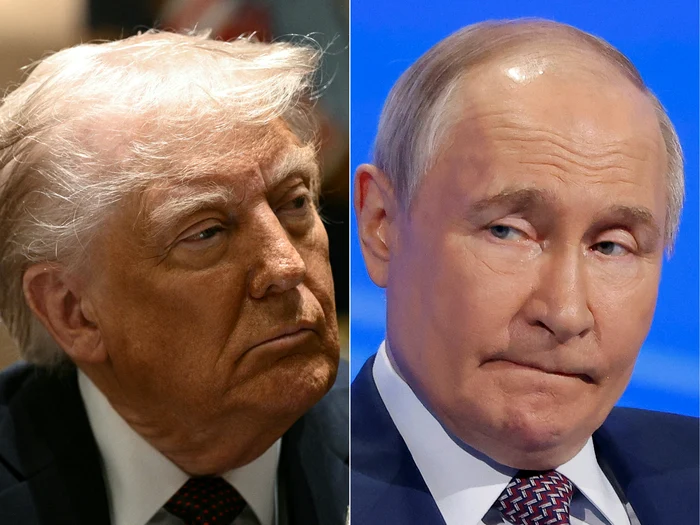
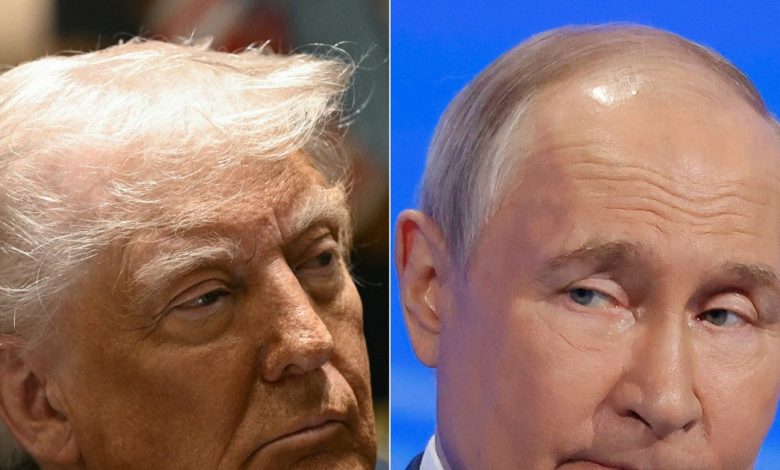
Donald Trump and Vladimir Putin/PHOTO: AFP
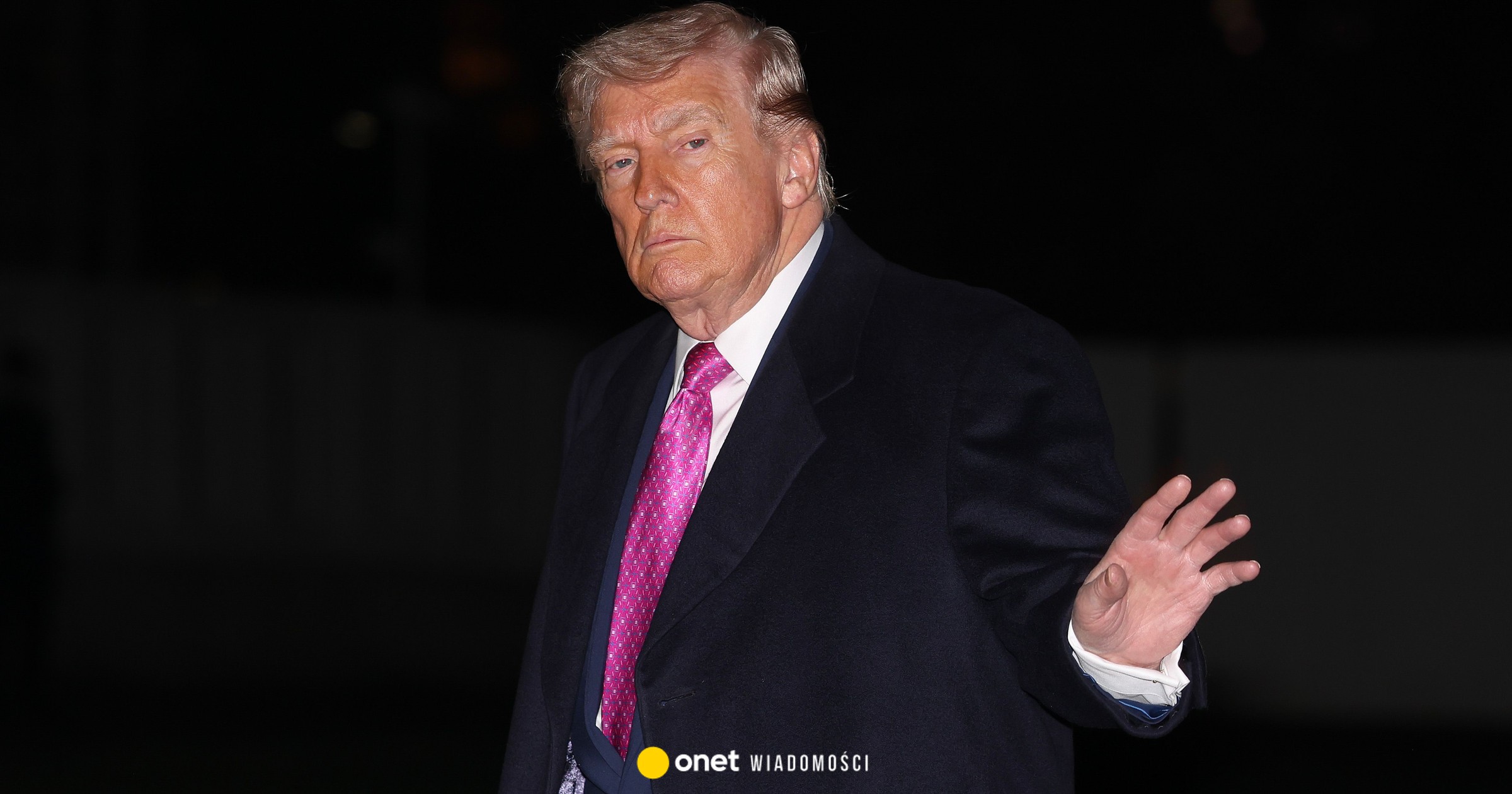
Donald Trump has expressed his displeasure with the Russian president in the past. But his statement on Saturday that he was “not happy” with Vladimir Putin had an unusual impact – not in its content, but in its timing.
The comment was made at Mar-a-Lago as Trump answered questions about Venezuela, just hours before a plane carrying another Kremlin-friendly leader, Nicolás Maduro, landed near New York after a US military and intelligence operation that surprised allies and adversaries alike.
In the same context, Trump spoke about the human cost of the war in Ukraine, citing tens of thousands of deaths in recent months and describing the conflict as “slaughter.”
For a president who has built his image on the idea that he can negotiate directly with America's adversaries, the tone marked a subtle but significant shift: less emphasis on his personal relationship with Putin and more on the frustration and costs of a war he says “never should have started.”
Strategic clarity or recalibration?
Trump's remarks raise a key question for Kiev and Washington's Western allies: Do they indicate a clearer American policy toward Russian aggression or a recalibration that could affect Ukraine's negotiating position? Kyiv Post asks.
Trump has not expressed explicit support for Ukraine, repeating that “both sides” have done “pretty bad things” and again calling the conflict “Biden's war.”
At the same time, he emphasized US support through NATO, saying that European allies contribute more financially and that the United States provides large amounts of ammunition, with the costs borne by the partners.
This approach reflects a familiar pattern: transactional, skeptical of absolute moral arguments, but anchored in American power projection.
For Ukraine, the message remains ambiguous. Trump's desire to quickly end the war could increase diplomatic pressure on Kiev to compromise, even as his criticism of continued Russian attacks suggests limits to Washington's patience with Moscow.
In this context, European national security advisers are in Kiev for discussions on possible peace initiatives, and President Volodymyr Zelensky is due to travel to Paris. Trump's comments add an element of uncertainty about the firmness of American support.
Why frustration with Putin matters
Trump's criticism of Putin has focused on the loss of life rather than geopolitical calculations. He repeatedly cited the number of casualties – military and civilian – and described the ongoing attacks on Ukrainian cities as “brutal”.
Alex Plitsas, a former senior Pentagon official and Atlantic Council analyst, said the frustration reflects more than rhetorical irritation. In his view, Trump may have concluded that Putin misled him, continuing the attacks while Washington tries to broker a diplomatic solution.
According to Plitsas, this is not necessarily an ideological shift towards Russia, but a more skeptical approach based on the perception that Moscow is undermining the negotiations through violence.
This nuance could be important. Trump has always placed a strong emphasis on his credibility as a negotiator. If Putin perceives this image to be eroding, the Kremlin's room for maneuver in its relationship with Washington could shrink.
Maduro, Moscow and the authoritarian “axis”.
The capture and indictment of Nicolás Maduro adds a new dimension to this equation. Venezuela has been an important partner in an informal network that includes Russia, Iran and North Korea designed to circumvent Western sanctions.
Plitsas points out that a possible more US-friendly government in Caracas would weaken this network, especially in relation to the oil trade. However, the situation remains volatile, and Venezuelan officials have sent messages of defiance, with the risk of further escalation.
Trump cast the operation in economic terms, suggesting the US could fill a void in the oil market and supply crude to states that currently depend on sanctioned suppliers. Russia, he said vaguely, would be addressed “after things clear up.”
Reactions in Washington: support and reservations
In Congress, Republicans quickly hailed the operation. Senator Lindsey Graham called on European allies to “be realistic”, saying Maduro's ouster represented the fall of an illegitimate dictator allied with Putin.
Other officials were more cautious. Congressman Don Bacon warned that Russia and China could use the precedent to justify their own actions, including in Ukraine or Taiwan.
A similar position was expressed by Daniel Fried, a former American diplomat and expert on Russia. He praised the operation's effectiveness, but warned that the legal and strategic implications are complex, and long-term US goals in Venezuela remain unclear.
The message for the Kremlin
Trump concluded his remarks by suggesting that if the forces involved in the operation in Venezuela had been active earlier, the war in Ukraine would not have lasted so long.
But the message to Moscow is clearer than the wording: The United States is willing to act decisively against Russian-aligned regimes, and Trump's patience with Putin's behavior appears to be waning.
Whether this will strengthen Ukraine's position or increase pressure for a quick deal remains to be seen. What is certain is that, as analysts note, the Kremlin is getting a signal that Washington retains the ability and will to act – and ignoring the warnings may have costs beyond the battlefield in Ukraine.
US allies and rivals alarmed by Venezuela's ouster of Nicolás Maduro
The United States military operation that led to the capture of Venezuelan President Nicolás Maduro on Saturday caused reactions of concern at the international level, both from Washington's adversaries and traditional US allies, writes AFP.
US President Donald Trump has said the United States will “manage” Venezuela and exploit its vast oil reserves. The White House has released an image of Nicolás Maduro being detained aboard a US military vessel, wearing handcuffs and an eye mask.
Maduro and his wife were flown by helicopter to New York, where they are accused of drug and arms trafficking. According to US authorities, they were captured by US special forces in a pre-dawn operation that included airstrikes on targets in and around Caracas.
The action was quickly condemned by states with close ties to the regime in Caracas, such as China, Russia and Iran. Concerns have also been expressed by Western allies of the United States, including France and the European Union.
The main international reactions
China
Beijing demanded the “immediate release” of Nicolás Maduro and strongly condemned the US operation. The Chinese Foreign Ministry said the US action is a serious violation of international law and the principles of the UN Charter.
Russia
Moscow called on Washington to “reconsider its position” and release the “legitimately elected president of a sovereign state”, calling the intervention illegal.
Iran
Tehran condemned the US military strike, describing it as a flagrant violation of Venezuela's sovereignty and territorial integrity.
Mexico
The Mexican government has strongly denounced the US action, warning that it endangers regional stability in Latin America.
Colombia
President Gustavo Petro described the operation as an “attack on regional sovereignty”, warning of the risk of a humanitarian crisis in Venezuela.
Brazil
President Luiz Inácio Lula da Silva described the US action as a “grave offense” to Venezuelan sovereignty.
Cuba
Havana denounced what it called “state terrorism” against the Venezuelan people.
Spain
Prime Minister Pedro Sánchez said the intervention “violates international law” and is pushing the region toward instability and militarization.
France
Paris said the operation undermines international order and stressed that a solution to the Venezuelan crisis cannot be imposed from the outside. President Emmanuel Macron has called for a political transition led by Venezuelan civilian leaders.
Germany
Chancellor Friedrich Merz said Nicolás Maduro had “brought his country to ruin” but described the US intervention as “legally complex”.
european union
The EU expressed concern over developments in Venezuela and called for respect for international law, while reiterating the position that Maduro no longer has democratic legitimacy.
However, some EU candidate states, including North Macedonia, Albania and Kosovo, have expressed support for Washington.
Great Britain
Prime Minister Keir Starmer said London would discuss the situation with American partners, adding that it would “shed no tears” over the collapse of the Maduro regime.
Italy
Prime Minister Giorgia Meloni, an ally of President Trump, supported the US operation, saying it was “legitimate” and “defensive”.
Israel
Israel welcomed the intervention, describing the United States as “the leader of the free world.”
Ukraine
President Volodymyr Zelensky suggested that the precedent set could be applied to other authoritarian leaders. The Ukrainian foreign minister emphasized Maduro's lack of legitimacy and supported “democracy and human rights.”
South Africa
Pretoria warned that the use of unilateral force undermines the stability of the international order and the principle of equality between states.
united nations
UN Secretary-General António Guterres said he was “deeply alarmed”, warning that the US action could set a dangerous precedent.
Greece
Prime Minister Kyriakos Mitsotakis said Maduro ran “a brutal and repressive dictatorship,” adding that his ouster offered “new hope” to Venezuela, without commenting on the legality of the intervention.