
It's now or never. Europe is beginning to understand the stakes of this war. But didn't she wake up too late? The moment of truth is approaching [OPINIA]

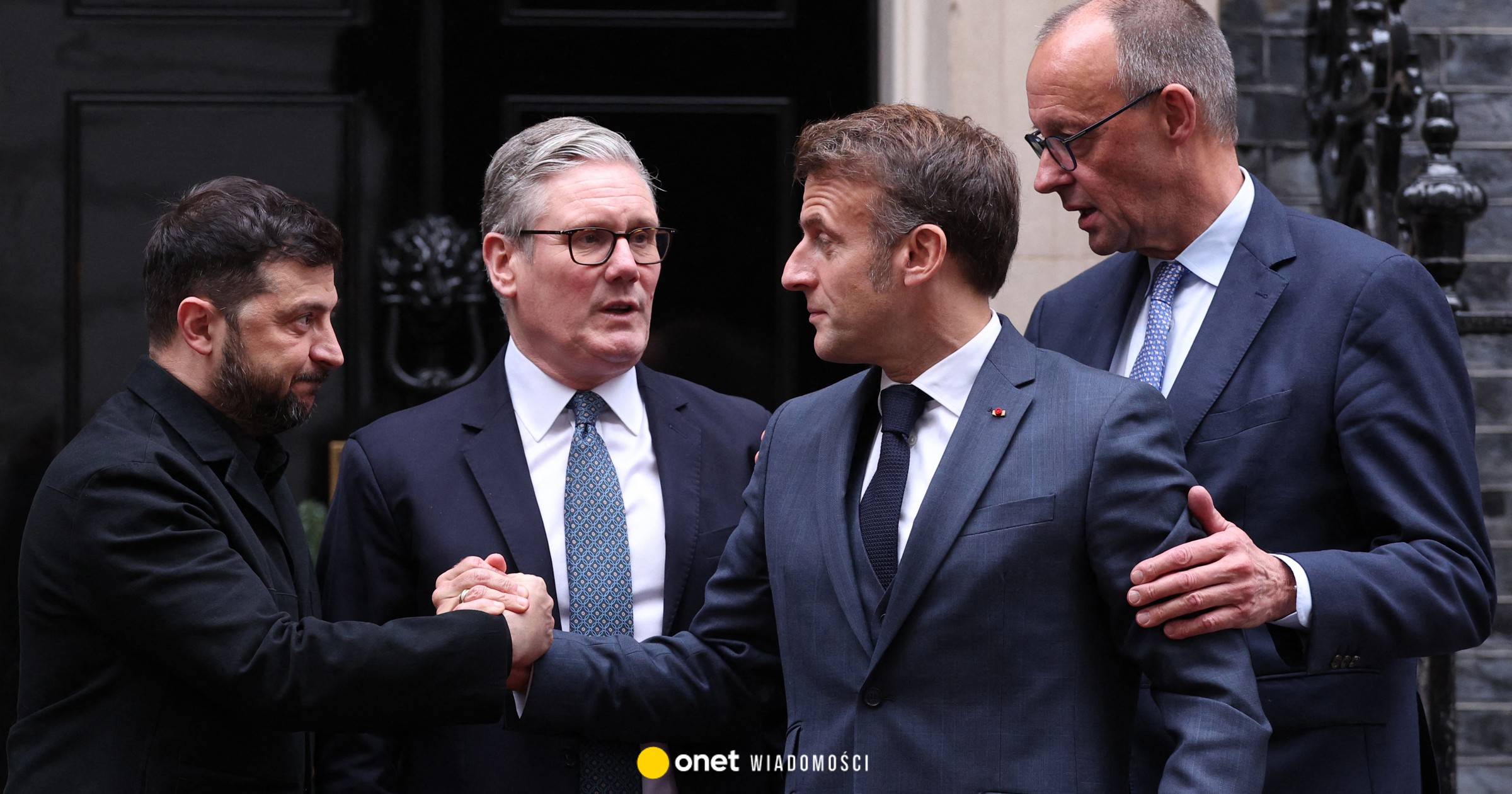
In late 2025, diplomatic efforts to end Russia's war against Ukraine suddenly appeared to be making progress, but nothing actually changed. Russian President Vladimir Putin continues to seek to destroy Ukraine as an independent state, an ally of Europe, and US President Donald Trump continues to act in a way that benefits him. The peace process remains at an impasse.
Therefore, at the beginning of 2026 Europe faces a choice. After decades of relying on U.S. security guarantees, it must take decisive action or risk losing not only control over the outcome of the war but also its future security.
However, there is good news. While the United States has acted slowly, Europe and Ukraine's other allies, including major financial institutions, have begun to respond with greater determination. It's starting to pay off.
Europe recently committed to providing loans in the amount of EUR 90 billion (PLN 379 billion, 404 million) for 2026-2027, bringing total EU aid to EUR 216 billion (PLN 910 billion, 570 million). Financing is important, but what it symbolizes is even more important. Europe now sees that Ukraine's survival and its own security are interconnected and can no longer wait for the United States to take the initiative.
During recent summits, European leaders made strong promises on clear security guarantees for Ukraine. They committed to using “armed forces, intelligence and logistical assistance” if Russia attacks again after any peace deal is reached. European Commission President Ursula von der Leyen called it “Europe's moment of independence.”
The article continues below the video
For years, European countries relied on the United States for defense and debated who should pay more, believing that major military threats were over. The Russian invasion changed this situation. Currently, Europe is intensely active is working to restore its position as a global player.
Political will is growing, but unity is fragile
Europe is not alone in this.
Canada is one of the largest donors per capita, providing a total of almost $22 billion. (PLN 79,119 million), of which over USD 12 billion (PLN 43,156 million) is direct financial assistance. In December, it pledged another $2.5 billion. (almost PLN 9 billion) to help unlock additional funds from the International Monetary Fund (IMF). Such commitments often encourage other institutions to provide more support.
Japan has pledged to provide a total of $12 to $15 billion. (from PLN 43 billion to PLN 54 billion), which makes it one of the largest donors, even though it is far from the conflict. Japan sees Ukraine's defense as linked to security in the Indo-Pacific region. If Russia wins in Europe, Japan fears this could encourage China.
Australia has donated over $1.5 billion. (PLN 5,394 million), including military equipment and training.
Countries in the Indo-Pacific region may be realizing before some Europeans that what happens to the rules-based order in one place affects everyone. If Ukraine falls, it will be a signal to all aggressors that the system is not working and they can act with impunity.
The role of international financial institutions is also important.
Weapons supplies are essential, but if Ukraine's economy collapses, it will be a disaster. International financial institutions are not charities; they are an economic pillar.
USD 15.5 billion was made available under the IMF's expanded assistance program. (PLN 55,743 million), constituting part of a package worth USD 153 billion. (PLN 550,234 million), and at the end of 2025, a new agreement was concluded at the working level for an additional USD 8.1 billion. (PLN 29 billion). The World Bank, the European Bank for Reconstruction and Development and the European Investment Bank are also key contributors to various programs.
This support will only work if the money arrives on time and partners remain committed.
Promises will not help if political disputes or delays freeze funds while Ukraine exhausts its reserves.
For Ukraine, this support may come dangerously late. European arms factories finally have their hands full, but building the industry for a major war usually takes years, not just a few months.
Political will is growing, but unity between 27 countries with different interests is still fragile. Europe's military strength looks good on paper, but after years of neglect, recovery will likely take a decade, not just a year.
A coalition of the willing and difficult questions
In March 2025, when Washington's support for Ukraine weakened, British Prime Minister Keir Starmer and French President Emmanuel Macron took the initiative. They created a diplomatic group to coordinate the activities of European leaders regarding Ukraine's security, called the Coalition of the Willing. That same year, German Chancellor Friedrich Merz joined the coalition as co-chairman, marking Berlin's shift from hesitation to action.
The coalition started with 26 countries and grew to 34 by the end of the year. It includes European and Commonwealth countries such as Canada and Australia, as well as Japan.
Politically, the coalition is coordinating support for Ukraine in talks with Russia and the United States, helping Kiev maintain its advantage, while Washington and Moscow may prefer to conclude agreements without Ukraine's participation.
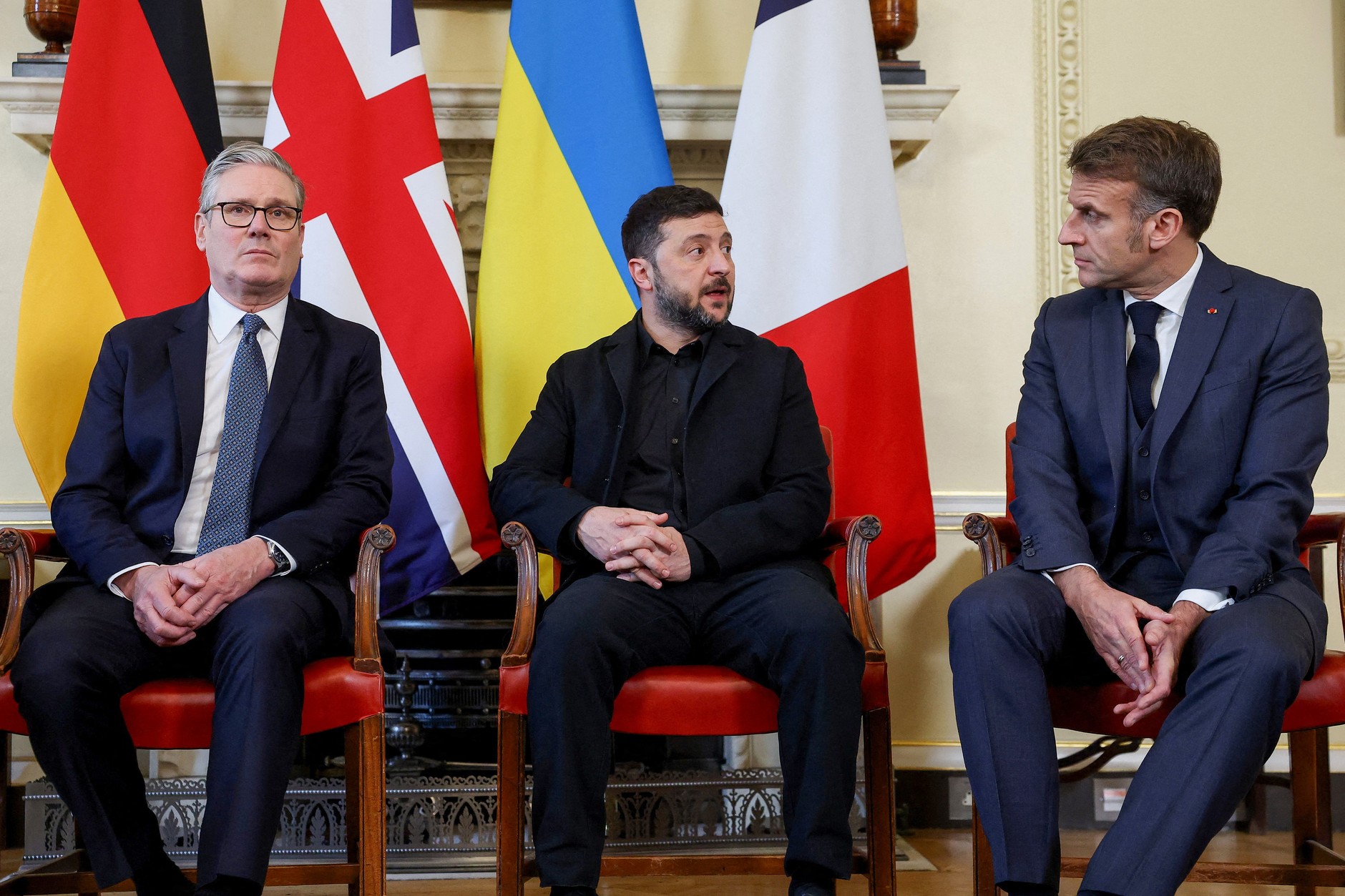
From left: British Prime Minister Keir Starmer, Ukrainian President Volodymyr Zelensky and French President Emmanuel Macron attend a meeting at the Prime Minister's Office, London, December 8, 2025.TOBY MELVILLE / POOL / AFP / AFP
On security, members are working on guarantees for Ukraine's future and plan to establish a security force, troops that will be deployed once a ceasefire is implemented. Twenty-six countries have pledged equipment and personnel for these forces, but key details such as the size, capabilities and how to respond to an attack by Russian forces remain undetermined.
The idea of creating forces ensuring security raises difficult questions. Will European troops be able to defend themselves if Russia attacks? Will Europe be able to maintain a military presence without US air and intelligence support? Will the political will survive as the costs become clear?
It is important for the coalition to show that Europe is serious about acting. It is still uncertain whether this new structure will actually fulfill its purpose and whether it will do it on time.
A fundamental contradiction
Typically, a ceasefire precedes negotiations. First the fighting ends, and then both sides start talks. Putin rejected this conceptand the West, mainly because of Trump's position, agreed with it.
Putin believes that time is on his side, and he will not agree to anything that is not a complete victory – not only in Donbas, but also in the matter of complete subordination of Ukraine.
Why would he compromise now if he thinks he can get better terms in six months? He won't agree—unless Russia suffers a real military defeat or its economy and morale collapse under the weight of sanctions and endless war.
Key test
European support is finally growing, but not at the pace or scale needed to change Ukraine's difficult situation on the front lines. Ukraine has no shortage of determination, but on the other side of the Atlantic, American aid has stalled due to political games.
Unfortunately, the year is 2025 was marked by delays and missed opportunities. Washington hesitated, European support came too late, and Russia blocked progress at every turn.
Putin wants to subjugate Ukraine. Ukraine wants freedom and security. The conflict turned into a long war of attrition.
So 2026 comes down to this: Will international promises turn into real actions or will they remain just words on paper?
Will democratic countries have the determination to continue supporting Ukraine when their own problems are mounting and costs are rising endlessly? Will Trump change his approach as Putin remains adamant and domestic criticism of his policies intensifies?
Ukrainians are entering the fifth year of war against a greater, relentless and brutal enemy. They risk everything, trusting that their true allies will support them when it matters most.
Ukraine's fate has significance beyond its borders. It is a test of whether democracies can still defend the principles they proclaim.


