The US security strategy “shares the vision of Putin's Russia” and “sets the course for a break with Europe”. The warning of an influential European newspaper


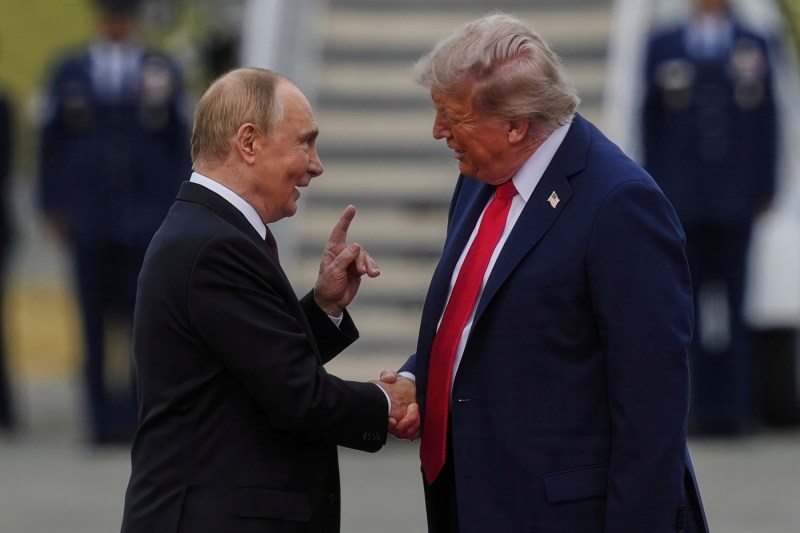
Vladimir Putin, at the meeting with Donald Trump, in Alaska, August 15, 2025. Photo: Julia Demaree Nikhinson / AP / Profimedia
The new US national security strategy is a wake-up call for Europe and sets the course for a break that many Europeans feared but were reluctant to acknowledge, says the Financial Times editorial board.
The White House has officially released the new US security strategy in which it talks about a European “economic decline” and the possible demise of European civilization, while promoting support for extremist forces in the EU, while adopting a conciliatory tone towards Russia or China.
It is an alarm signal for Europe, warns the editorial board of the Financial Times publication.
“A worldview promoted by Vladimir Putin's Russia for almost two decades”
“The document signals that the US is moving away from the shared values that have underpinned its policy for eight decades. It describes America's previous commitment to the defense of democracy and human rights, to globalism and free trade – which many would consider the source of US wealth and power – as obstacles that have weakened it,” observed the Financial Times.
Moreover, the strategy seems to be approaching Russia's vision as well.
The document “envisions a world divided into spheres of interest by the great powers, with the US dominant in the Western Hemisphere. This is a worldview promoted by Vladimir Putin's Russia for nearly two decades,” notes the Financial Times.
“China will appreciate the implicit non-conflict message. Many authoritarian leaders in Africa, the Middle East and elsewhere will celebrate the retreat from liberal interventionism, although many of their citizens will regret the loss of support for pro-democracy efforts,” the editorial added.
“A Rupture”
“Most worrying for leaders across the Atlantic is that the strategy presents a Europe still committed to values and institutions not as an ally, but as a rival or even a threat. The EU is accused of undermining political freedom and sovereignty,” the article says.
The editorial notes “a touch of absurdity in a document that extols the merits of national sovereignty while advocating – through its support for populist nationalist parties in Europe – for direct interference in the sovereign affairs of other nations”.
But US concerns, the Financial Times editorial board believes, make one thing clear: “The strategy is setting the course for a break that many in Europe feared but were reluctant to acknowledge.”
And Ukraine, the editorial says, is the most pressing potential cause of such a rupture.
“The document suggests that sooner or later the US will force Ukraine to make a deal in the name of 'strategic stabilization' with Russia – which it never openly criticizes as an aggressor. It suggests that Europeans will be forced to choose between supporting Kiev or keeping the US in NATO,” observes the Financial Times.
“Europeans must not deceive themselves”
The Financial Times warns that while they do not want to defy Trump, Europeans should not delude themselves into thinking they can persuade him to accept their position.
First, the editorial says, their task is to step up their efforts to support Ukraine and reduce their own dependence on US security, thus sending a clear message to Russia.
European leaders must also set a goal of assuming responsibility for Europe's conventional defense by the end of the decade, at the latest, with minimal US involvement, the article says.
Second, EU member states and institutions must overcome their economic vulnerability and improve the continent's competitiveness, concludes the Financial Times.