Bulgarian traders: It's crazy, we don't have euros to spare. Taxi meters display double amounts after the switch to the euro


“Why didn't you prepare? Since when did you know that starting today, payments will be made in the new currency?” complains one customer.
“Don't give me a euro because I have nothing left to give you! I work with leverage!”, says saleswoman Nelly, from the only stall open on January 1 at the market on Mladezhka Street in Plovdiv, to a customer who wants to buy pears and pulls out a 10-euro bill, writes 24 Chasa. The customer leaves the banknote next to the fruit crates, but the shopkeepers complain that they don't have any European currency. “I work with leva, sir,” repeated Nelly politely, handing him two pears for 3.70 leva.
The customer has to reach into his wallet again to take out a five-leva coin. The woman gives him back 1.30 leva.

“I was just hoping to make my first purchase in euros and it didn't happen,” the man commented. Nelly – an otherwise well-mannered woman – apologizes to him.
“We are not ready for this kind of payment. My daughter is a cashier in a store in the village of Parvenets in Plovdiv. She called me on the phone some time ago: “Mom, it's horrible! An elderly woman is shopping today, the cash register shows the amount of 17 euros and she gives me 17 leva and does not want to hear about euros. What are we going to do?”, Nelly describes the troubles of shopping.
On the entire “Mladezhka” street in Plovdiv, almost all shops are closed on January 1st. The big supermarket is open. However, the cashiers are pale with worry.
“It's crazy. We don't have euro notes available. And we're forced to work with leverage,” explains one of the women.
A customer hands over 20 euros for her purchases and expects the rest in the same currency. “Why didn't you prepare, since we know that the euro will be the official currency in our country from January 1?”, asks the client. The cashier directs her to the owners of the supermarket chain.
Her colleague opens the drawer. “I don't have more than 20-30 euros in the cash register. There are a few euro cents, but we are not ready to work with them today,” explains the worried woman. He admits that it is difficult for them because they cannot return customers who want to pay cash in euros. Complex calculations are then required on how to return the remainder to leverage.
According to the sellers, the first weeks and even months will be extremely painful. Men enthusiastically comment in front of the store that somehow it's easier in supermarkets. Cash registers are designed to display the amount in both leva and euro.
“Go to the market and buy two kilos of tomatoes and see how the stall calculates the rest,” advises one.
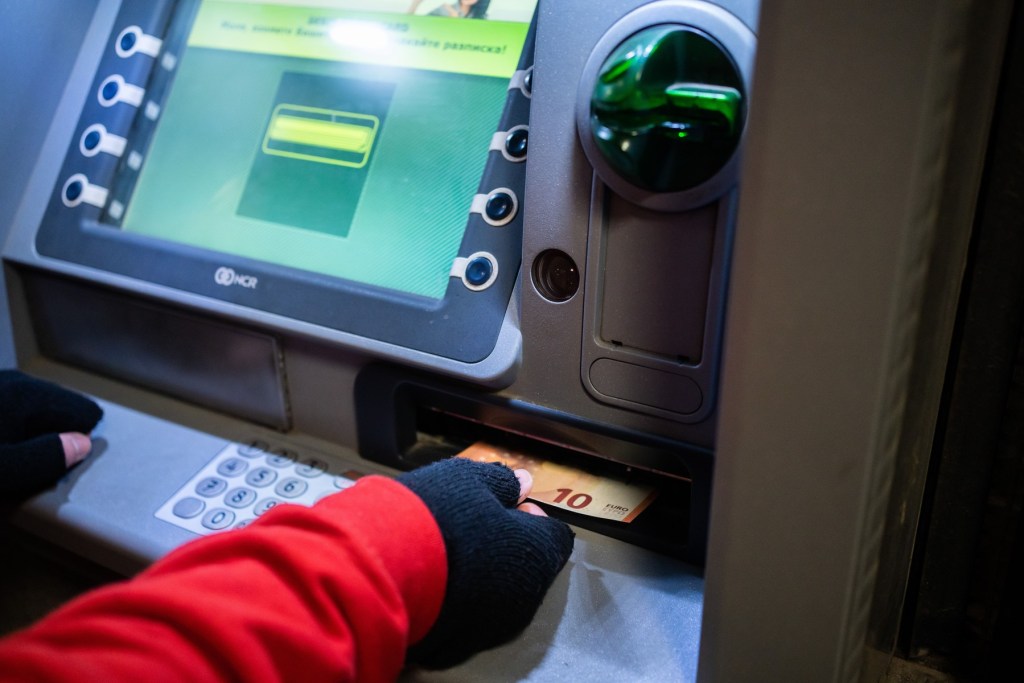
Unlike shops and markets, ATMs dispense euro notes. There are some difficulties with the 5 euro note.
The switch from the leva to the euro created problems for taxi drivers.
It seems that not all cars are equipped with the new devices, where the final amount is calculated in euros.
The bigger problem, however, is that some of the repaired devices, which show the price in euros, almost double the kilometers traveled, thus increasing the price, reports NOVA, cited by 24Chasa.
There is no exact data on how many of the cars have suitable devices that can calculate the final price of trips in euros. However, it is important to note that drivers who have not yet carried out this repair are in breach of the euro introduction law.
On December 30, Martin Dimitrov, a taxi driver, fixed the device in his car to comply with the new requirements. This morning, however, the changed currency created another problem. “Today, when I started work, I found out that there is a problem with the kilometers traveled – they calculate them twice. As a result, the amount doubles.
Customers think we're doing something that's not legal, but actually the problem is with the device itself or the chip that's installed now,” says Martin.
So instead of being with customers on the streets of Sofia, he comes to Alex Ivanov's service center to fix his device. The owner says there are drivers who have called because of this very problem – the device is counting twice.
The new fix takes minutes, but costs drivers money and time.
The carmaker has already received dozens of taxis with faulty devices. “There are such cases. The problem is technical, which we cannot explain either,” explains Biser Danov, the manager of a taximeter company.
According to Bulgarian officials, the first euro was withdrawn 20 seconds after midnight. The withdrawal took place from an ATM in Sunny Beach.